

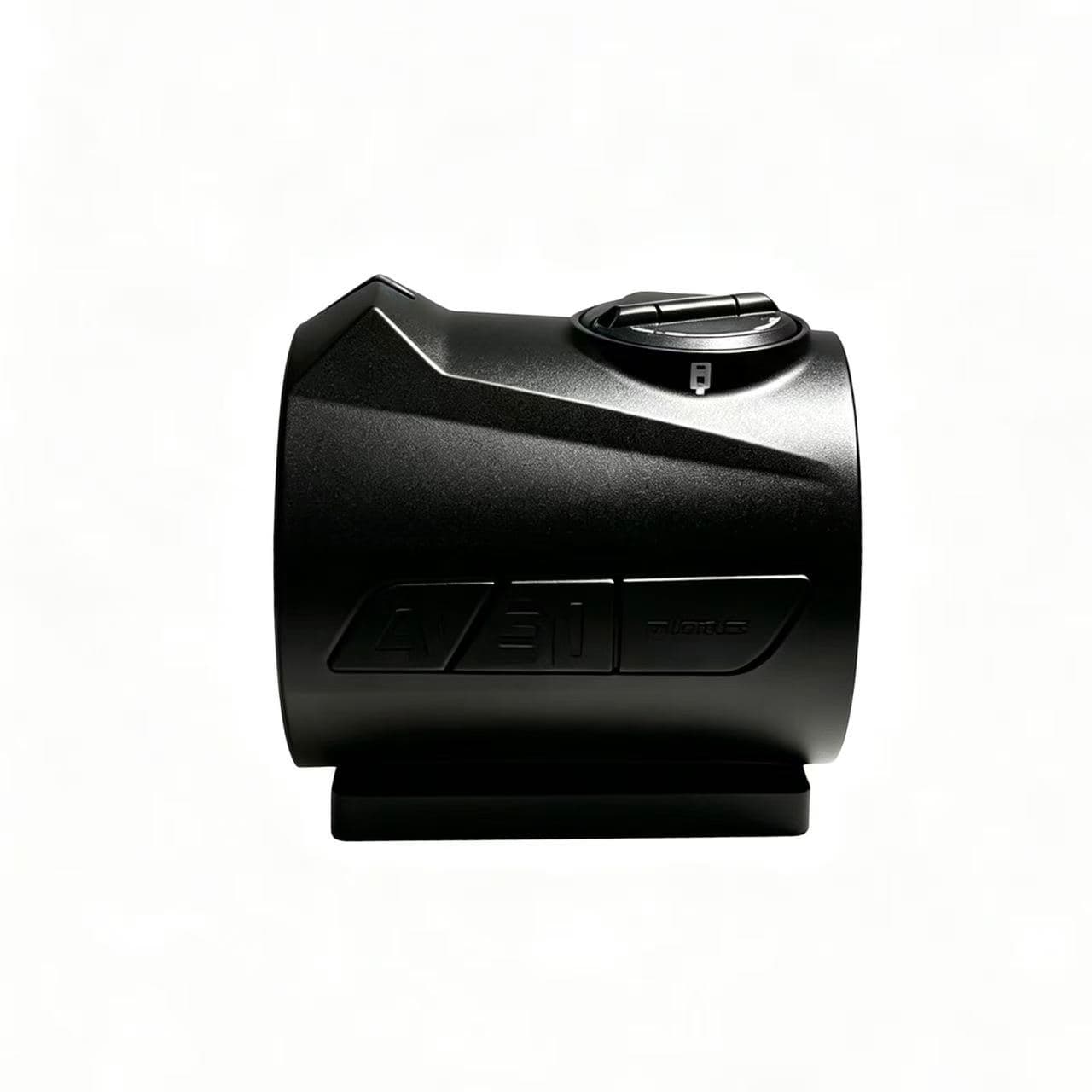
Technical specifications
Values are transcribed from the HW256 controlled user manual. Conditions are retained. This page is a product reference, not an independent test report or certification.
Optical
| Parameter | Value | Condition / note |
|---|---|---|
| Magnification | 1× | True 1× optical system used with both eyes open |
| Viewing window | 30 mm × 23 mm | — |
| Reticle styles | Dot / Circle / Dot + circle | Selected with the + button per the manual |
| Dot size | ≤ 3 MOA | — |
| Parallax | ≤ 2 MOA | — |
Power
| Parameter | Value | Condition / note |
|---|---|---|
| Battery | 1 × CR123A (3 V or 3.7 V) | — |
| Runtime, red dot only | ≥ 10,000 h | Stated for red-dot-only operation |
| Runtime, fusion mode | ≥ 6 h | Stated for combined thermal + red-dot operation |
| Reticle brightness | 15 day + 5 night (20 levels) | — |
| Thermal brightness | 10 levels | — |
| External power | Type-C, 5 V | Does not charge the cell per the manual |
Thermal imaging
| Parameter | Value | Condition / note |
|---|---|---|
| Detector type | Uncooled vanadium oxide | — |
| Detector resolution | 256 × 192 pixels | Detector pixels, not display pixels |
| Pixel pitch | 12 µm | — |
| Display | OLED, 1024 × 768 pixels | — |
| Lens focal length | 19 mm | — |
| Field of view | 9° × 6.7° | — |
| Image modes | Black hot / White hot / Outline | — |
Adjustment, mounting, physical and environmental
| Parameter | Value | Condition / note |
|---|---|---|
| Elevation and windage range | ± 40 MOA | — |
| Adjustment increment | 0.5 MOA | — |
| Mount standard | Picatinny rail (MIL-STD-1913) | Quick-release lever with clamp-adjustment knob |
| Housing | CNC-machined aircraft aluminium; black hard anodised | — |
| Overall dimensions | ≤ 95 × 55 × 90 mm | — |
| Sight height above bore axis | 38 mm | — |
| Weight | 450 g | Battery/accessory inclusion is not stated |
| Operating temperature | −20 °C to +65 °C | — |
| Storage temperature | −40 °C to +70 °C | — |
| Waterproof rating | IP67 | Manufacturer-stated rating; see the IP-code note below |
HW256 at a glance
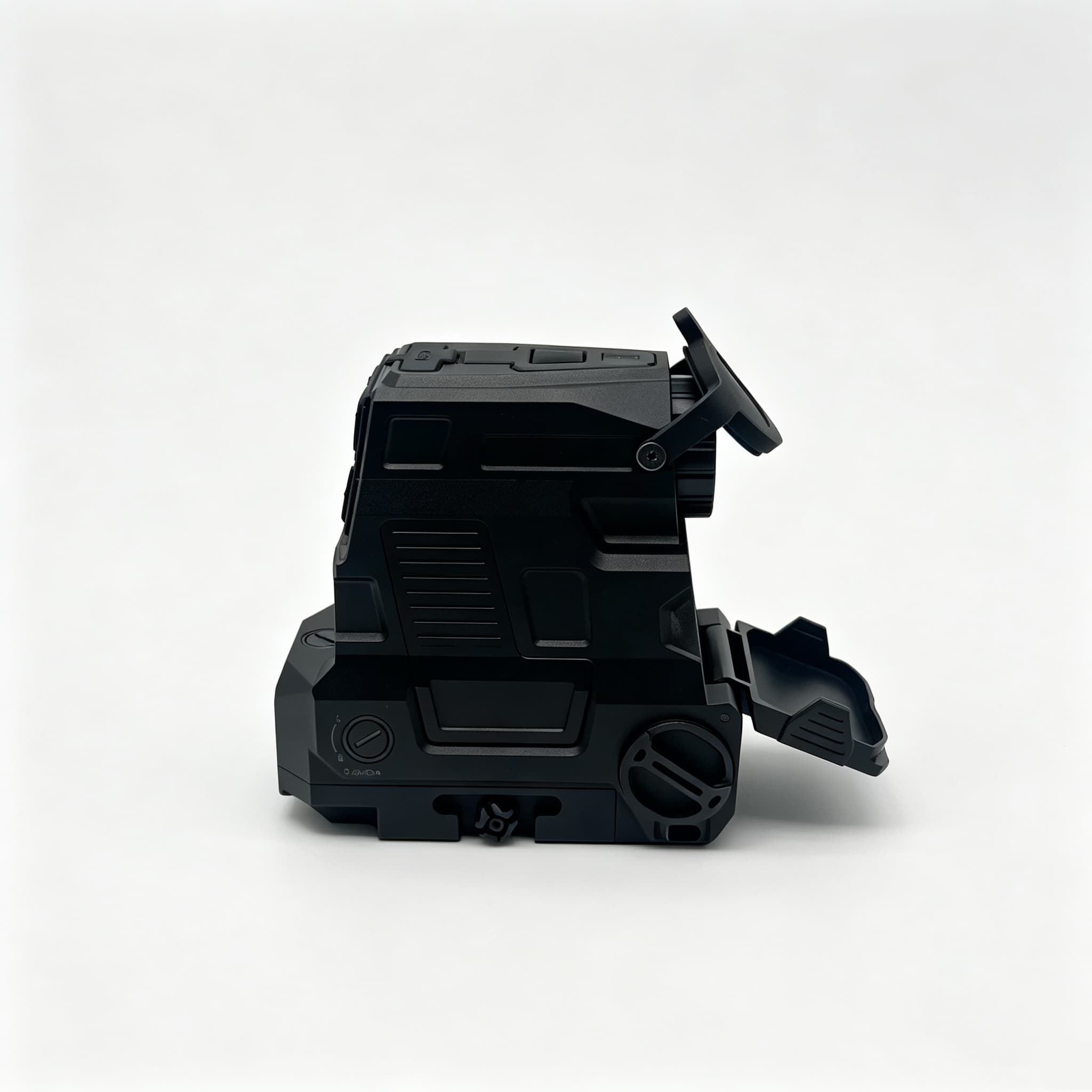
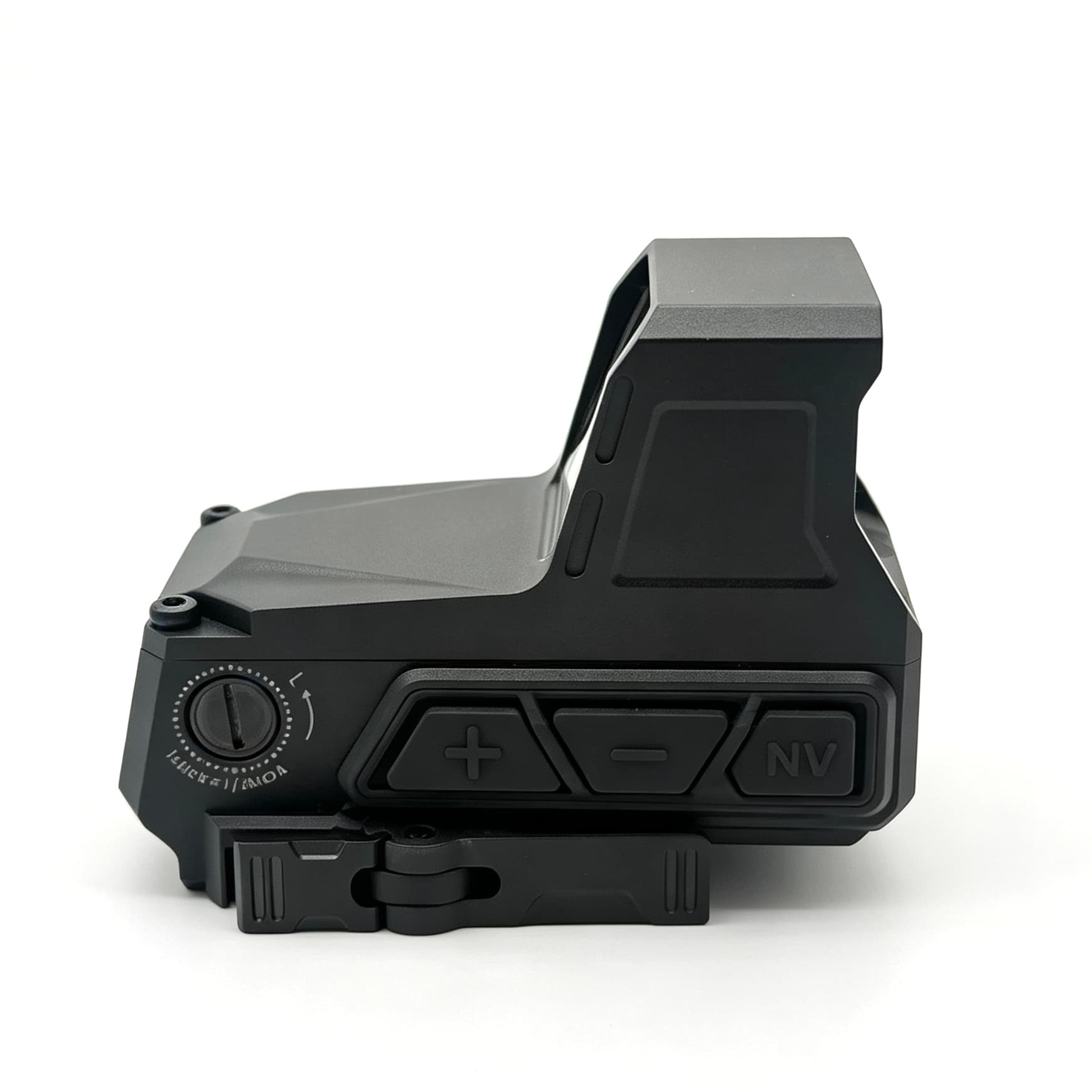
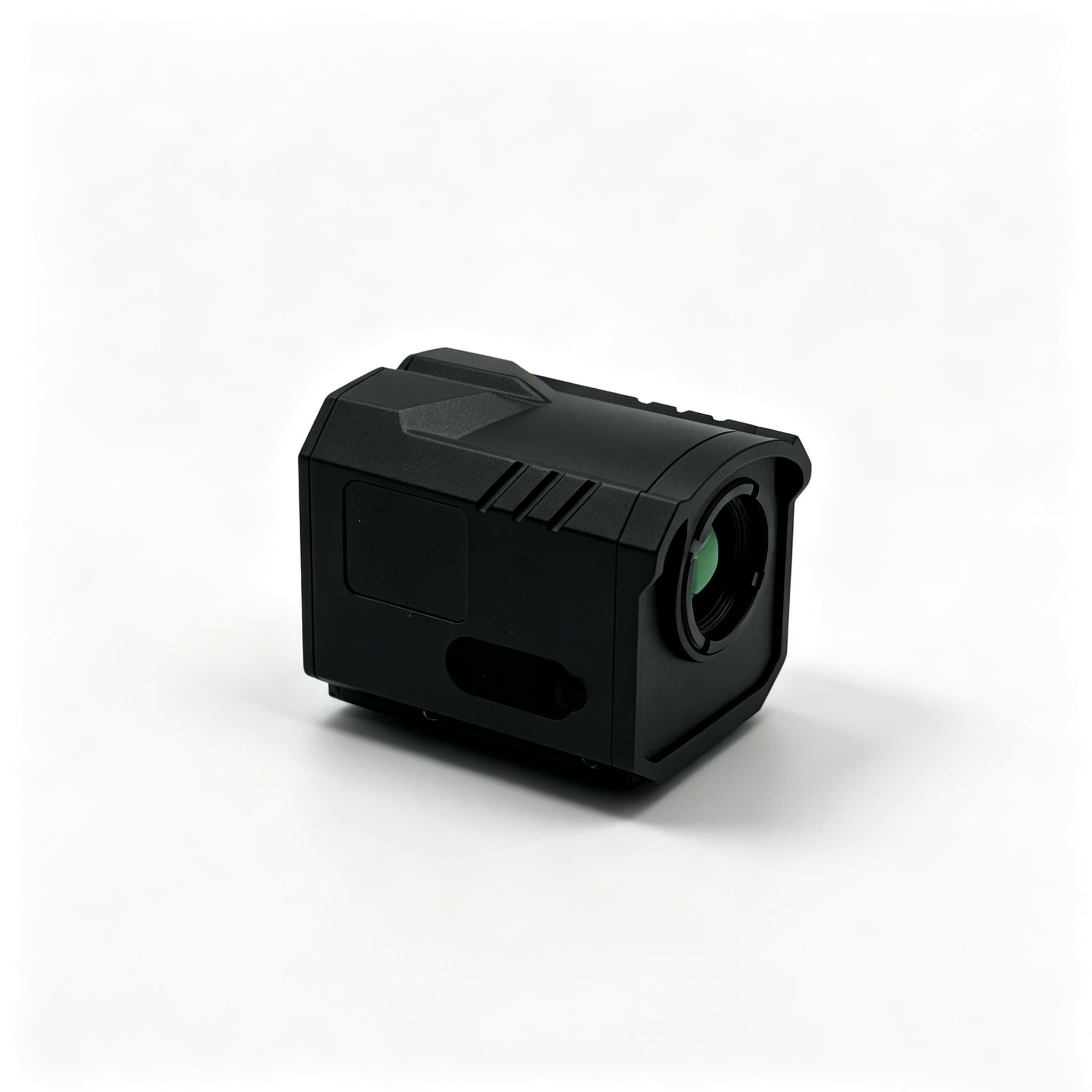
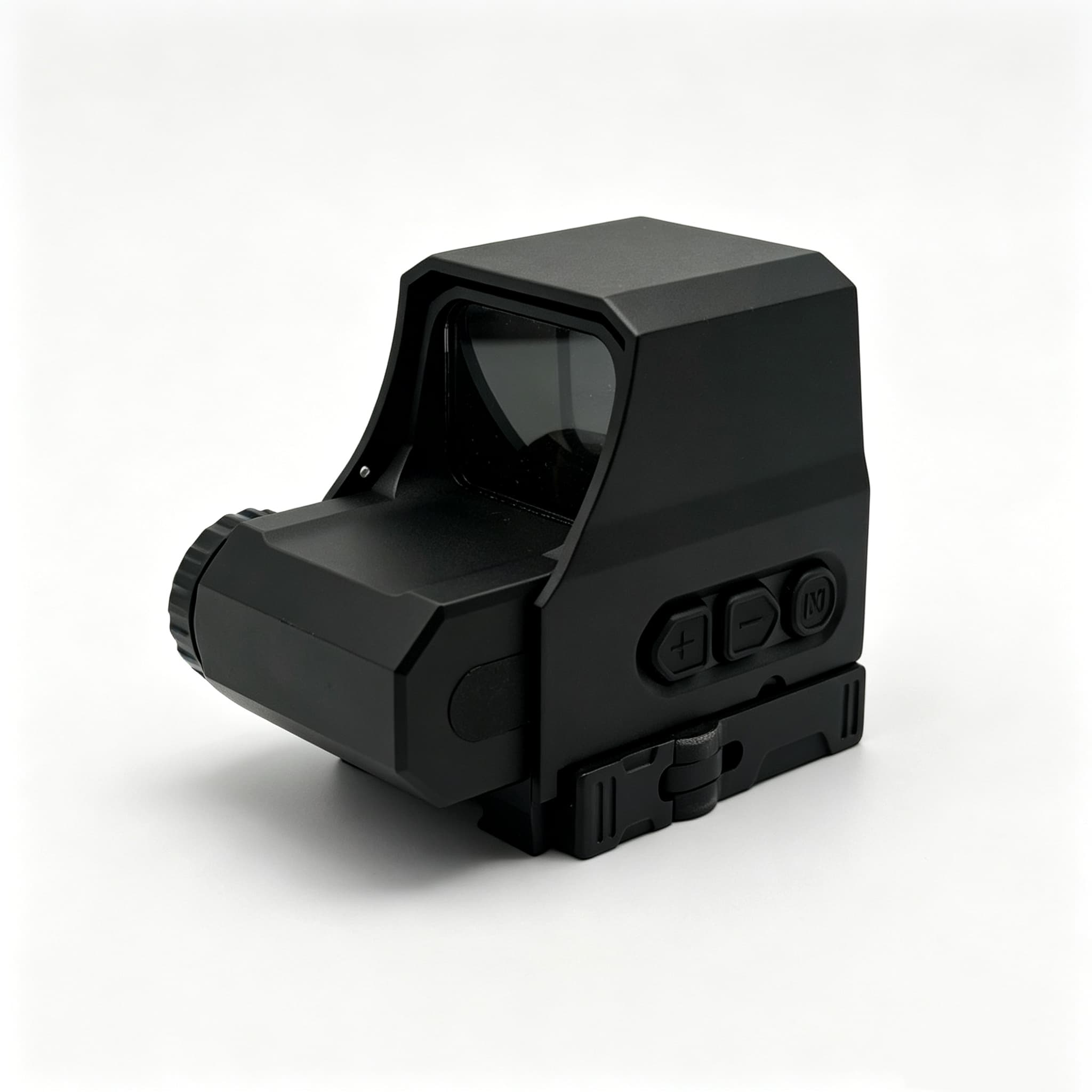
The HW256 product record describes thermal and red-dot information in one housing. Its detector has 256 × 192 pixels on a 12 µm pitch; the OLED display separately has 1024 × 768 pixels. The 19 mm thermal lens provides a stated 9° × 6.7° field of view, supporting a specification-led comparison with the 13 mm models.
Black-hot, white-hot and outline modes are documented alongside three reticle styles. Power figures depend on the channel in use: the source lists at least 10,000 hours for red-dot-only operation and at least six hours for fusion mode. The 1× optical system and 1×/3×/5× digital zoom entries describe different aspects of image presentation.
HW256 combines a 1× red-dot optical channel with an uncooled 256 × 192 thermal imaging channel. A 19 mm lens and 1024 × 768 OLED distinguish its fusion display arrangement from ERDI’s standalone compact thermal sights.
Key features
- Thermal and red dot in one sight for day and night use.
- Three reticle styles: dot, circle, and dot with circle.
- Three thermal image modes: black hot, white hot and outline.
- 256 × 192 uncooled vanadium-oxide detector, 12 µm pixel pitch, 19 mm lens, 9° × 6.7° field of view.
- OLED display, 1024 × 768 pixels.
- 1× / 3× / 5× digital zoom; digital zoom reduces the field of view.
- 15 daylight + 5 night-vision red-dot levels and 10 thermal brightness levels.
- Red-dot-only runtime ≥ 10,000 h; fusion-mode runtime ≥ 6 h.
- Full CNC aluminium housing with black hard-anodised finish for rigidity and stable zero retention.
- 30 × 23 mm viewing window and a quick-release Picatinny mount with a clamp-adjustment knob.
- IP67 sealed housing, stated for −20 °C to +65 °C operation.
How thermal fusion works
Every object above absolute zero emits infrared radiation, and the amount and spectrum depend on its temperature and emissivity. An uncooled thermal detector converts the incoming long-wave infrared radiance into an electrical signal and then into a visible image. Warmer objects can be displayed brighter (white hot) or darker (black hot), or rendered as an outline that emphasises temperature transitions.
The HW256 adds a red-dot aiming channel to that thermal image. The red dot provides a precise, high-contrast aiming point for rapid acquisition, while the thermal channel reveals target outlines that may be difficult to see with a conventional optic in low light, darkness, smoke or dust. Presenting both channels in one 1× sight avoids switching hardware between day and night configurations.
Thermal imagery is not a photograph and is not a calibrated temperature map. Image contrast depends on the temperature difference between the target and its background, atmospheric transmission, distance, focus and the selected palette. The HW256 is an imaging and aiming sight, not a radiometric thermometer.
Performance conditions and limits
- Thermal contrast depends on the target-to-background temperature difference and emissivity. A scene with little thermal contrast may show little detail even when the detector is working correctly.
- Atmospheric transmission is reduced by fog, heavy rain, dust, smoke and long distance. Thermal imaging can help in smoke or dust, but it does not guarantee seeing through every obscurant.
- Ordinary glass blocks much of the long-wave infrared band used by thermal imagers. A thermal sight generally cannot image through a closed window or glass barrier; confirm the optical path.
- Runtime depends on mode, brightness, zoom, calibration frequency, battery type and temperature. The quoted red-dot-only and fusion-mode figures are separate operating conditions.
- Digital zoom enlarges the central part of the image; it does not add optical resolution or target detail.
- IP67 is a manufacturer-stated rating. IEC 60529 defines the IP code; citing the standard does not certify this product. IP67 is not a diving or high-pressure-washing rating.
- Zero retention after removal, impact or mount changes must be confirmed on the host; the supplied manual describes the inspection and adjustment process.
Intended use and application scenarios
The supplied document describes the HW256 for close- to medium-range work on submachine guns, assault rifles and similar platforms, including urban operations and indoor CQB. It is an aiming aid: it does not replace safe firearm handling, marksmanship training or compliance with local law.
- Day/night patrol and security use where both a rapid red-dot aim point and thermal target detection are useful.
- Urban and indoor close-quarters scenarios where target outlines may be obscured by low light, shadow, smoke or dust.
- Hunting where lawful, particularly in low-light conditions where thermal contrast reveals animals against vegetation or ground.
- Sport shooting and professional training on 1913-rail rifles and carbines.
- Observation and detection of heat-emitting targets before positive identification with other sensors or lighting.
Application examples describe configuration possibilities, not a guarantee of detection, identification, hit probability or legality in a particular jurisdiction. Confirm local law and range rules before use.
Mounting, power and configuration
The HW256 fits a MIL-STD-1913 Picatinny rail with its quick-release mount. Confirm that the rail and mount are mechanically sound, that the mount is fully seated and locked, and that the sight cannot move by hand before use. The 38 mm optical-axis height should be checked against the host’s stock, cheek weld and any magnifier or clip-on.
Power is supplied by one CR123A cell (3 V or 3.7 V). The Type-C 5 V input can power the sight but does not charge the cell according to the manual. The red dot and thermal channel have separate power and brightness logic; the supplied manual gives the complete button, reticle, zoom, calibration and inspection procedure. This page intentionally does not reproduce operating instructions.
Thermal performance is configuration-dependent. Confirm the image focus, palette, brightness and reticle for the intended environment, and verify zero after mounting or changing the host configuration.
Care, storage and safety
- Wipe outer surfaces with a cloth moistened with water, mild soap solution or alcohol. Blow loose particles off the optics, then clean the glass with a lens tissue and an optical solvent.
- Clean the battery compartment with a suitable solvent and let it dry fully. Check the mount, O-rings and covers periodically.
- If the sight is not used for a long period, remove the cell, store it in a dry, dust-free place below 80 % relative humidity, away from acids, alkalis and corrosive vapours, and check the sight every three months.
- Do not open the housing, modify the sight or attempt repairs. Refer visible damage or unexplained faults to qualified service personnel.
- Before installing, adjusting or servicing the sight, make sure the firearm is unloaded, the chamber is empty and the muzzle is pointed in a safe direction. Wear eye and hearing protection when shooting.
- Do not point the sight at the Sun, lasers, welding equipment or other high-intensity heat sources. Do not use it as solar-viewing equipment.
- Do not dispose of lithium cells with household waste; follow local recycling and disposal rules.
Ordering, stock and dispatch
Prices below are published B2B unit prices in USD, shipping included to the address entered at checkout. Insurance, import duties, taxes and clearance fees are excluded. The server reconfirms the selected quantity tier before PayPal approval; no prior quotation or PI is required for eligible online orders.
| Quantity | Unit price (USD) | Dispatch after verified payment |
|---|---|---|
| 1–10 pcs | 1,999 | 1–100 pcs: stock basis 100 pcs; dispatch within 7 working days |
| 11–100 pcs | 1,899 | 1–100 pcs: stock basis 100 pcs; dispatch within 7 working days |
| 101–500 pcs | 1,799 | 101–500 pcs: 45 working days |
| 501–1,000 pcs | 1,599 | 501+ pcs: 60 working days |
| 1,001+ pcs | 1,299 | 501+ pcs: 60 working days |
Dispatch days are working days counted from verified payment. The stock basis is 100 pcs for the in-stock band. Larger quantities are produced to order. Shipping is included to the shipping address entered at checkout; the terms shown in the cart and order confirmation govern the accepted order.
Frequently asked questions
What does thermal fusion mean for HW256?
The supplied document describes an optical red-dot channel and a thermal imaging channel in the same product. Its displayed modes include black hot, white hot and outline. This identifies the documented channel arrangement; it does not establish an undocumented image-processing algorithm or recognition distance.
Does the 1024 × 768 OLED mean the detector has that resolution?
No. HW256’s thermal detector is specified as 256 × 192 pixels, while its OLED is 1024 × 768 pixels. Display resolution and detector resolution are separate specifications. Keep the detector count and 12 µm pitch with any comparison of the sensing array.
How should HW256’s two runtime figures be compared?
The source assigns at least 10,000 hours to red-dot-only operation and at least six hours to thermal fusion operation. They refer to different power modes, so the larger figure must not be presented as thermal-imaging runtime. Confirm delivered operating conditions in the model manual.
What is the difference between 1× optics and digital zoom?
The model record lists a 1× optical system and digital viewing options of 1×, 3× and 5×. Digital zoom changes image presentation and field of view; it does not change the detector’s physical pixel count. It should not be described as extra optical magnification or new sensor detail.
What distinguishes the HW256 thermal lens from the 13 mm models?
HW256 lists a 19 mm lens and a 9° × 6.7° field of view. FM500C1 and YM500D1 have their own 13 mm lens entries. Compare each model’s complete detector and optics record rather than deriving a detection-distance guarantee from focal length alone.
References and evidence boundaries
- HW256 controlled product datasheetModel-specific optical, imaging and power specifications.
- Advancements of uncooled infrared microbolometer materials: A reviewBackground on uncooled thermal detection; not ERDI model measurements.
Warranty, compliance and contact
Warranty terms are as stated in the sales contract and the delivery documents. Damage caused by failure to observe the manual, unauthorised disassembly or modification, non-approved accessories, accident or improper storage is not covered. Keep the packaging and delivery documents for any claim.
The HW256 is a firearm accessory. The buyer and user are responsible for compliance with all applicable laws governing purchase, possession, transport and use. Firearm accessories and some thermal imaging products may be subject to export-control or dual-use rules; confirm the destination, end user and end use before export, re-export or transfer, and obtain any required licence. This page is not legal advice.
Technical support, spare parts and warranty service: sales@erdicn.com. Quote the model (HW256) and the serial number marked on the product.