

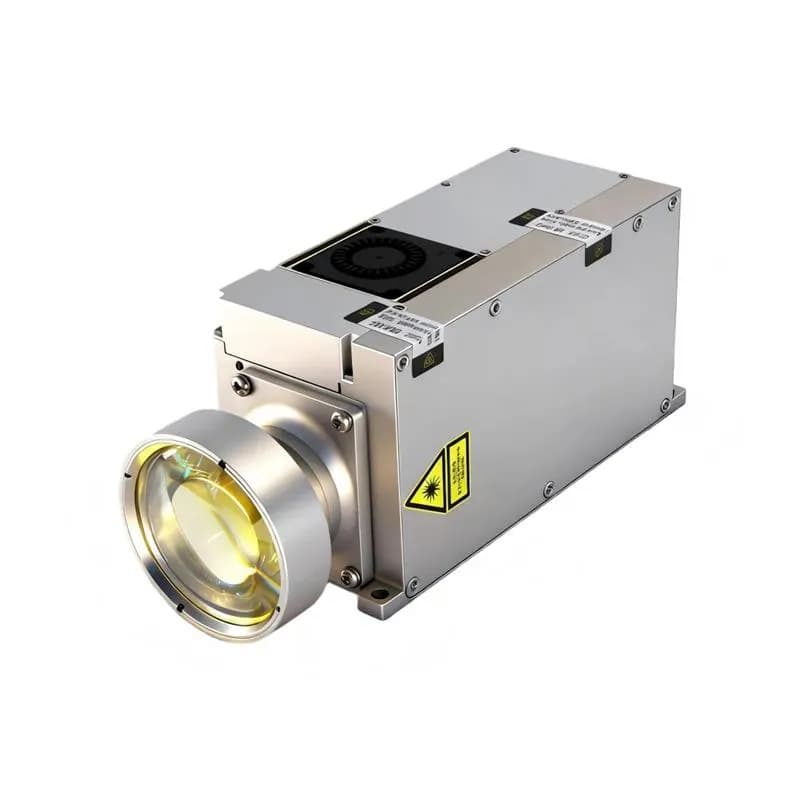
Laser rangefinders are precision instruments designed to measure distances accurately using laser technology. While electronics and signal processing play an important role, optical features are the true performance drivers. The quality, design, and integration of optical components directly influence accuracy, range, reliability, and usability across different environments. Let’s explore more.
Optics laser rangefinders: Beam quality and divergenceimpacting performance
One of the most critical optical characteristics of a laser rangefinder is beam divergence. Divergence defines how much the laser beam spreads as it travels over distance.
Low beam divergence allows the laser spot to remain small at long ranges, improving accuracy and reducing the chance of hitting unintended surfaces. On the other hand, high divergence causes beam spreading, which weakens the reflected signal and increases measurement uncertainty, especially over long distances.
In high-performance laser rangefinders, precision collimating optics are used to minimize divergence, enabling accurate ranging even at extended distances.
Transmitting optics and beam shaping
The transmitting optics are responsible for shaping and directing the outgoing laser beam. These optics ensure that the laser energy is efficiently delivered toward the target.
To make this happen, a system must feature collimation lenses to keep the beam parallel, beam shaping elements to optimize the energy distribution, and optical alignment accuracy to ensure the beam follows the intended optical axis.
Well-designed transmitting optics are essential for maximizing signal strength while maintaining eye safety and energy efficiency.
Receiving optics and aperture size are also crucial.
Receiving optics collect the reflected laser light returning from the target. Their effectiveness has a direct impact on detection reliability. Apart from that, larger optical apertures collect more reflected photons, improving performance in long-range or low-reflectivity conditions.
Lens, optical alignment, mechanical stability, and field of view are other optical features that impact performance.
At ERDI, optics laser rangefinders are designed for accurate and efficient performance in varying conditions.