PREFACE
The application of photoelectric science and technology in the military field is mainly reflected in information acquisition, information transmission, information storage and display, photoelectric countermeasures, etc. This article will provide a detailed introduction to the applications in various aspects and the related products involved.
I. Access to information
Common military photoelectric sensors include:
-
Advancements in CCD Cameras
CCD cameras are extensively used in military applications. In high-radiation environments, the Si material used as the substrate for CCDs is prone to damage, leading to a decrease in charge transfer efficiency and complete failure in severe cases. In the early 1990s, a new type of “Active Pixel Sensor” (APS) was developed. Each pixel in an APS has its own selection and readout transistor, replacing CCDs in high-radiation environments.
To capture image information underwater or in foggy conditions, an active imaging technique known as “Long-Range Gated Imaging Technology” has been developed. Due to the narrow width of the distance gate (adjustable from several nanoseconds to several hundred nanoseconds), most background noise can be filtered out, resulting in clear images while also obtaining target distance data.

2. Infrared imager
| Model | LRF10000D |
| Eye safety level | Class 1(IEC60825-1) |
| Magnification | 7× |
| Field of view | 6°/106mil |
| Pupil distance | 20mm |
| Receive caliber | Φ32mm |
| Diopter | -5~+5D |
| Laser wavelength | 1535nm |
| Range (building) | ≥ 20~10000m |
| Accuracy | ±1m |
| Frequency | 1Hz (3Hz in continuous ranging mode) |
| Accurate | ≥98% |
| Divergence angle | 0.4mrad |
| Angular range | Azimuth: 0~360°(±1°);
Pitch angle: ±90° (±1°) |
| Power supply | DC 5~12V |
| Battery type | Rechargeable battery 16340×2/CR123A×2 |
| Battery life (room temperature) | 5000 ranging |
| Weight | ≤ 430g (including battery) |
| Volume | 141×81×53mm (L×W×H) |
| Operating temperature | -40~+55℃ |
| Storage temperature | -50~+65℃ |
| Waterproof rating | IP67 |
| Connector | Uart(TTL_3.3V)to USB |
| Wireless transmission | Bluetooth 5.0 |
| Positioning type | GPS/BeiDou/GLONASS |
| Location accuracy | ≥50m |
| Other | Mobile APP interconnection |
| Product certification | CE、RoSH |
3. Multi-spectral camera

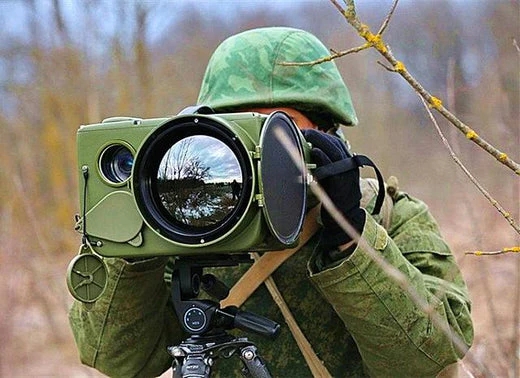
4、Laser Distance Measuring Instrument
Laser distance measurement has the advantages of far, accurate, fast, anti-interference, no blind spot and so on, compared with ordinary distance measurement.
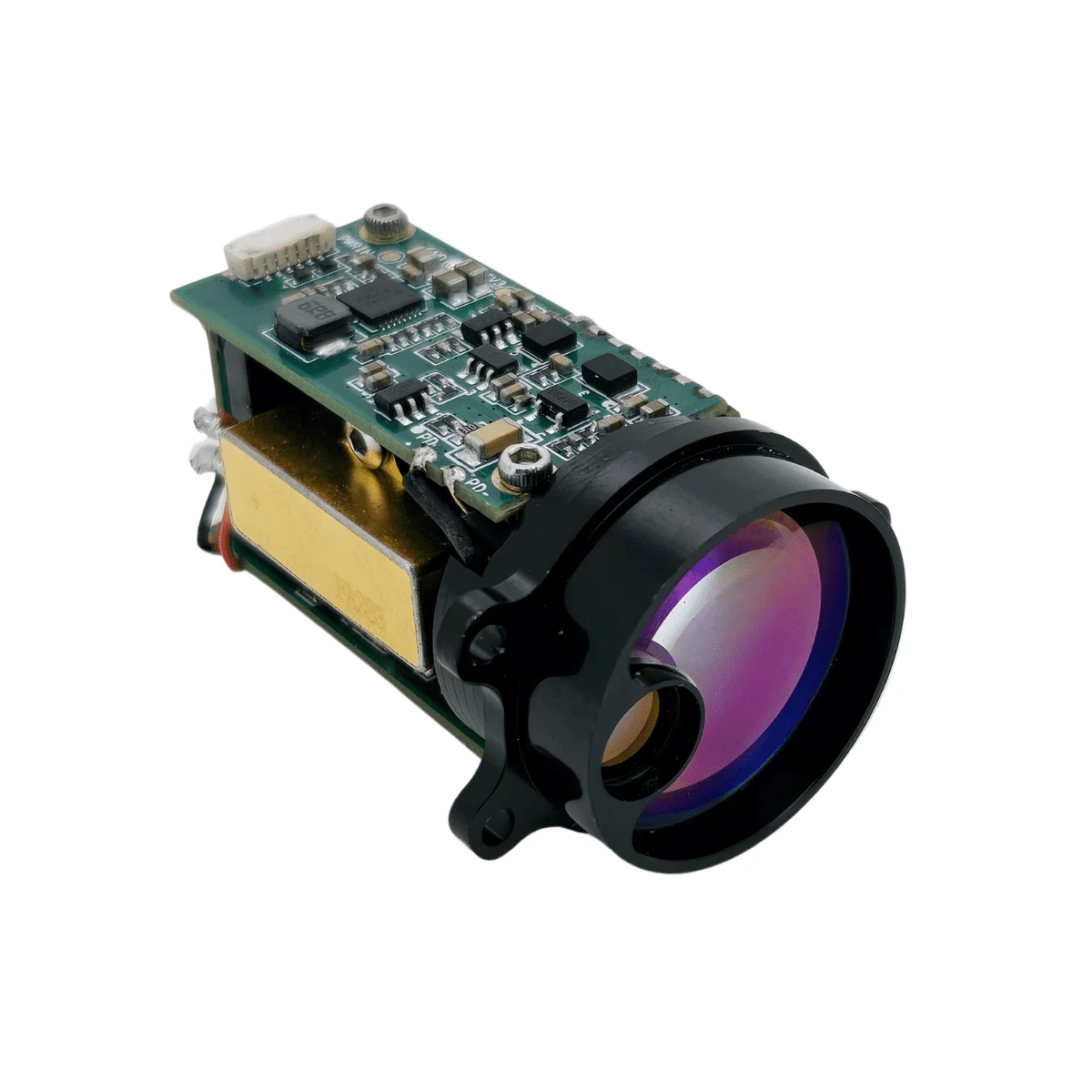
| Model | LRF0105C | LRF0308C | LRF0405C | LRF0612C | LRF0816C | LRF0815C | LRF1017C | LRF1221C | LRF1525C | LRF1830C | LRF2535C |
| Laser Wavelength | 1535±5nm | ||||||||||
| Distance measurement capability (2.3mX2.3m target) | ≥3000m | ≥3000m | ≥4000m | ≥6000m | ≥8000m | ≥8000m | ≥10000m | ≥12000m | ≥15000m | ≥18000m | ≥25000m |
| Eye Safety | Class Ⅰ | ||||||||||
| Divergence Angle | ≤1mrad | ≤0.6 mrad | ≤4.21 mrad | ≤0.35 mrad | ≤0.3mrad | ||||||
| Launch Lens Diameter | Φ8 mm | Φ8 mm | Φ12mm | Φ12mm | Φ15mm | Φ15mm | Φ18mm | ||||
| Receiver Lens Diameter | Φ20 mm | Φ16 mm | Φ25mm | Φ40mm | Φ45mm | Φ50mm | Φ60mm | ||||
| Minimum Range | ≤15 m | ≤30 m | 50 m | ||||||||
| Ranging Frequency | Single, 1Hz~10Hz | ||||||||||
| Ranging Accuracy | ±2 m | ±1 m | ±1 m | ||||||||
| Range Resolution | ≤20 m | ≤30 m | ≤30 m | ||||||||
| Precision Rate | ≥98% | ≥98% | ≥98% | ||||||||
| False Alarm Rate | ≤1% | ≤1% | ≤1% | ||||||||
| Supply Voltage | DC 3~5 V | DC4.5~16V | DC12 V | ||||||||
| Weight | ≤29±1 g | ≤32±1 g | ≤ 58±1g | ≤175g | ≤285g | ≤380g | ≤380g | 400g | |||
| Dimension (mm) | Φ34×47.5 | 48×30.5×21 | 65×48×32 | 65×46×86 | 107×72×60 | 125×85×58 | 125×100×70 | ||||
| Operating Temperature | -40~+70 ℃ | ||||||||||
| Storage Temperature | -55~+75 ℃ | ||||||||||