.png?w=1200&h=1200&q=80)
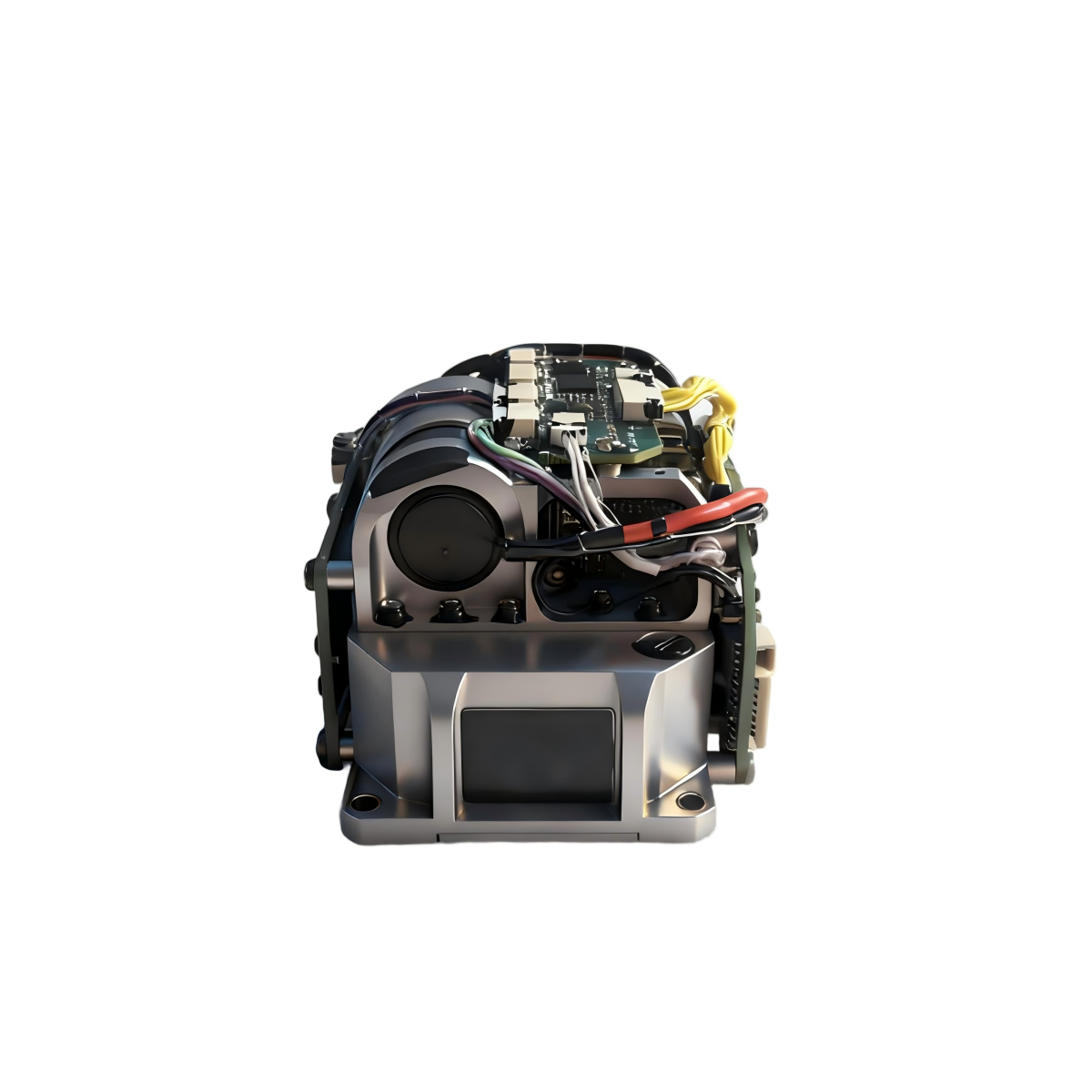
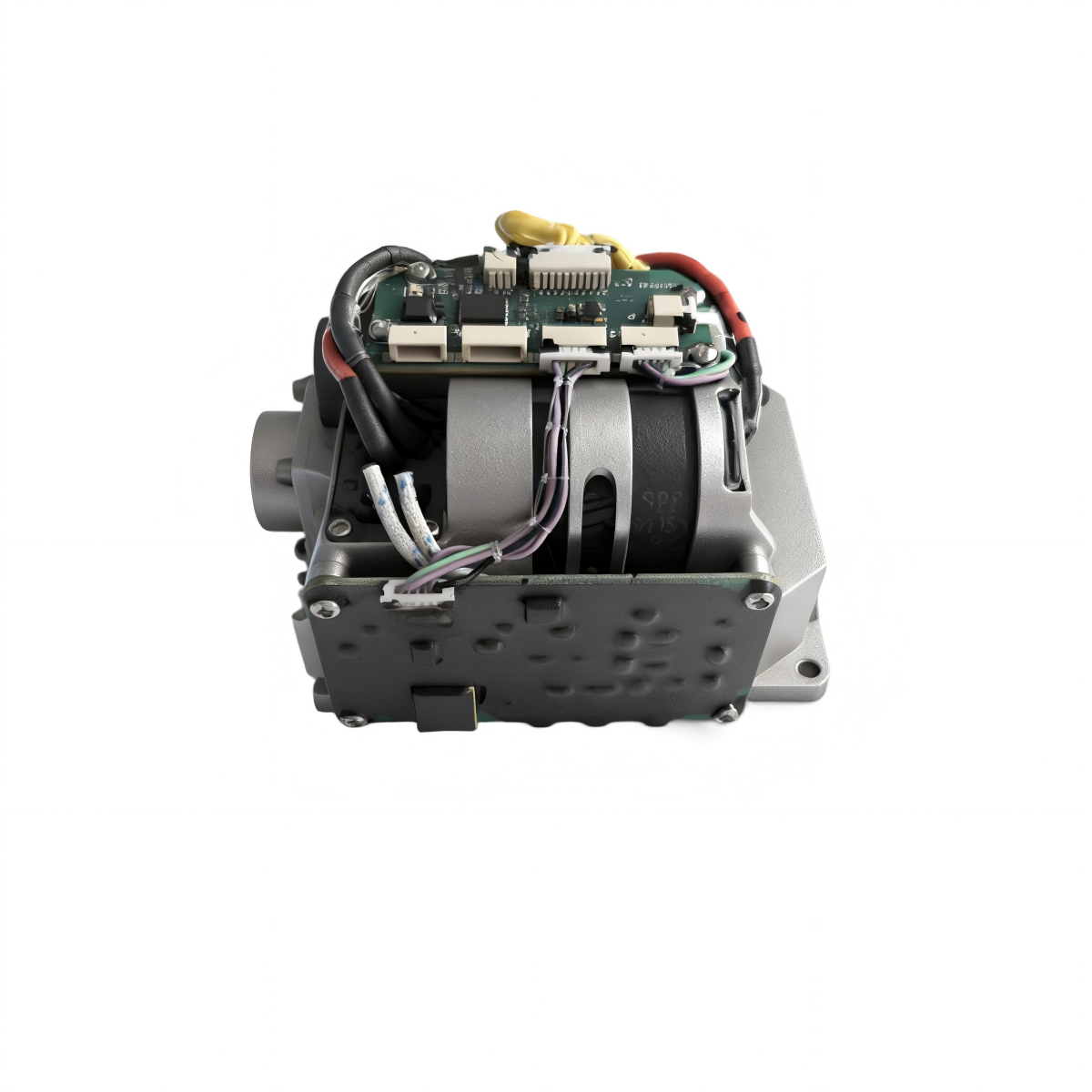
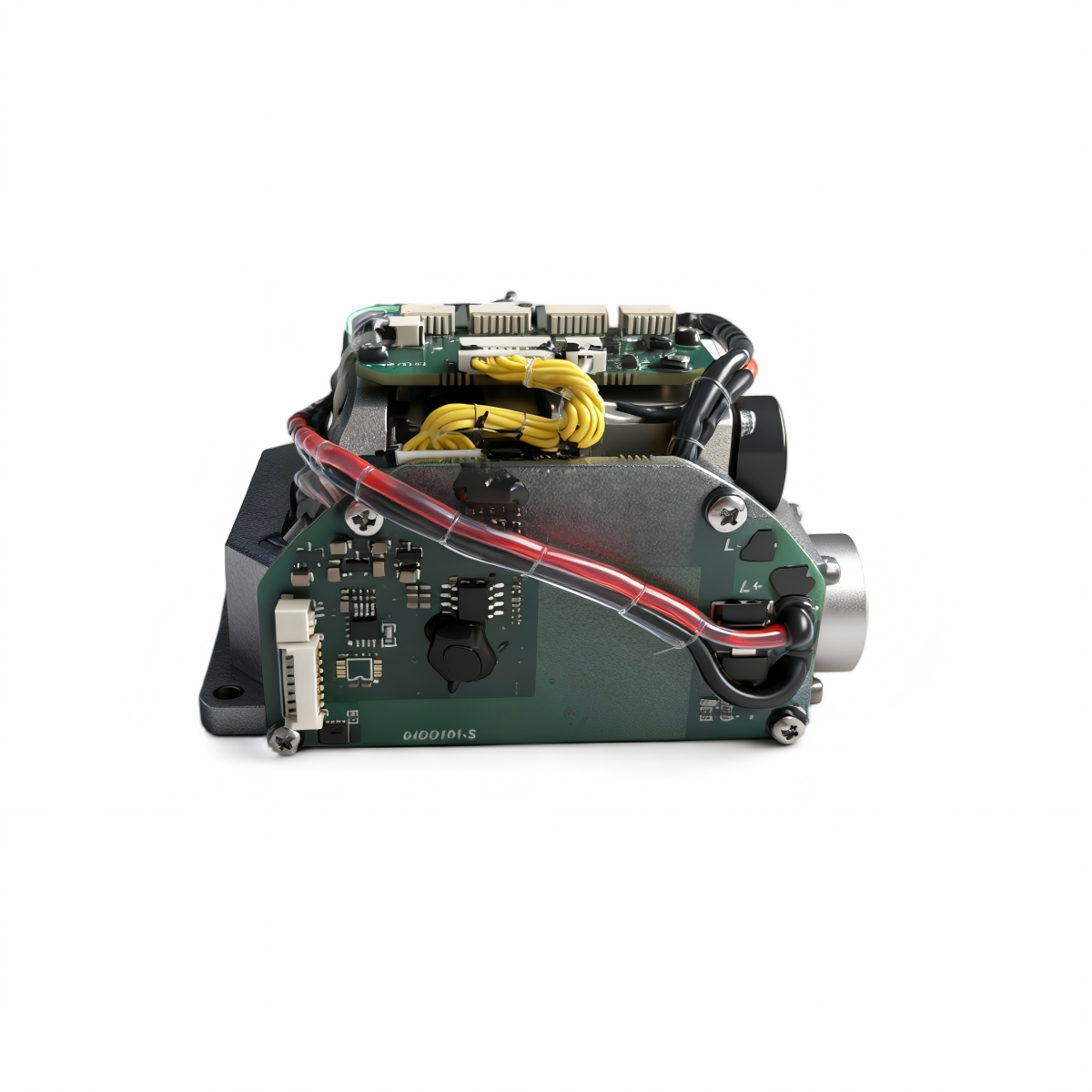
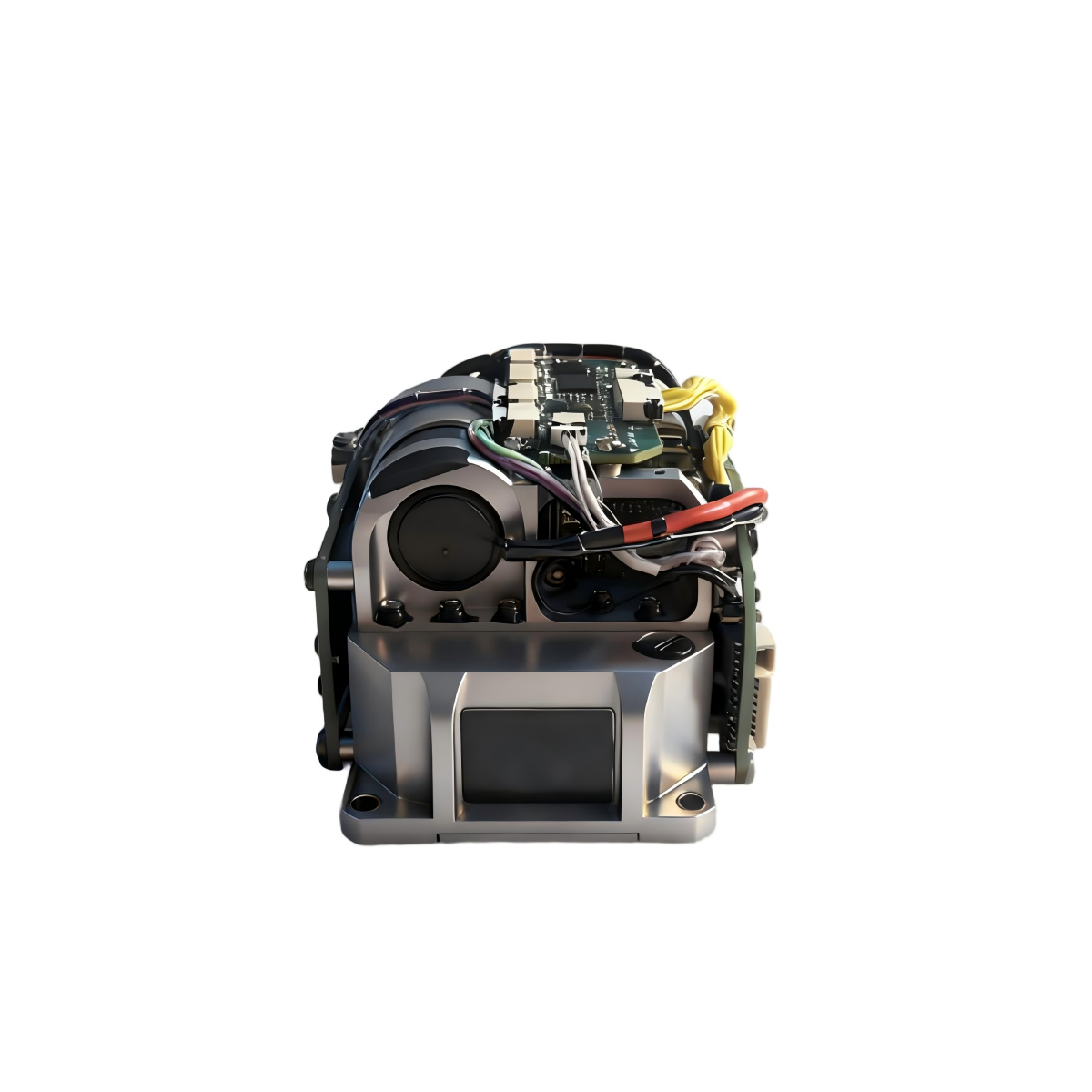
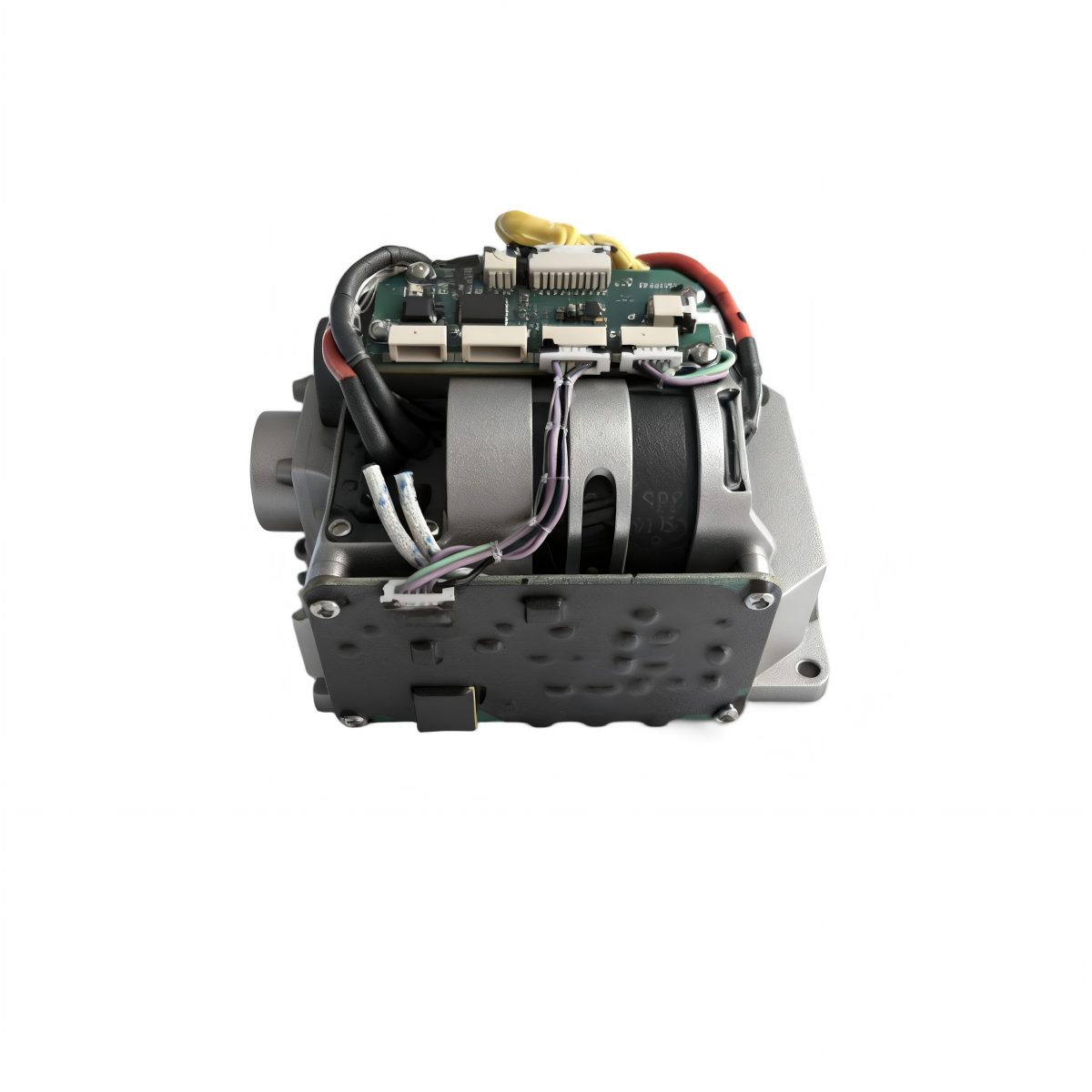
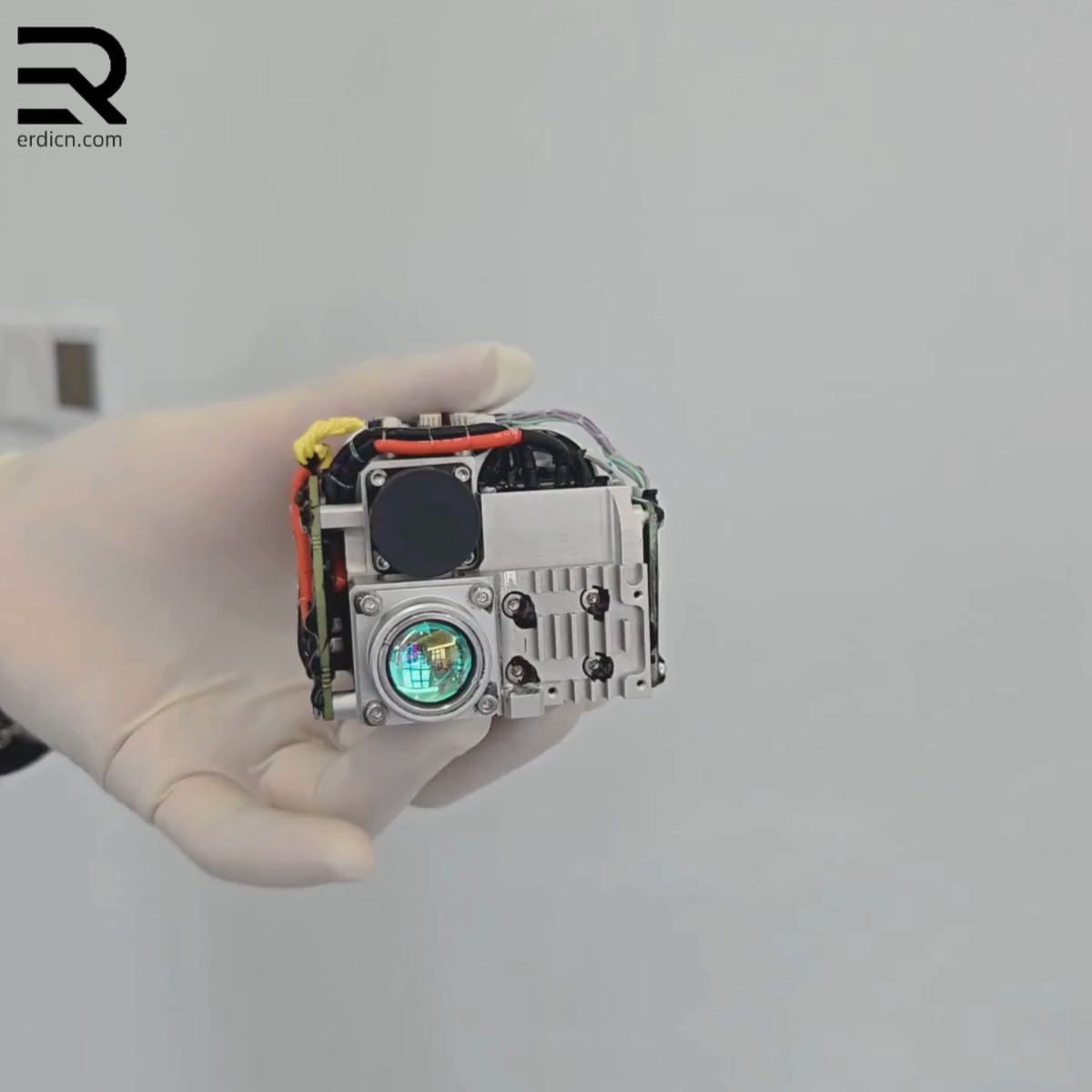
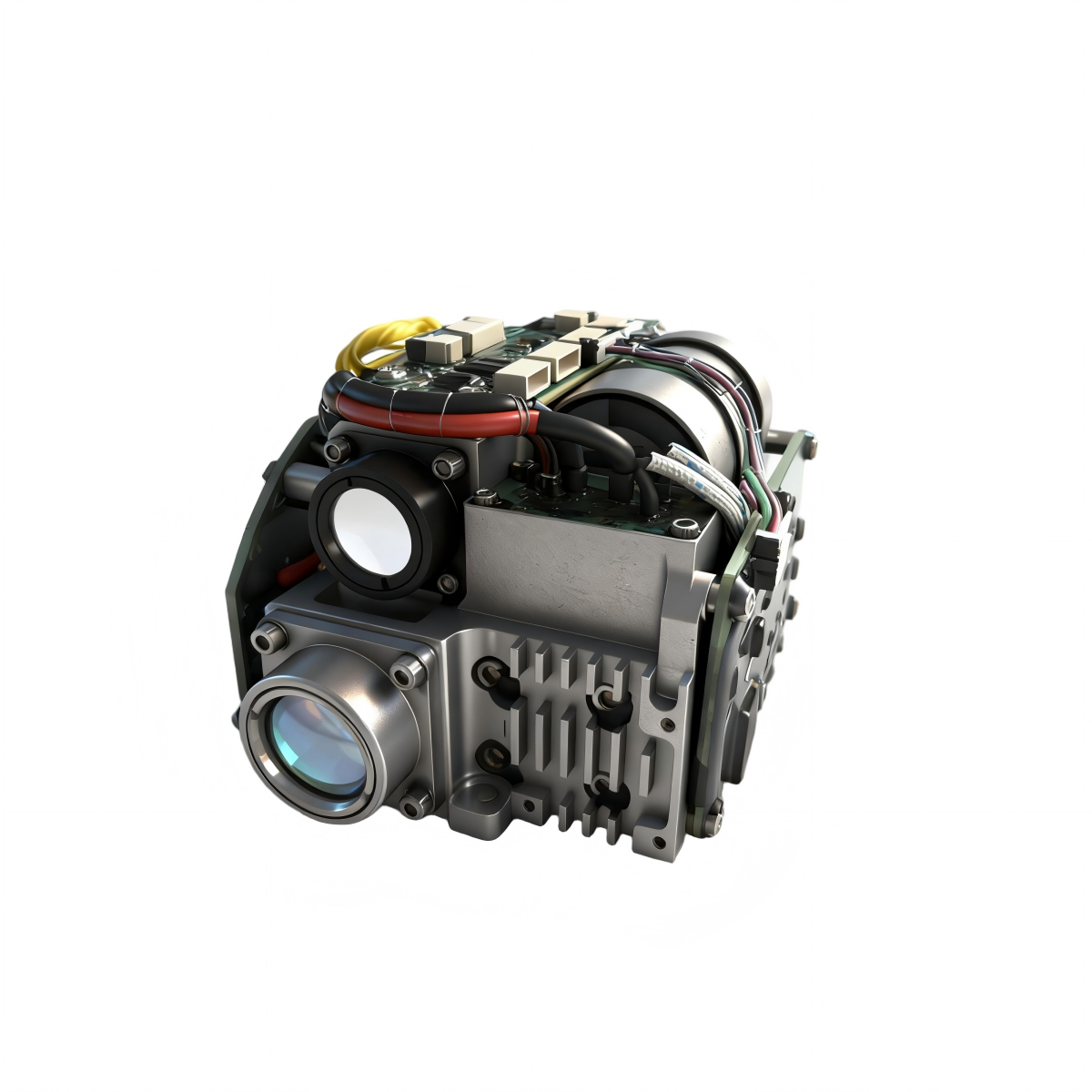
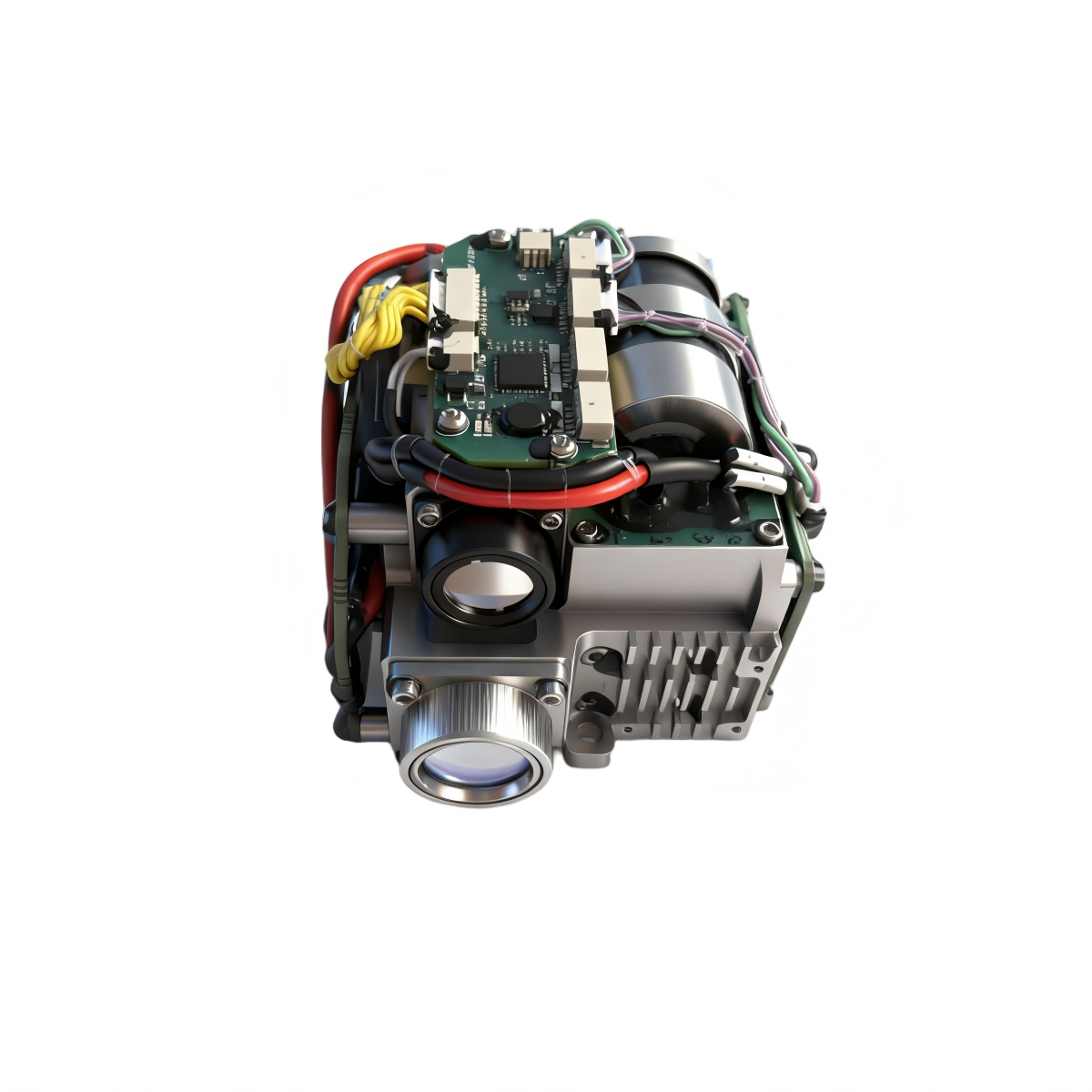
ERDI LDR20K1 1064nm Laser Rangefinder & Designator for UAV and Ground Applications
Contact Us

Senior Engineer, Yilin
Tel : +86 28 81076698
WhatsApp : +86 18000520222
ERDI Pre-Sales Notice & Customer Information
(Please Read Before Purchase or Inquiry) Thank you for your interest in ERDI TECH LTD. We are committed to providing customers worldwide with high-precision, high-reliability laser products and technical solutions. Before placing an order, please read the following information carefully to better understand our company, services, and purchasing policies.
-
About ERDI
ERDI is a professional manufacturer specializing in the research, development, and production of laser modules, laser measurement systems, and related optoelectronic components.
We integrate design, R&D, production, and sales, with a focus on safety, innovation, and precision.Our products are widely used in:
- Industrial measurement and alignment systems
- Scientific research and educational applications
- Optical instrumentation and laser testing
- Consumer and OEM laser solutions
ERDI operates certified facilities and maintains rigorous quality control to ensure that every product meets international standards.
-
Global Presence and Trade Reliability
ERDI has established official stores on leading global platforms including Amazon, Alibaba International Station, and Made-in-China.com, allowing customers worldwide to purchase safely and conveniently. We are a verified and trusted factory, not a reseller, and we ensure that all transactions, quotations, and logistics follow transparent and secure trade practices. -
Sample and Lead Time
To help customers evaluate our products and performance, we offer sample orders for most product categories.
- Standard samplesare typically delivered within one week after order confirmation.
- Customized modulesmay require additional processing time depending on design complexity and optical requirements.
Our logistics team will provide real-time tracking and documentation for every shipment.
-
OEM / ODM / OBM Services
ERDI supports full-range customization including:
- OEM (Original Equipment Manufacturing)– Products manufactured under your brand or part number.
- ODM (Original Design Manufacturing)– Custom optical or mechanical design based on your specifications.
- OBM (Original Brand Manufacturing)– Private-label solutions with our in-house R&D and branding support.
We provide technical co-development, logo engraving, packaging customization, and batch production services to meet both small-scale and mass-production requirements.
-
Technical Support and Service System
ERDI maintains technical service centers and distribution partners worldwide, enabling rapid customer response.
We provide:- Comprehensive technical consultation and project evaluation
- One-on-one on-site technical assistanceat the customer’s facility when required
- Lifetime after-sales supportand technical maintenance guidance
Each laser product is delivered with a full set of user documentation, including Laser Module Usage Precautions and Safety Guidelines.
-
Quality Assurance and Warranty
ERDI implements strict multi-stage quality control throughout production:
- Incoming material inspection
- Optical alignment verification
- Output power and wavelength calibration
- Safety and durability testing under standard conditions
We guarantee that all products leaving our factory meet design and performance specifications.
Except for man-made damage, we will replace any defective unit within one year free of charge and provide lifetime maintenance support thereafter.For more details, please refer to our After-Sales Service & Warranty Policy.
-
Important Safety Reminder
Before using any ERDI laser product:
- Carefully read and follow the Laser Module Usage Precautions.
- Always use appropriate laser protective eyewear.
- Operate only in controlled environmentsunder trained personnel supervision.
Failure to observe safety instructions may result in injury or equipment damage.
-
Communication and Order Confirmation
To ensure efficient service, please confirm the following before placing an order:
- Product model, wavelength, output power, and working voltage/current
- Whether you require custom mechanical dimensions, optical configurations, or driver circuitry.
- Packaging, labeling, and shipping preferences.
- Any specific export or compliance documentation needed for your country.
Our sales engineers will provide an official quotation and delivery schedule upon confirmation of all specifications.
-
Final Statement
ERDI upholds the values of safety, integrity, and precision. We sincerely welcome customers from all over the world to visit our facilities, discuss cooperation, and experience our advanced laser technologies firsthand. Your satisfaction and trust are our highest pursuit.
After-Sales Service & Warranty Policy
We strive to provide high-quality laser modules and excellent customer service. Please read the following terms carefully to understand your rights and our responsibilities.
-
Product Origin and Quality Assurance
- All ERDI products are manufactured directly by the factory, ensuring consistent quality and full traceability.
- We provide a diverse rangeof laser modules and laser distance measurement modules to suit various industrial, educational, and research applications.
- Every product is tested and inspectedbefore shipment to guarantee that it meets specification standards.
-
Return and Exchange Policy
- Customers may request a return or exchange within 30 daysof receiving the goods, provided that:
- The product remains in original condition, unused, and without affecting secondary sales.
- A valid reason for return or exchangeis provided.
- Upon approval, we will replace or refund according to our service policy.
- The buyer is responsible for shipping costsassociated with returns, exchanges, or repairs, based on international freight cost rules.
-
Warranty Coverage
- The main functional componentsof ERDI laser products are covered by a 2-year warranty from the date of purchase, excluding cosmetic appearance.
- Within the first 12 months, if a verified manufacturing defect occurs, we will replace the item with a brand-new productfree of charge.
- Replacement of cosmetic or housing components (e.g., enclosure, labeling, or exterior parts) may incur a reasonable cost feebased on material expenses.
- Warranty does not cover:
- Damage due to misuse, improper installation, or modification.
- Operation outside the recommended power supply or temperature range.
- Accidental or physical damage, including drops, fire, or liquid ingress.
-
Receiving Inspection
- Upon delivery, please inspect the parcel immediately in the presence of the courier.
- If there is any quantity discrepancy, visible damage, or mismatch, do not signthe delivery receipt.
- Once the package is signed for (by you, family, or colleagues), it is considered accepted as correct and complete.
-
Customer Support
For technical assistance, warranty claims, or safety inquiries, please contact our official service team through the contact information listed on erdicn.com.
Our support engineers will provide professional guidance on installation, alignment, safety, and maintenance procedures.
Laser Module Usage Precautions
(Important – Buyers Must Read Before Use)
Operating laser modules involves potential optical and thermal hazards. To ensure safe and proper use, please read the following precautions carefully before powering on your laser product.
-
General Safety Warnings
- Invisible Radiation Warning– Some laser modules emit infrared (IR) or ultraviolet (UV) radiation that is invisible to the human eye. Never assume the laser is malfunctioning simply because you cannot see the beam. Always confirm that the power is disconnected before inspecting the module.
- Do Not Look Directly into the Laser Aperture– Even when wearing certified laser safety goggles, never stare directly into or near the beam exit of a working laser module.
- Avoid Reflected Beams from High-Power Lasers– Reflection from Class IV lasers (output power > 500 mW) can cause severe and permanent eye damage. Always wear wavelength-specific safety goggles when operating or aligning high-power laser systems.
- Keep Away from Flammable Materials– Do not place flammable or explosive items (such as paper, cloth, leather, or plastics) in the laser path. Black or dark-colored materials absorb laser energy more easily and may ignite. (Exception: controlled material-burning experiments with proper fire protection.)
- Avoid Direct Human Exposure– Class IIIa or higher lasers (≥ 5 mW) can burn skin or eyes. Never point a laser beam at any part of a person’s body. Restrict Access to Trained Personnel Only – Keep all laser devices out of reach of untrained individuals, children, and pets.
-
Optical Path and Reflection Safety
- Never Aim Toward Glass Surfaces– Ordinary glass reflects roughly 4 % of incident light, which can redirect dangerous laser radiation into your eyes. Avoid operating lasers in front of mirrors or reflective windows.
- Working Plane Awareness– When setting up an experimental platform, note the laser emission height. Do not position your head or eyes near this level during operation. Lenses and mirrors may reflect or refract light unexpectedly. Always align optical components downward or horizontally—never angle a beam upward.
- Remove Reflective Accessories– Watches, jewelry, and other shiny objects can reflect laser light unpredictably. Remove them before use.
- Infrared Beam Detection– IR lasers (wavelength > 800 nm) are almost completely invisible. Use a beam-viewing card, IR detector, or up-conversion screen to visualize the beam path safely.
- Visual Brightness Misjudgment– Some wavelengths (below 430 nm or above 700 nm) appear much dimmer than their actual power output. Do not rely on visual brightness to judge beam intensity.
- Pulsed Laser Caution– Pulsed lasers can have extremely high peak power even at modest average power levels. Verify that all optical elements and samples in your experiment exceed the laser’s damage threshold before exposure.
- Prohibited Uses– It is strictly forbidden to point laser beams at moving vehicles, aircraft, or any area where light could distract or endanger others.
- End-of-Beam Safety Stop– Always place a black anodized or matte metal plate at the end of your optical path to absorb residual energy and prevent laser leakage into surrounding areas.
Low-Power Modules – ERDI laser modules rated below 1 mW are considered eye-safe under normal operating conditions and can be used without hazard when handled properly.
-
Recommended Protective Measures
- Protective Eyewear– Always wear certified laser safety goggles designed for the specific wavelength and power level of your module.
- Appropriate Clothing– Light-colored or white long-sleeved clothing reduces the risk of heat absorption or ignition if stray laser light contacts the fabric.
- UV Laser Protection– For ultraviolet lasers, apply broad-spectrum sunscreen (SPF 30 or higher) to exposed skin areas to minimize UV radiation effects.
- Environmental Safety– Operate lasers in a controlled laboratory or industrial environment with minimal reflective surfaces. Ensure that all personnel nearby are informed of ongoing laser use and have received proper training.
Technical Specifications
|
Operating modes |
Ranging, designation |
|
Pump source |
Diode array |
|
Operating wavelength |
1.064 μm (1064 nm) |
|
Pulse energy |
≥ 20 mJ |
|
Pulse energy stability |
Within a single designation cycle, single-pulse energy deviation ≤ ±10% (after 2 s of emission) |
|
Beam divergence |
≤ 0.6 mrad |
|
Pulse width |
10 ns ± 5 ns |
|
Laser optical-axis stability |
≤ 0.05 mrad |
|
Ranging performance |
|
|
Ranging frequency |
1 Hz / 5 Hz / single-shot |
|
Continuous ranging |
1 Hz: ≥ 5 min; 5 Hz: ≥ 1 min |
|
Measurement range |
300 m to ≥ 3,000 m (vehicle-sized target) |
|
Ranging accuracy |
±1 m |
|
Detection rate |
≥ 98% |
|
Dimensions |
≤ 92 mm × 67 mm × 53 mm |
|
Weight |
≤ 290 g |
|
Designation performance |
|
|
Laser code accuracy |
≤ ±2.5 μs |
|
Designation frequency |
20 Hz fundamental (supports user-defined coding) |
|
Environmental Adaptability |
|
|
Operating temp |
–40°C to +55°C |
|
Storage temp |
–45°C to +70°C |
OUTLINE DIMENSION
(1).png?w=844&h=769) ≤92mm×67mm×53mm
≤92mm×67mm×53mm
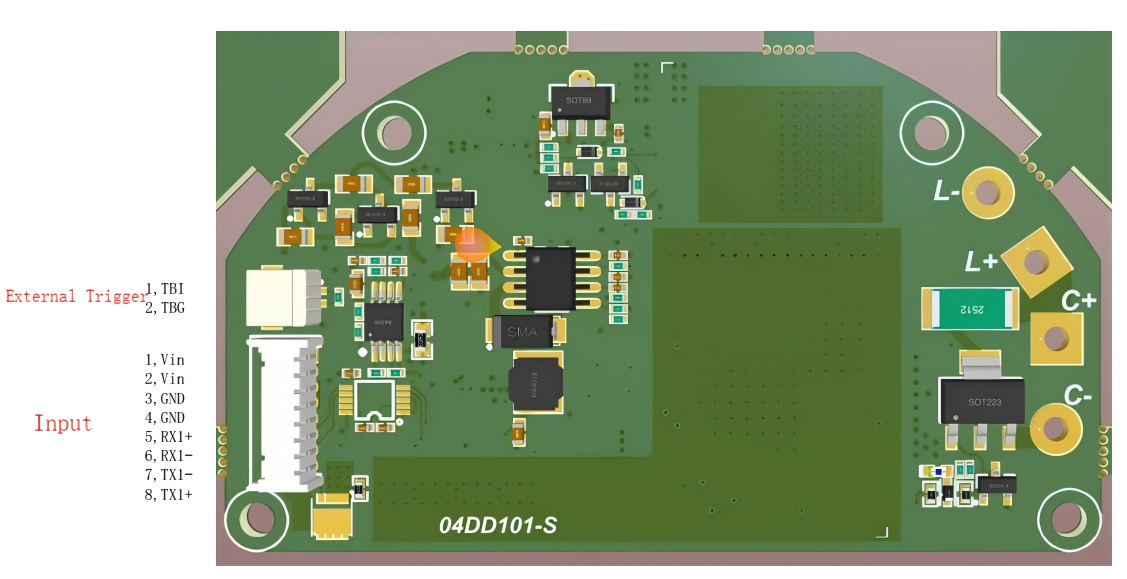
PIN INTERFACE
Communication Interface: RS422.
Connector model and interface definition:
Socket: MOLEX 53048-0810
Matching plug: MOLEX 51021-0800
| Pin No. | Signal Name | Description |
|
1 |
Vin |
Power supply +(24V) |
|
2 |
Vin |
Power supply +(24V) |
|
3 |
GND |
Power return (–) |
|
4 |
GND |
Power return (–) |
|
5 |
RX1+ |
Host Computer -> Laser Range & Illumination Unit (422-RX+) |
|
6 |
RX1- |
Host Computer -> Laser Range & Illumination Unit (422-RX-) |
|
7 |
TX1- |
Laser Range & Illumination Unit -> Host Computer (422-TX-) |
|
8 |
TX1+ |
Laser Range & Illumination Unit -> Host Computer (422-TX+) |
|
External Trigger |
||
|
1 |
TBI |
External Trigger + (Rising edge trigger) |
|
2 |
TBG |
External Trigger - |
Product Description
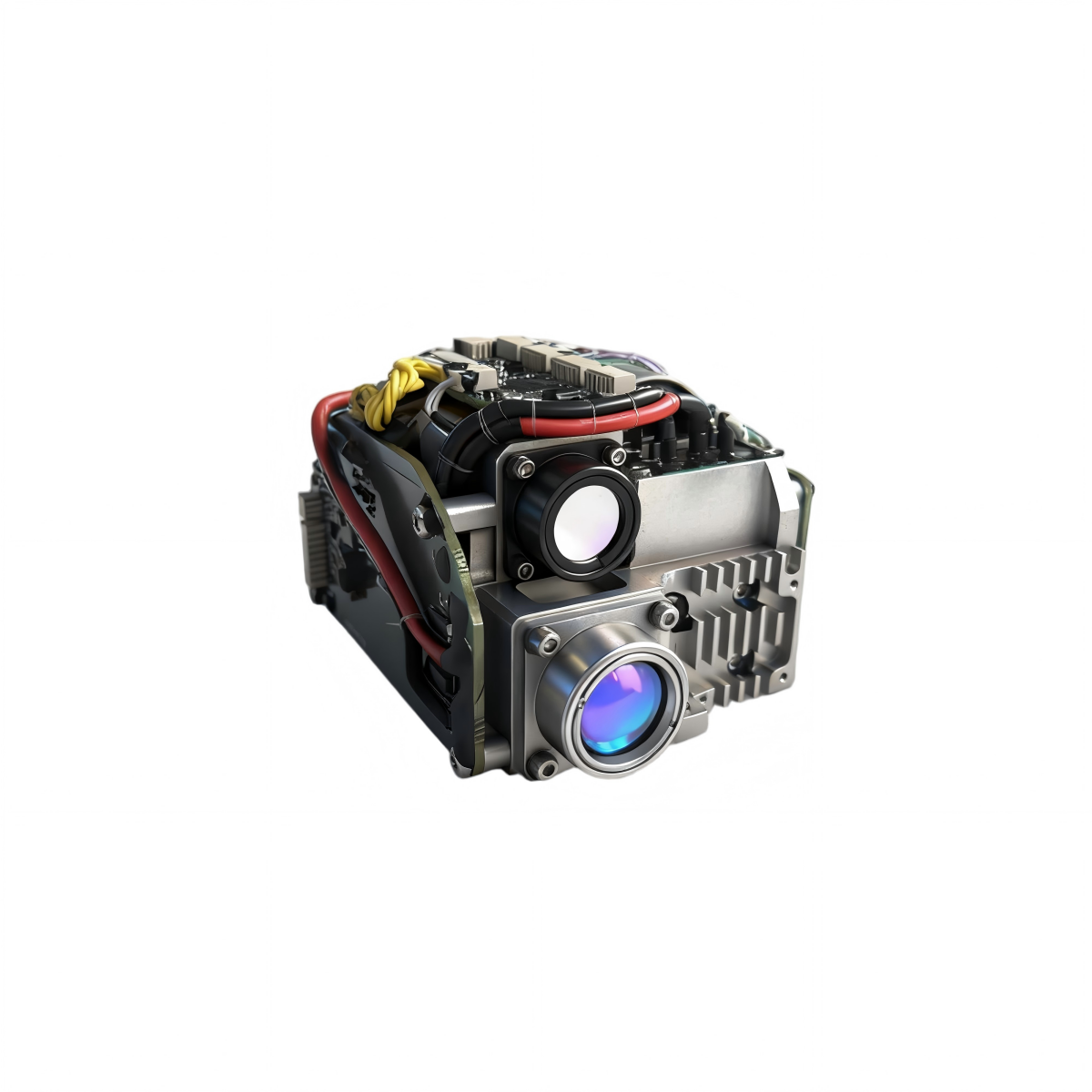
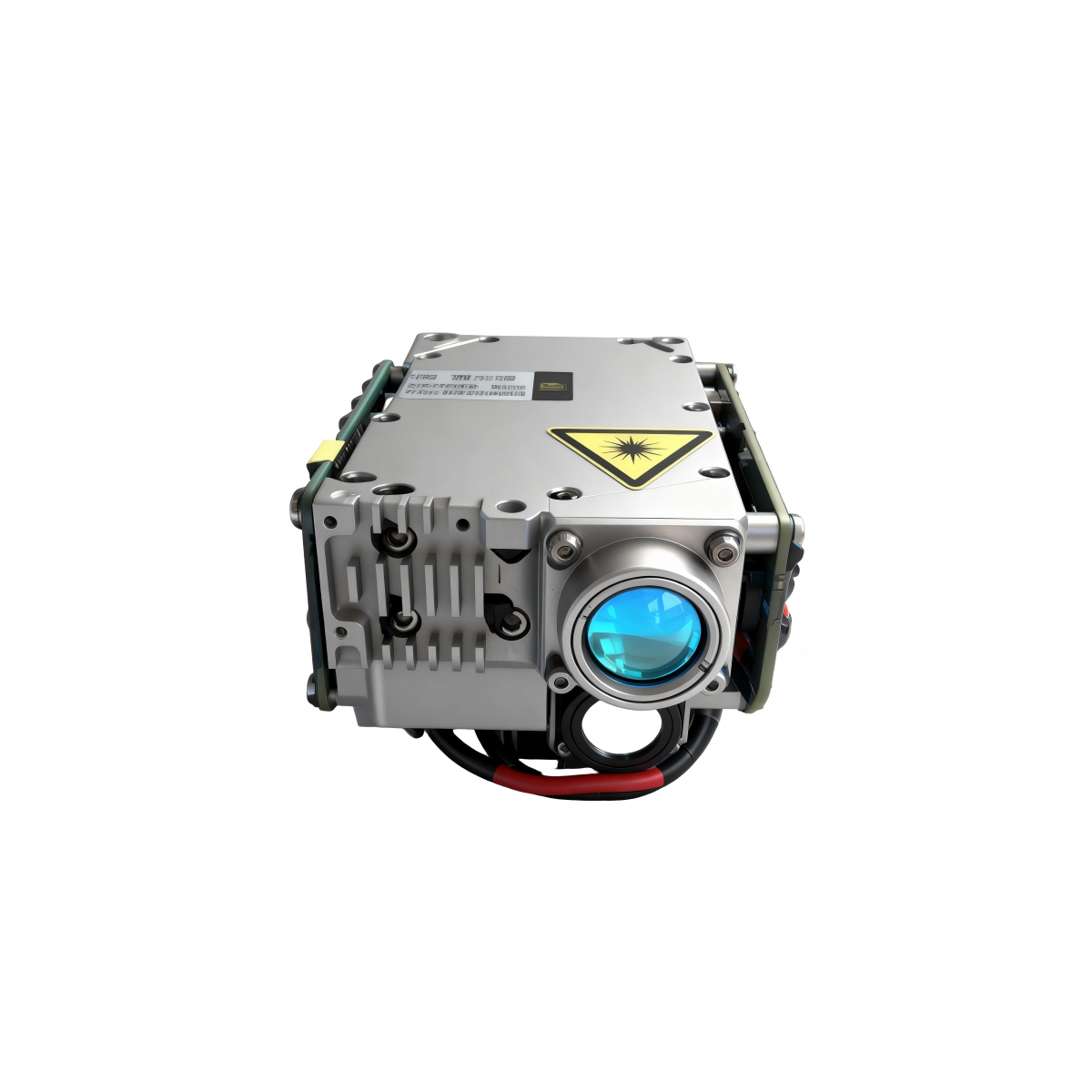
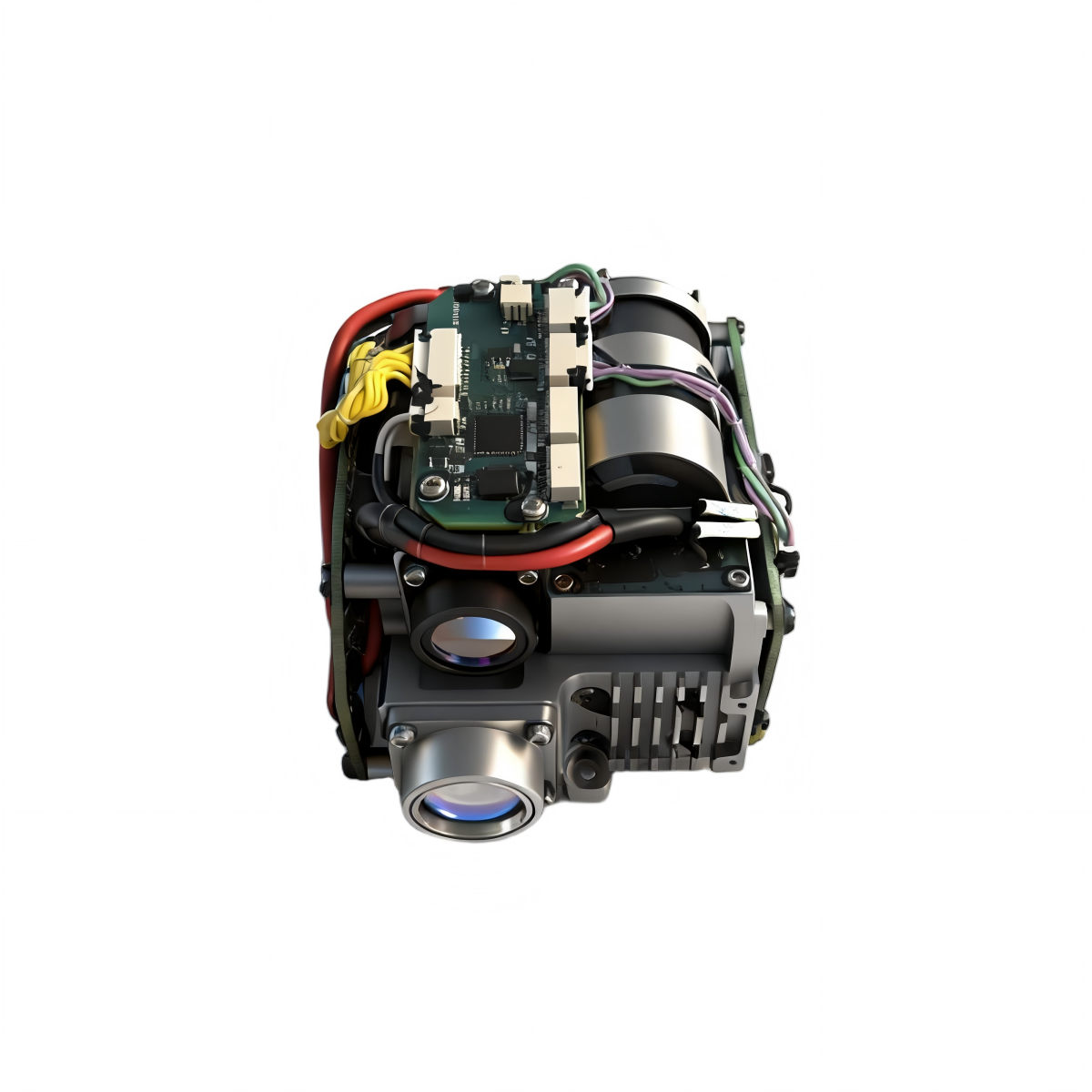
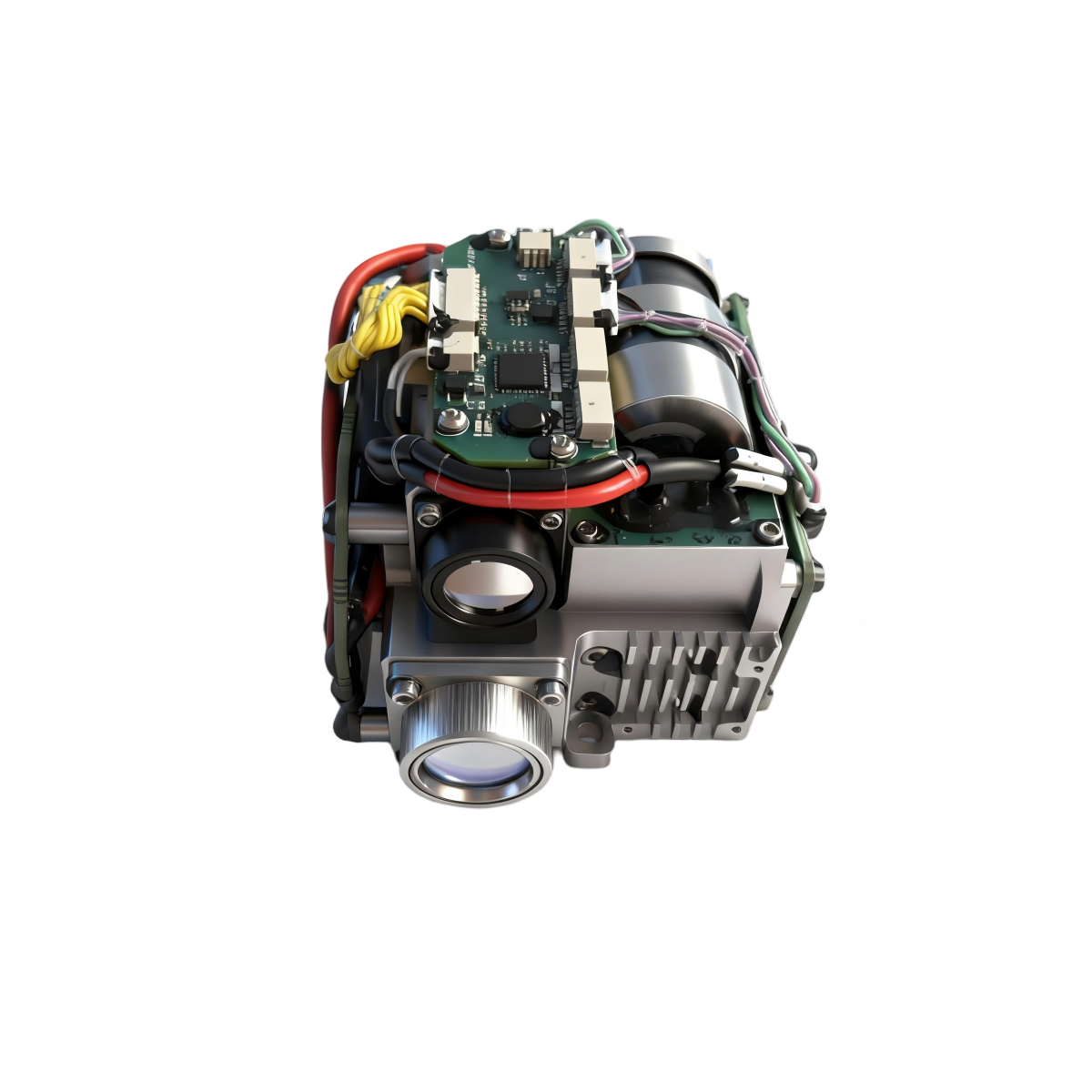
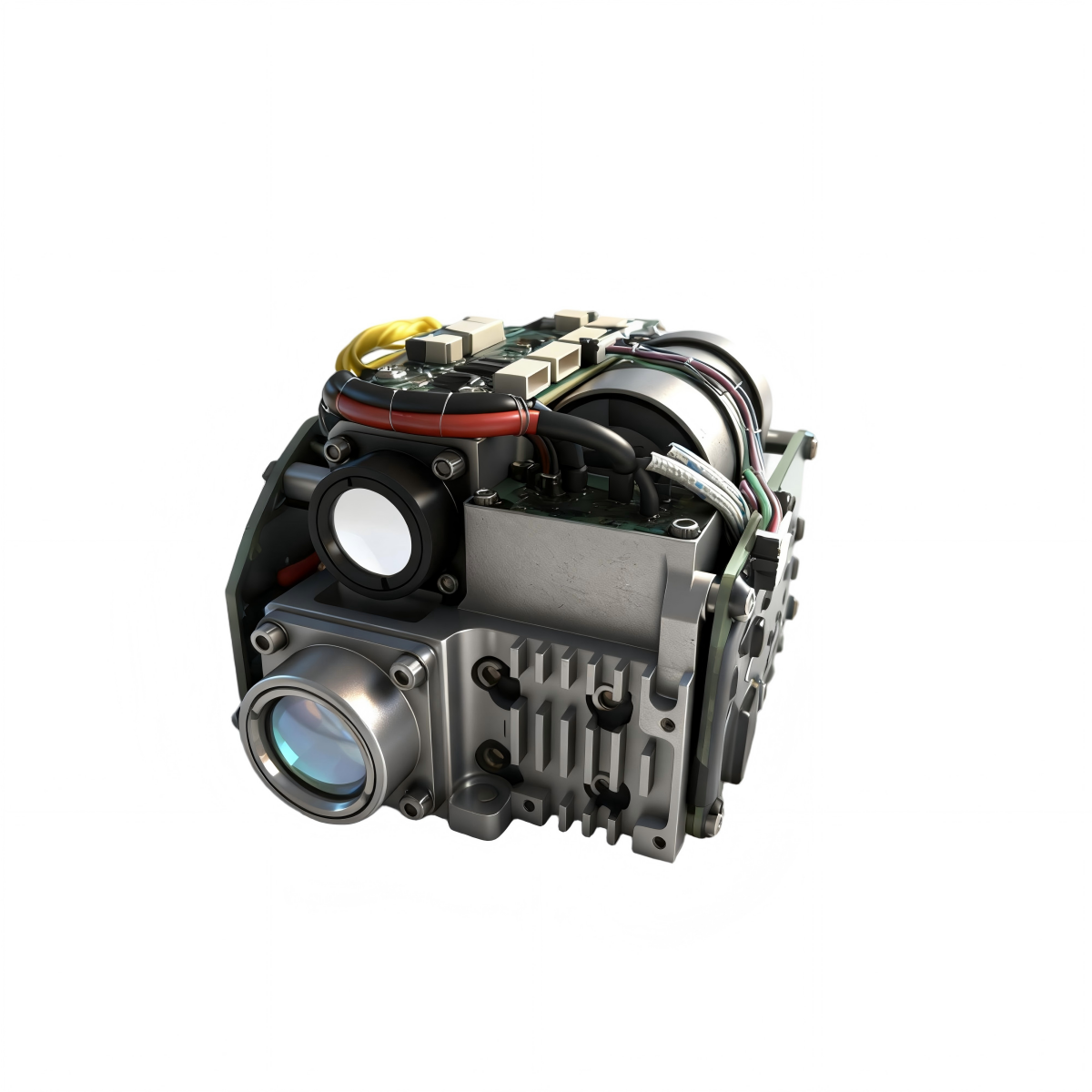
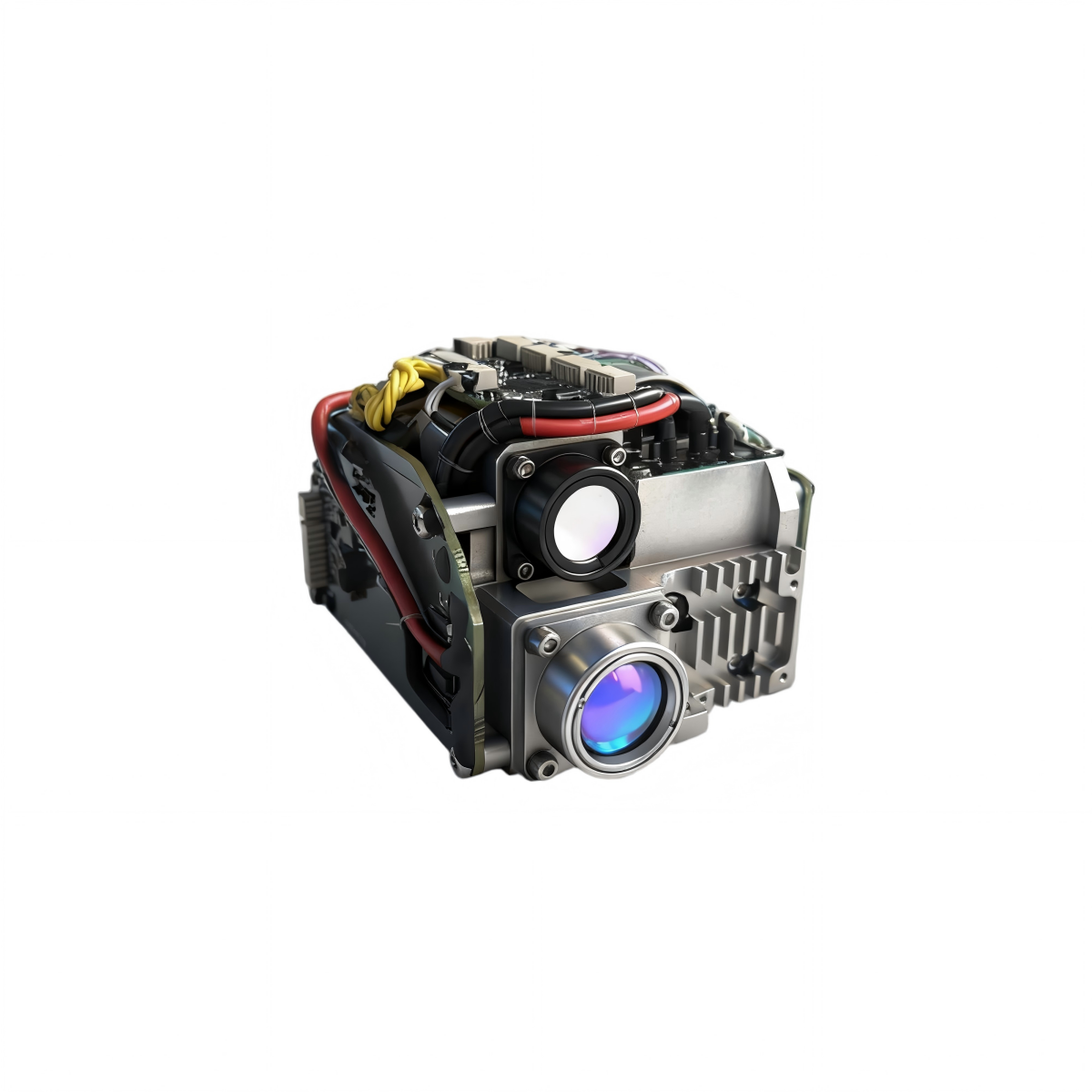
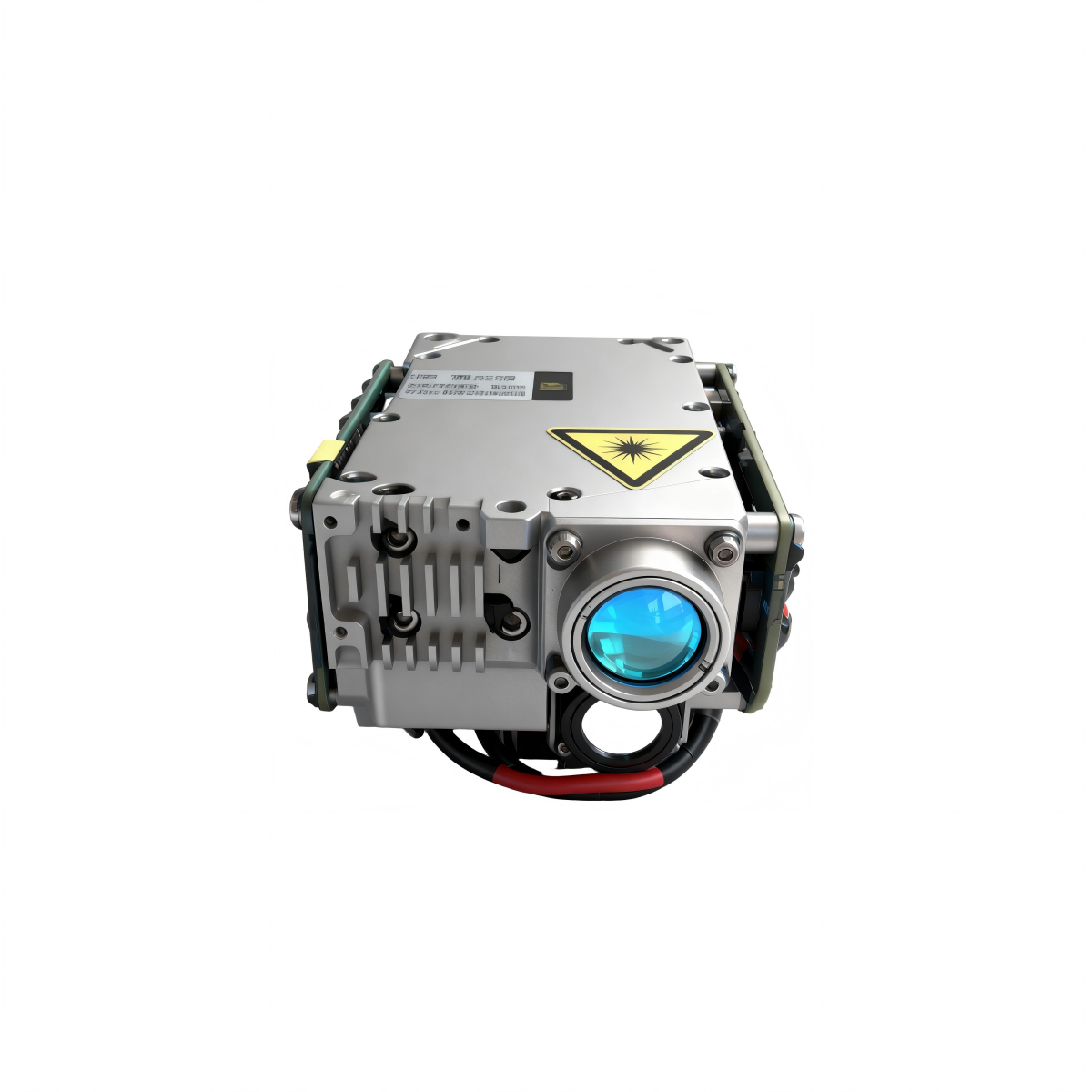
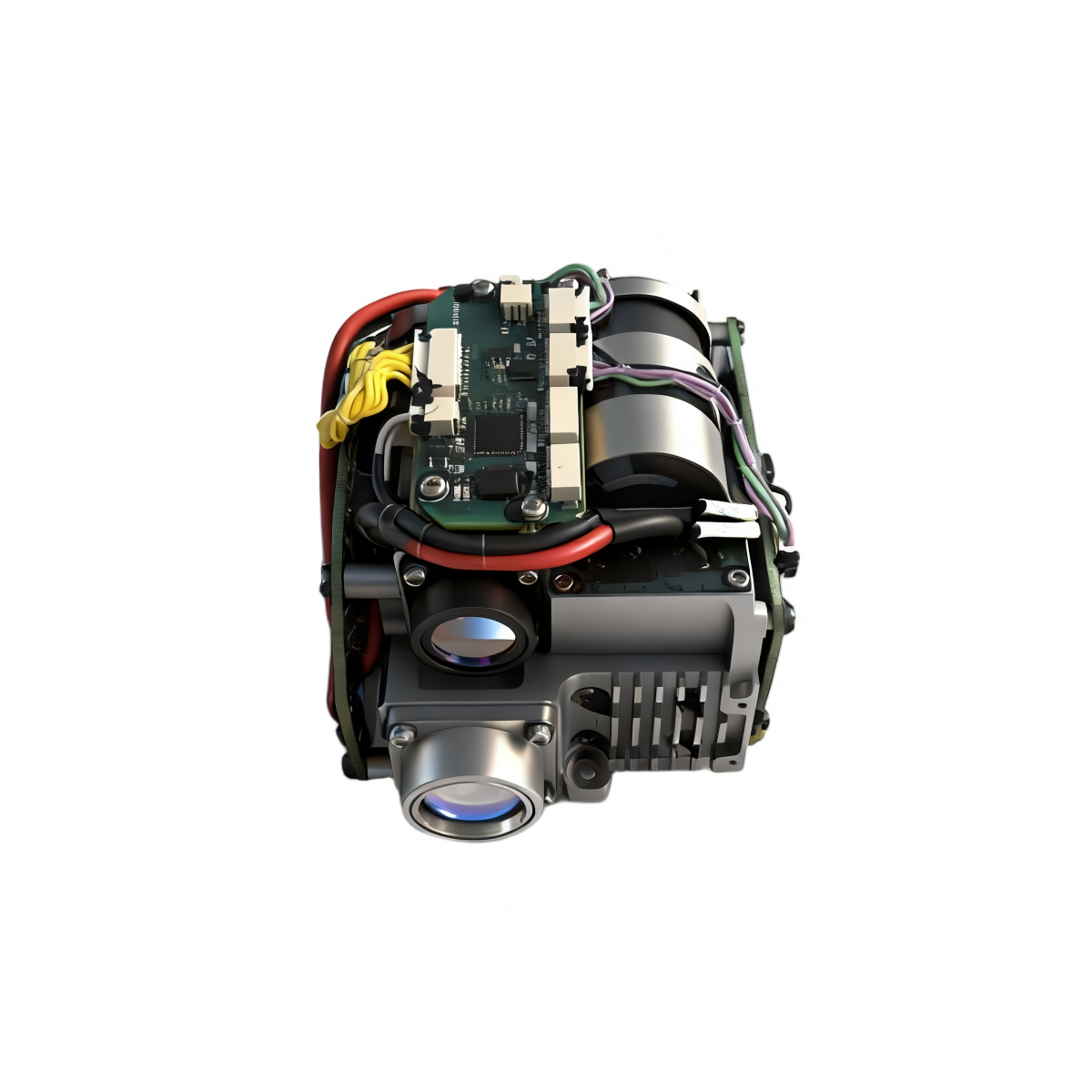
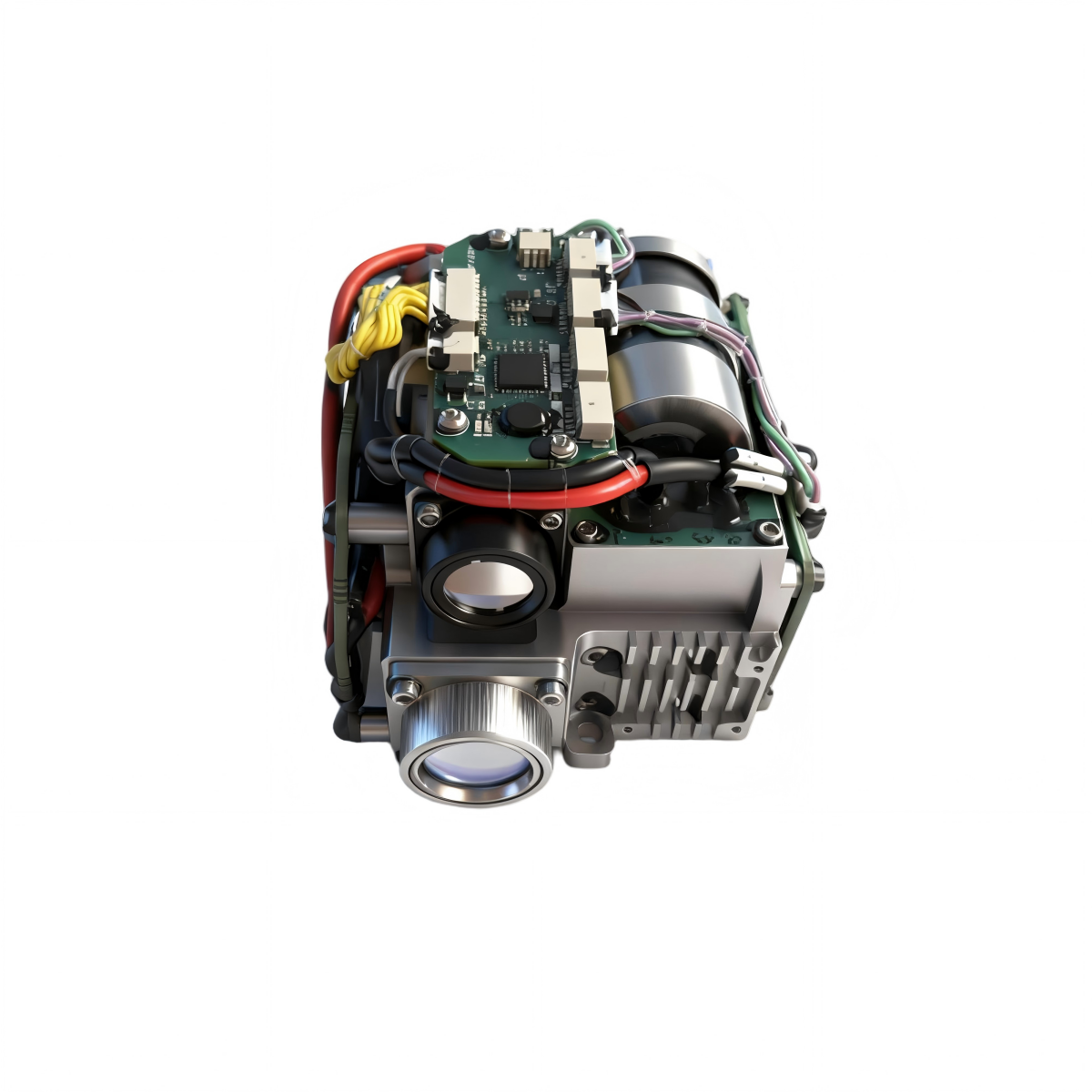
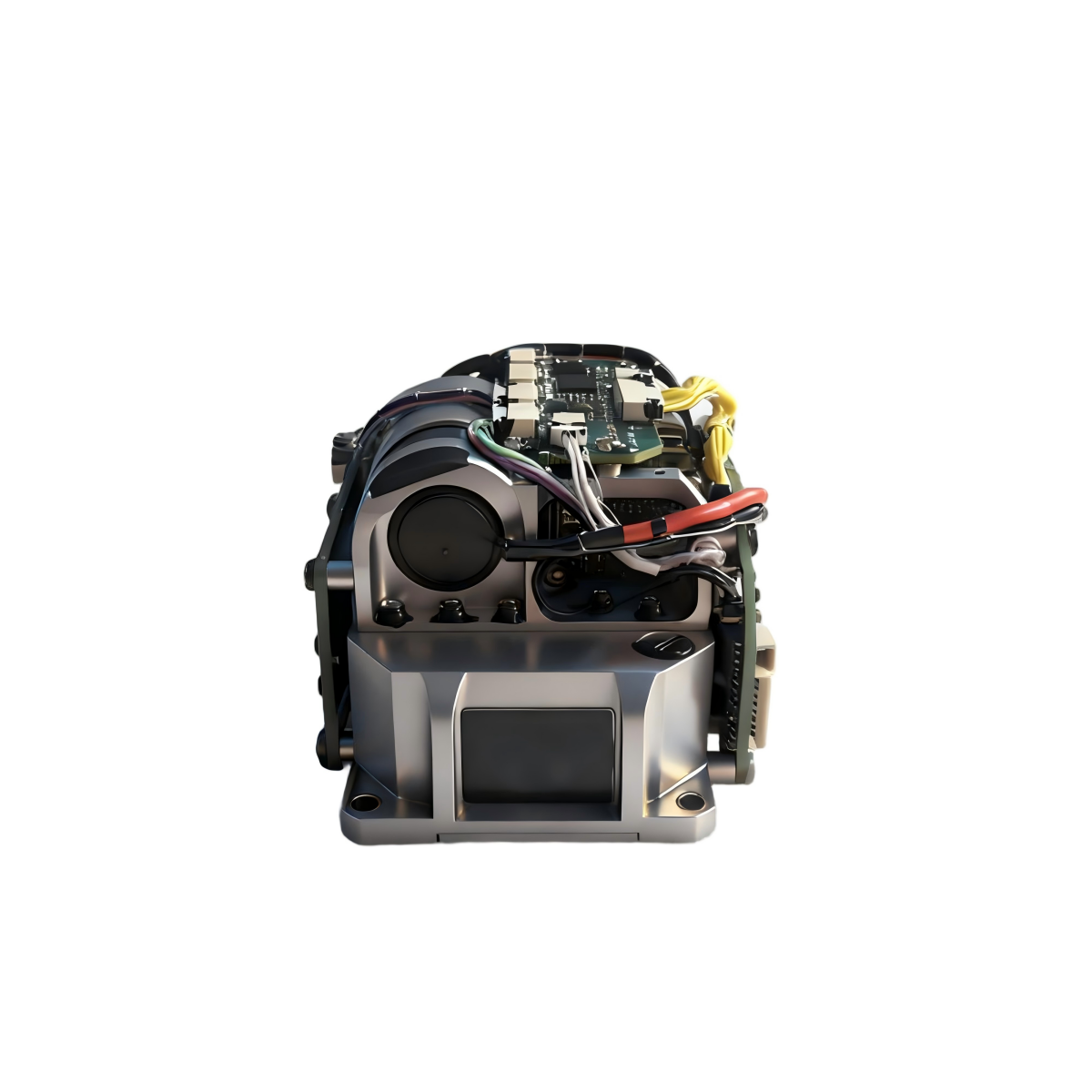
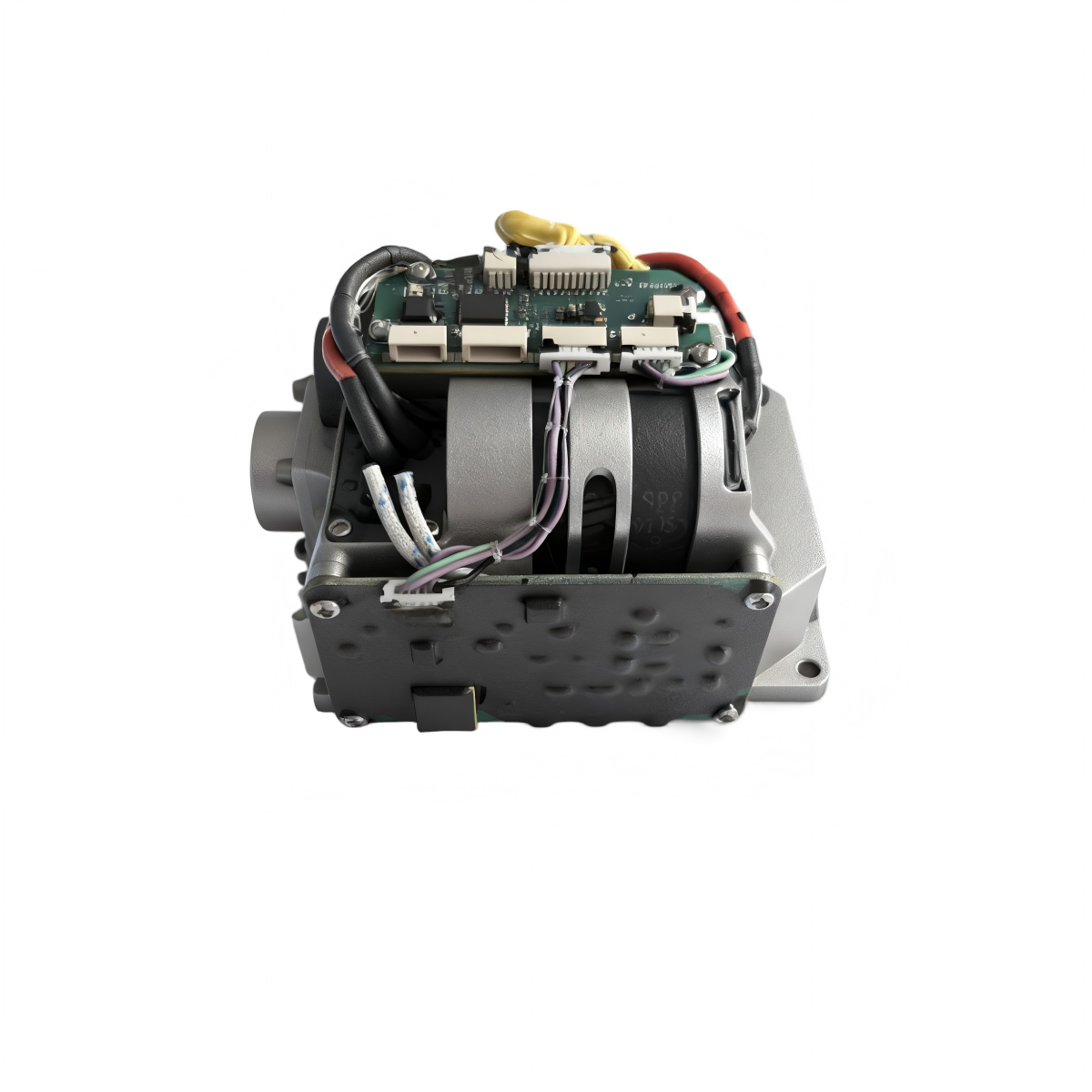
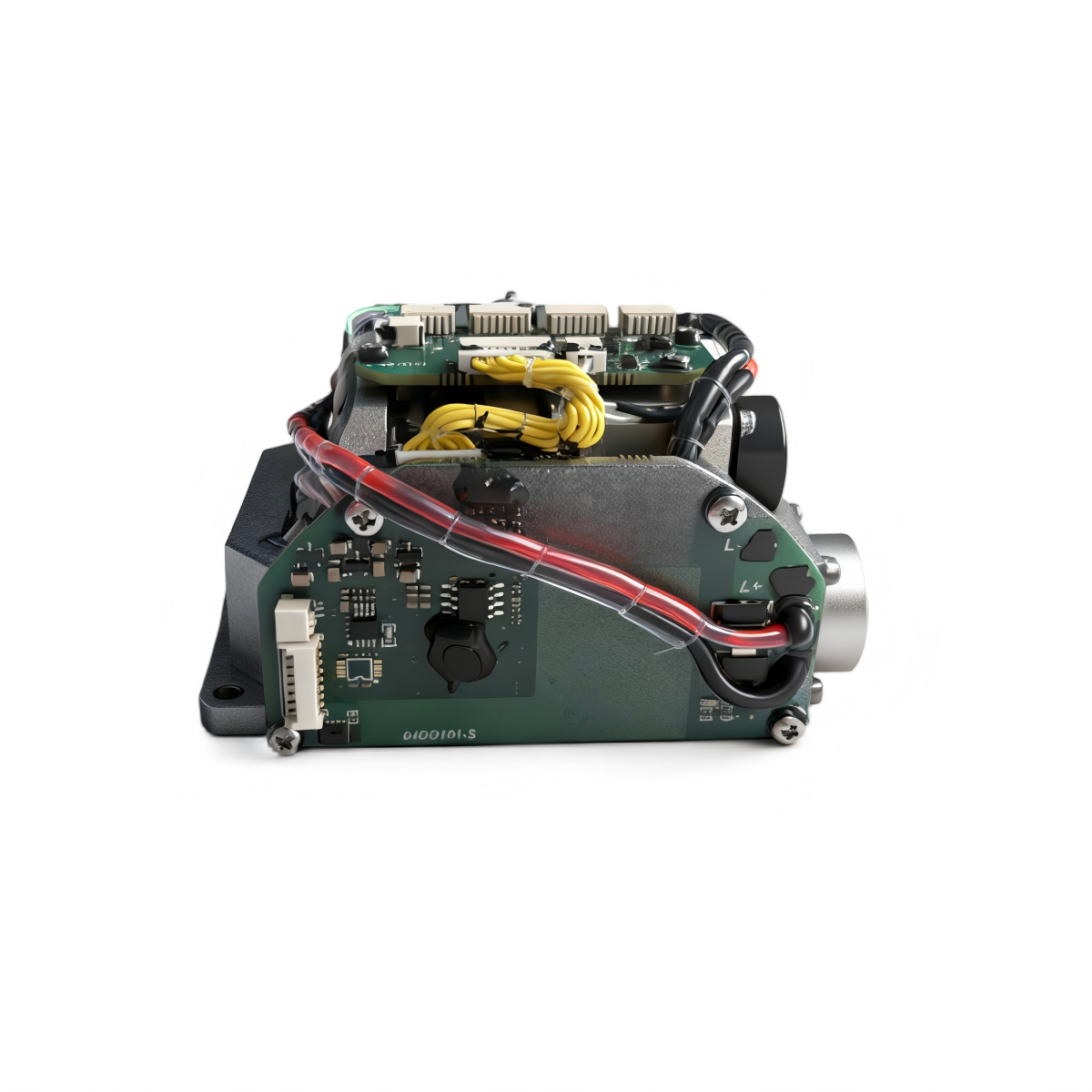
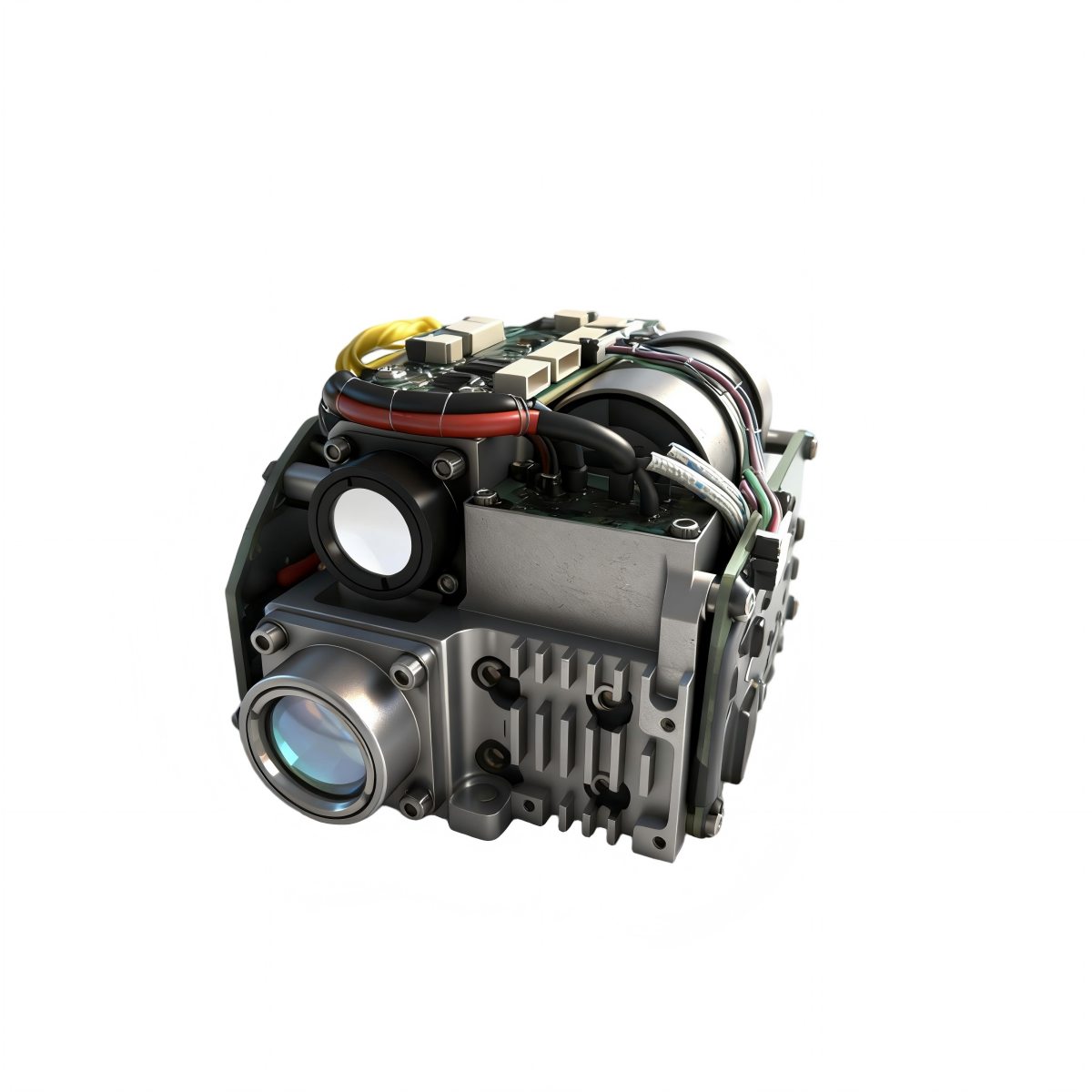
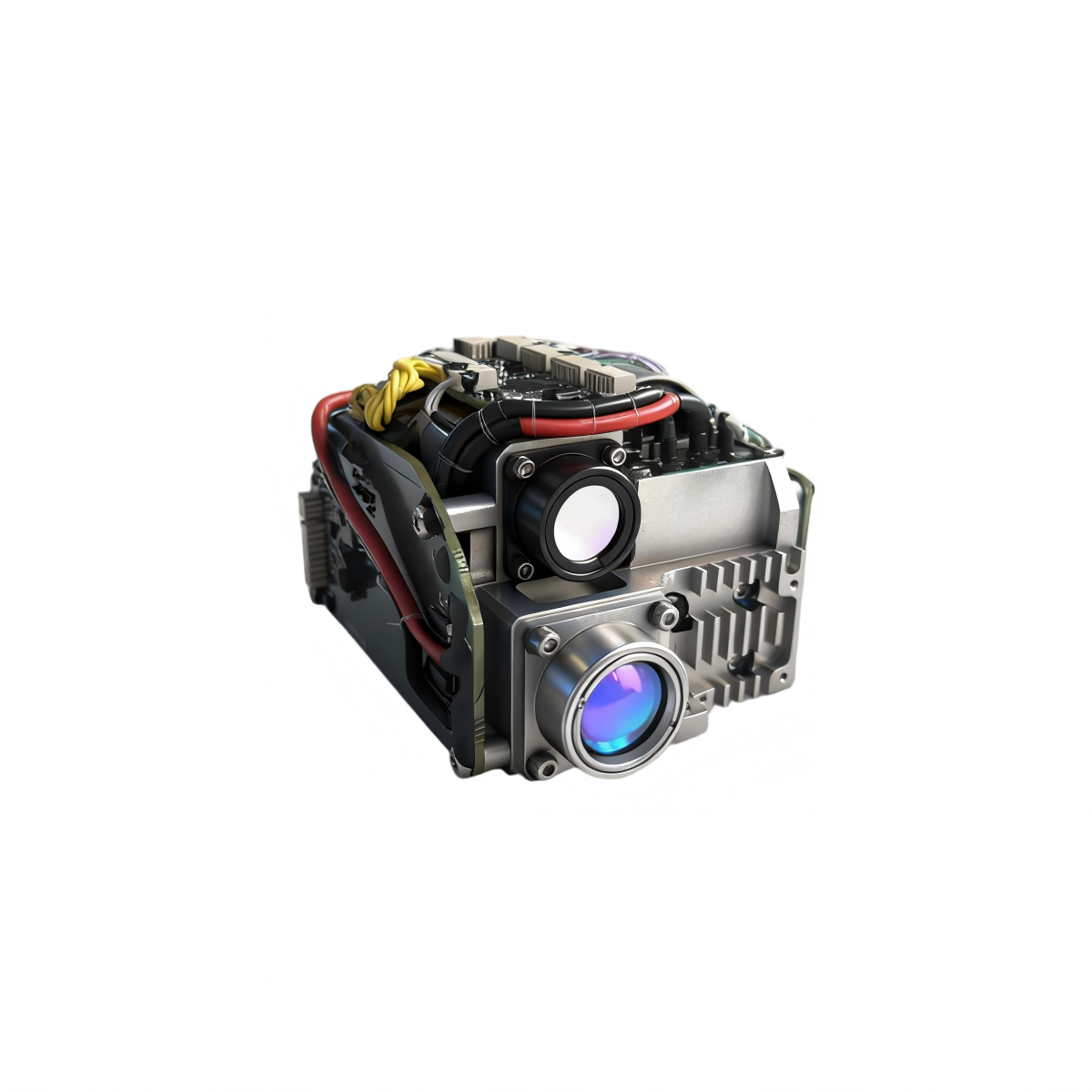
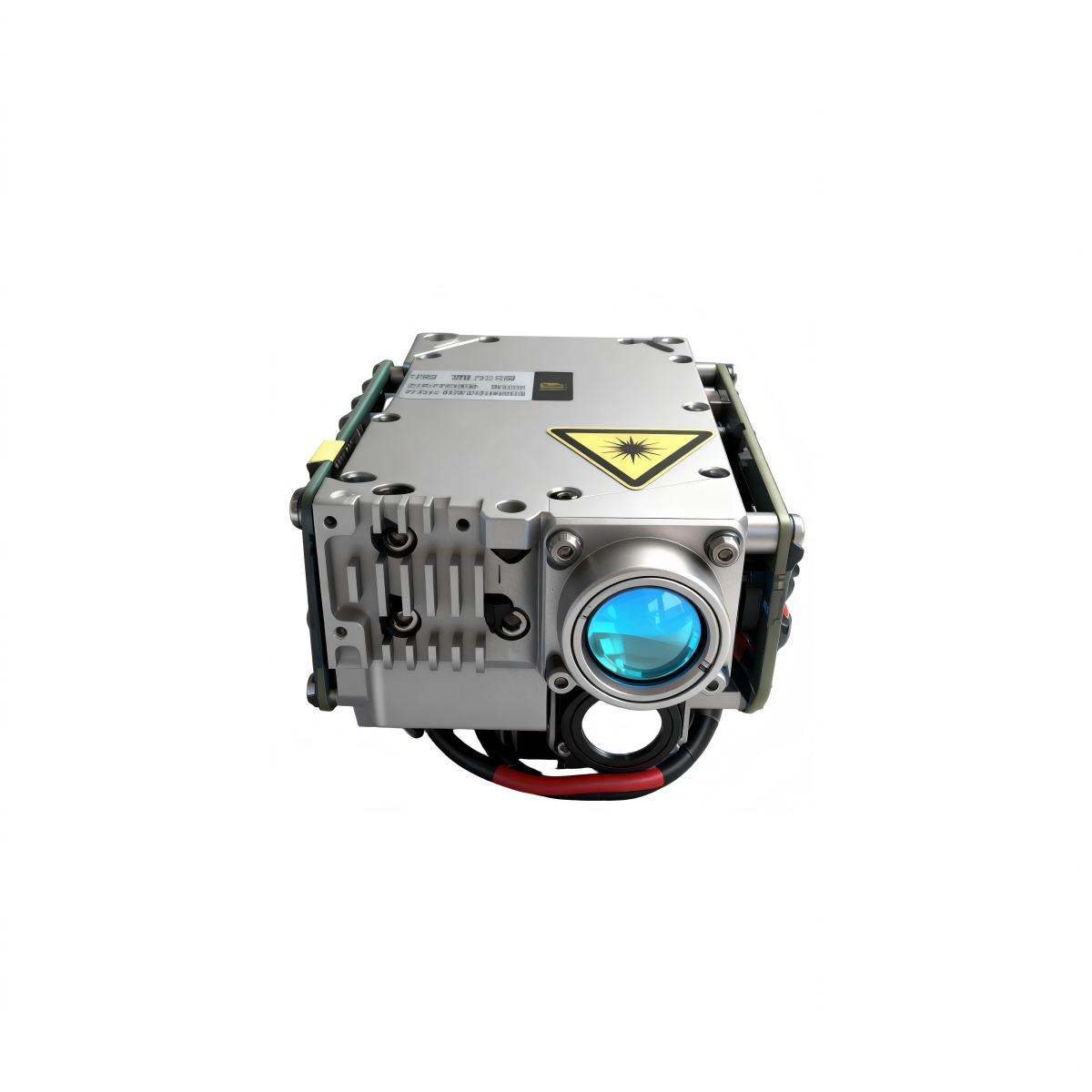
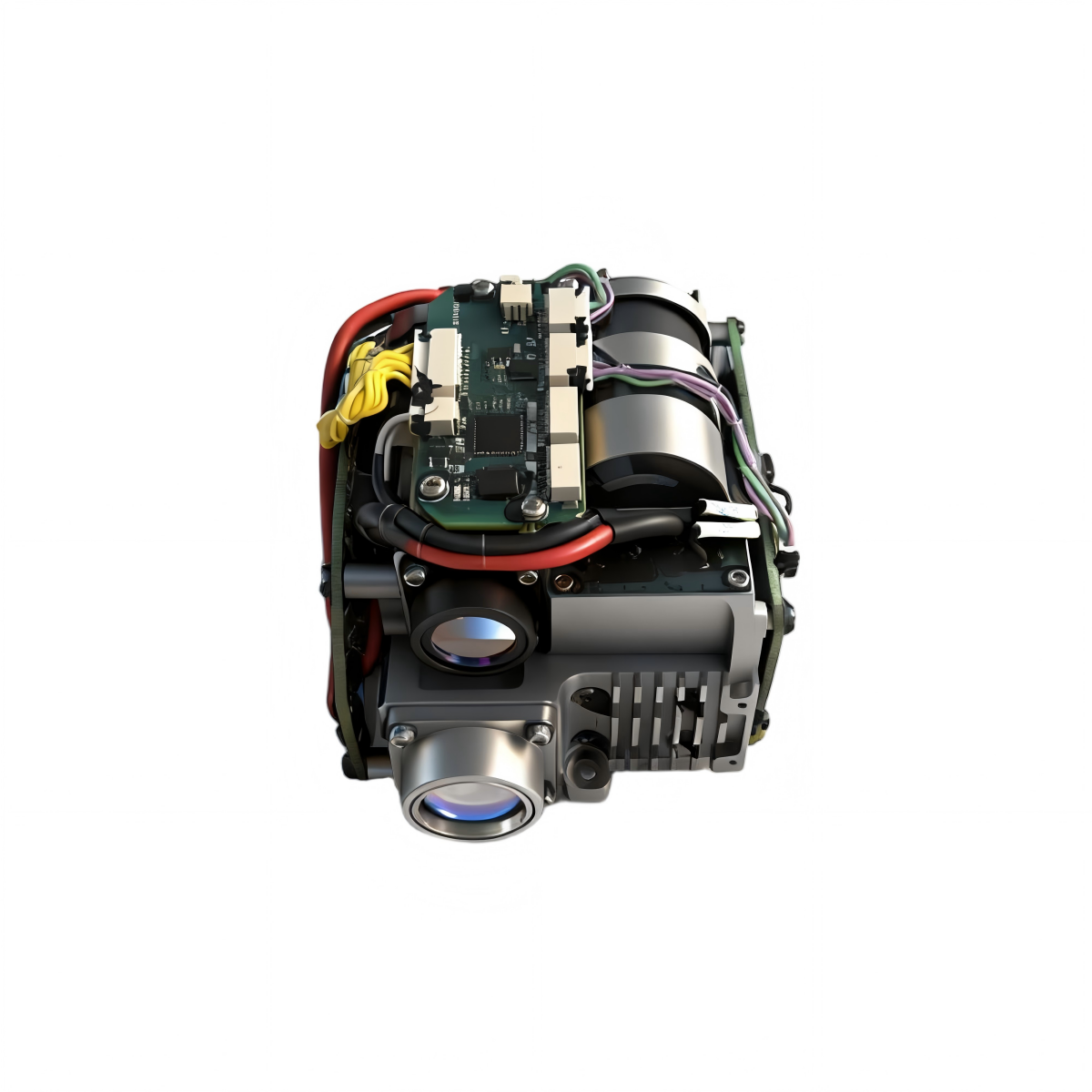
LDR20K1 20 mJ 1064 nm Laser Rangefinder & Target Designator
The LDR20K1 is an ultra-compact and lightweight 20 mJ laser target designator module designed for small UAV gimbals and portable targeting and observation systems. It integrates high-precision 1064nm ranging and coded designation into a module weighing less than 290 g.
Despite its small size, the LDR20K1 offers a measurement range up to 3 km and precise frequency coding for laser-guided precision systems. Its RS-422 interface and rugged construction ensure reliable performance in airborne and mobile ground environments.
_1445x.png?w=1200&h=1200&q=80)
_1800x.png?w=1200&h=1200&q=80)