

What is laser?
Laser (Light Amplification by Stimulated Emission of Radiation), stands for “light amplification by stimulated emission of radiation”. It’s a bit of a mouthful and hard to understand, so let’s start by looking at the following diagram:
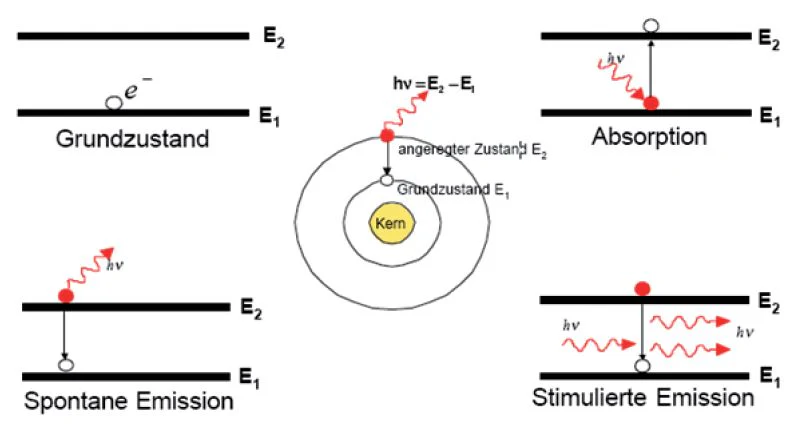
Spontaneous radiation refers to the process where an atom at a higher energy level spontaneously transitions to a lower energy level, emitting a photon in the process. In layman’s terms, it can be understood as follows: imagine a ball at its most stable position on the ground. When this ball is pushed into the air by an external force (known as pumping), and the moment the external force disappears, the ball falls from the air and releases a certain amount of energy. If this ball represents a specific atom, then during its transition, the atom will emit a photon of a specific wavelength.
The Birth of the Laser Device
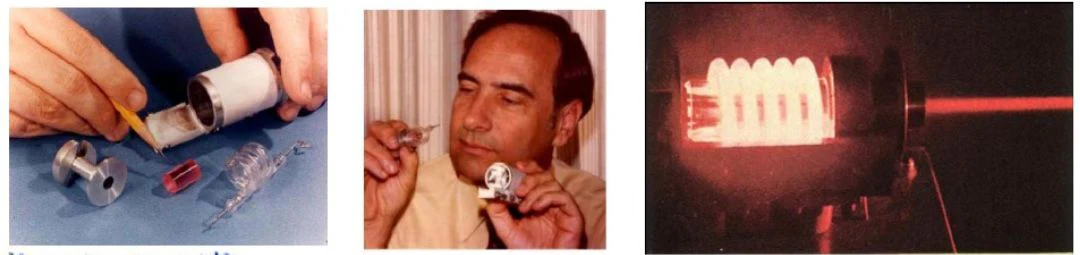
In 1960, Theodore Maiman of Hughes Research Laboratories in the United States developed the first ruby laser, emitting red laser light at 694.3nm, which is widely recognized as the world’s first laser device.
The laser wavelength emitted by Maiman’s laser device was 694.3nm, which falls within the visible light spectrum, hence the visible red color of the laser beam. In subsequent research and development, scientists invented lasers with different wavelengths. Currently, the most common laser wavelength is 1064nm, which falls outside the visible light spectrum and is therefore not visible to the human eye.
Classification of Lasers
After grasping the principle of laser generation, people began to develop different forms of lasers. If classified according to the laser working medium, they can be divided into gas lasers, solid-state lasers, semiconductor lasers, etc.
- Classification of gas lasers includes atomic, molecular, and ionic lasers. The working medium of gas lasers is gas or metal vapor, characterized by a wide range of laser output wavelengths. The most common type is the CO2 laser, where CO2 serves as the working medium and generates 10.6um infrared laser through electrical discharge excitation.
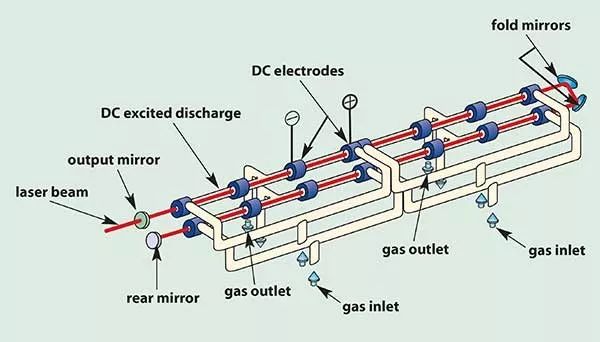
Due to the bulky size of gas lasers resulting from their gaseous working medium, and the long wavelengths they emit, which are not ideal for material processing, gas lasers were quickly phased out of the market. They are now only used in specific areas, such as laser marking on certain plastic parts.
- Classification of solid-state lasers: ruby, Nd:YAG, etc.
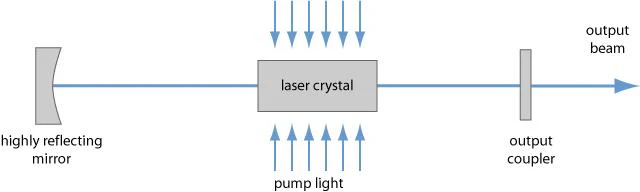
Solid-state lasers use materials like ruby, neodymium-doped glass, and yttrium aluminum garnet (YAG) as their active medium. These lasers are created by uniformly doping a small amount of ions, known as activator ions, into the crystal or glass matrix of the host material. Solid-state lasers consist of an active medium, a pumping system, a resonant cavity, and cooling and filtering systems.
In the image below, the black square in the middle represents the laser crystal, which appears to be a light-colored transparent piece of glass. It is composed of a transparent crystal doped with rare-earth metals. It is the unique atomic structure of these rare-earth metals that allows for population inversion (imagine many balls on the ground being pushed into the air) when exposed to light. When the particles undergo transition and emit photons, and when there are enough photons, laser light is formed. To ensure that the emitted laser light is directed in one direction, a total reflection mirror (left lens) and a semi-reflective output mirror (right lens) are used. After the laser light is emitted, it undergoes certain optical designs to form laser energy.
The following image depicts a typical YAG fiber-optic laser transmission device. In the picture, the gray part is the laser crystal rod doped with Nd ions. It is irradiated by a red xenon lamp to generate laser light. After the laser is coupled into the fiber for transmission, it reaches the surface of the workpiece.

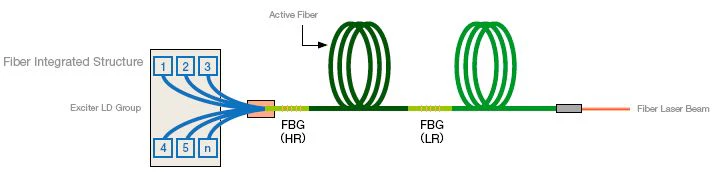
Due to the certain amount of wear and tear on the xenon lamp that emits laser light, similar to how fluorescent lights at home can break down after a period of use, improvements have been made to the laser illuminated by fluorescent lights. If the fluorescent lamp is replaced with a semiconductor that emits photons through internal electron transitions, the lifespan of the laser will be significantly extended. Improvements to the YAG solid-state laser have been made in two aspects: on the one hand, the xenon lamp (consumable) that excites the laser has been replaced with a semiconductor (photodiode); on the other hand, the laser crystal rod has been modified to directly dope rare earth ions into the fiber. As a result, a bulky solid-state laser has been integrated into a small laser generator. After integration, this type of laser is called a fiber laser.
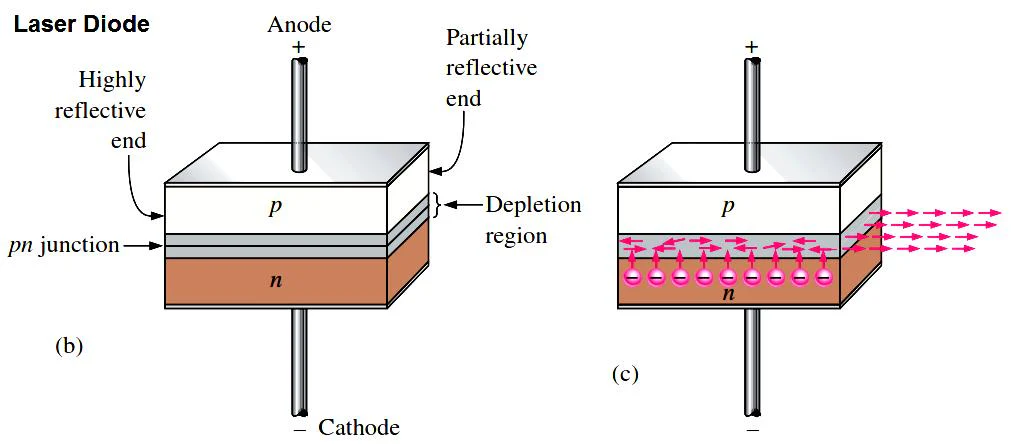
When it comes to semiconductor lasers, they can be simply understood as a photodiode. Inside the diode, there is a PN junction. When a certain current is applied, electron transitions occur within the semiconductor, releasing photons and thus generating laser light.
When the laser energy released by the semiconductor is relatively small, low-power semiconductor devices can be used as the pump source (excitation source) for fiber lasers, thus forming a fiber laser.
If the power of the semiconductor laser is further increased to a level where it can be directly output to process materials, it becomes a direct semiconductor laser. Currently, direct semiconductor lasers on the market have reached the 10,000-watt level.

The main industrial applications of lasers include laser cutting, laser marking, and laser welding.
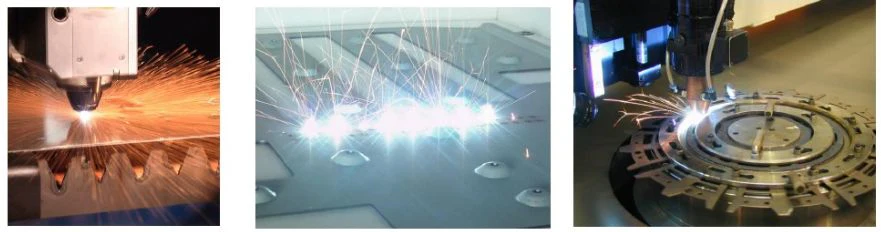
The working principle of lasers is to focus the output laser beam through a focusing lens and direct it onto the surface of the workpiece. The high temperature of the laser melts or vaporizes the workpiece. Once the surface of the workpiece melts, laser welding can be achieved.


The Principle of Laser Rangefinders
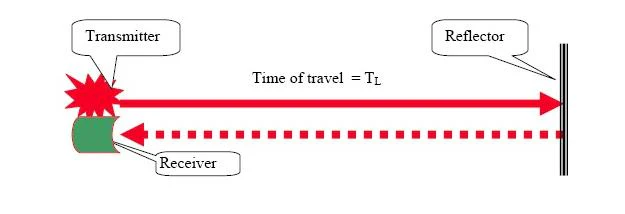
If a laser rangefinder is made directly into a handheld device, it would look like this. One window is for the laser emitter, and the other is for the laser receiver. The distance to the object being measured is calculated based on the time between emission and reception.
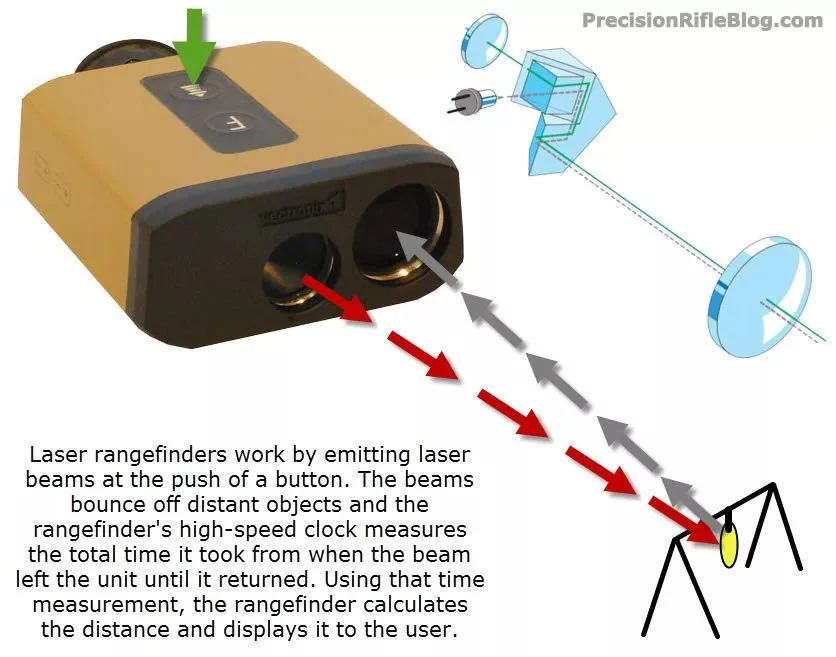
Diode Laser Rangefinder Module
People hunt with handheld laser rangefinders, and the laser emission from objects is as follows:
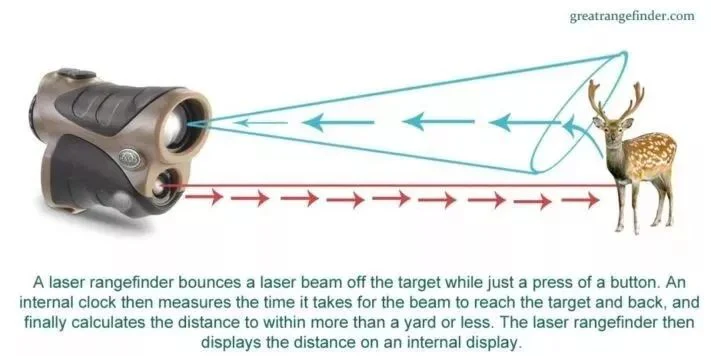
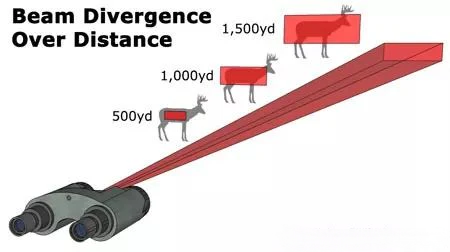
The laser divergence factor has a significant impact on the accuracy of laser rangefinders. What is a divergence factor? For example, consider a flashlight held by one person and a laser pointer held by another. The laser pointer has a greater illumination distance than the flashlight because the flashlight beam diverges more. The measure of how much the beam diverges is called the divergence factor. Laser light is theoretically collimated, but when the working distance is relatively far, there is still some beam divergence. Reducing the divergence angle of the beam and controlling the degree of laser divergence are ways to improve the accuracy of laser rangefinders. The image below shows laser beams illuminating animals at different distances.
What are the applications of laser rangefinders?
Development Direction of Laser Rangefinders

| LRF Specs | LRF0308C | LRF0612C | LRF0815C | LRF1017C | LRF1221C | LRF1830C | |
| Extended Range (km) | 4.2 | 7.1 | 20 | 20 | 25 | 30 | |
| Range to NATO Vehicle
(2.3 × 2.3m) |
Single Measurement (km) | 3.5 | 6 | 8 | 10 | 12 | 18 |
| Continuous (10Hz) (km) | 3.5 | 6 | 8 | 10 | 12 | 18 | |
| Human (.5 x 1.8m) single Measurement (nm) | 2 | 3.8 | 4 | 5 | 6 | 9 | |
| Human (.5 x 1.8m) continous (10Hz) (nm) | 2 | 3.8 | 4 | 5 | 6 | 9 | |
| Wavelength (nm) | 1535±1 | 1535±1 | 1535±5 | 1535±5 | 1535±5 | 1535±5 | |
| Single Measurement Time(s) | ≤0.03 | ≤0.03 | ≤0.5 | ≤0.5 | ≤0.5 | ≤0.5 | |
| Continuous Measurement(1, 4, 10, 20, 100, 200, 500 Hz) | 1~10(Adjustable) | 1~10(Adjustable) | 1~10(Adjustable) | 1~10(Adjustable) | 1~10(Adjustable) | 1~10(Adjustable) | |
| Precision (cm) | ±100 | ±100 | 200 | 200 | 200 | 200 | |
| False Detection Rate (%) | ≤1% | ≤1% | ≤1% | ≤1% | ≤1% | ≤1% | |
| Beam Divergence (Hrz × Vrt) (mrad) | ~0.6 | ~0.3 | ≤0.35 | ≤0.35 | ≤0.3 | ≤0.3 | |
| Target Distinction (m) | 20 | 50 | 30 | 30 | 30 | 30 | |
| Range Gating Resolution (m) | 1 | 1 | 0.1 | 0.1 | 0.1 | 0.1 | |
| Alignment Laser (yes/no) | Yes | Yes | Yes | Yes | Yes | Yes | |
| Laser Class | Class1 | Class1 | Class1 | Class1 | Class1 | Class1 | |
| Power Consumption (W) | ≤2w | ≤4w | 2W | 2W | 2.5W | 3W | |
| Lifetime MTBF with assumtions | ≥1500h | ≥1500h | 1×10⁶Number of launches | 1×10⁶Number of launches | 1×10⁶Number of launches | 1×10⁶Number of launches | |
| Serial Interface | Uart(TTL_3.3V) | Uart(TTL_3.3V) | 422/TTL | 422/TTL | 422/TTL | 422/TTL | |
| Operating Temperature | -40~70℃ | -40~70℃ | -40℃-+65℃ | -40℃-+65℃ | -40℃-+65℃ | -40℃-+65℃ | |
| Dimensions (mm) | ≤48×31×25 | ≤65×48×32 | ≤80×64×42 | ≤107×62×72 | ≤115×60×62 | ≤125×100×70 | |
| Weight (g) | ≤32±1 | ≤58±1 | ≤180 | ≤280 | ≤350 | ||