

Operating Instructions
-
Match the laser driver to the ER8000 laser.
The laser driver power supply must be properly matched to the laser.
The typical load voltage of the ER8000 is < 14 V, with an operating current of 100 A, pulse width < 4 ms, and a repetition rate of 5 Hz. For the exact operating parameters, please refer to the attached factory test report. The laser driver power supply must meet these requirements; otherwise, the laser may fail to operate properly or could be overloaded and permanently damaged. Therefore, before wiring, carefully check the laser specification sheet and confirm that the laser is compatible with the selected driver. -
Always disconnect power before wiring.
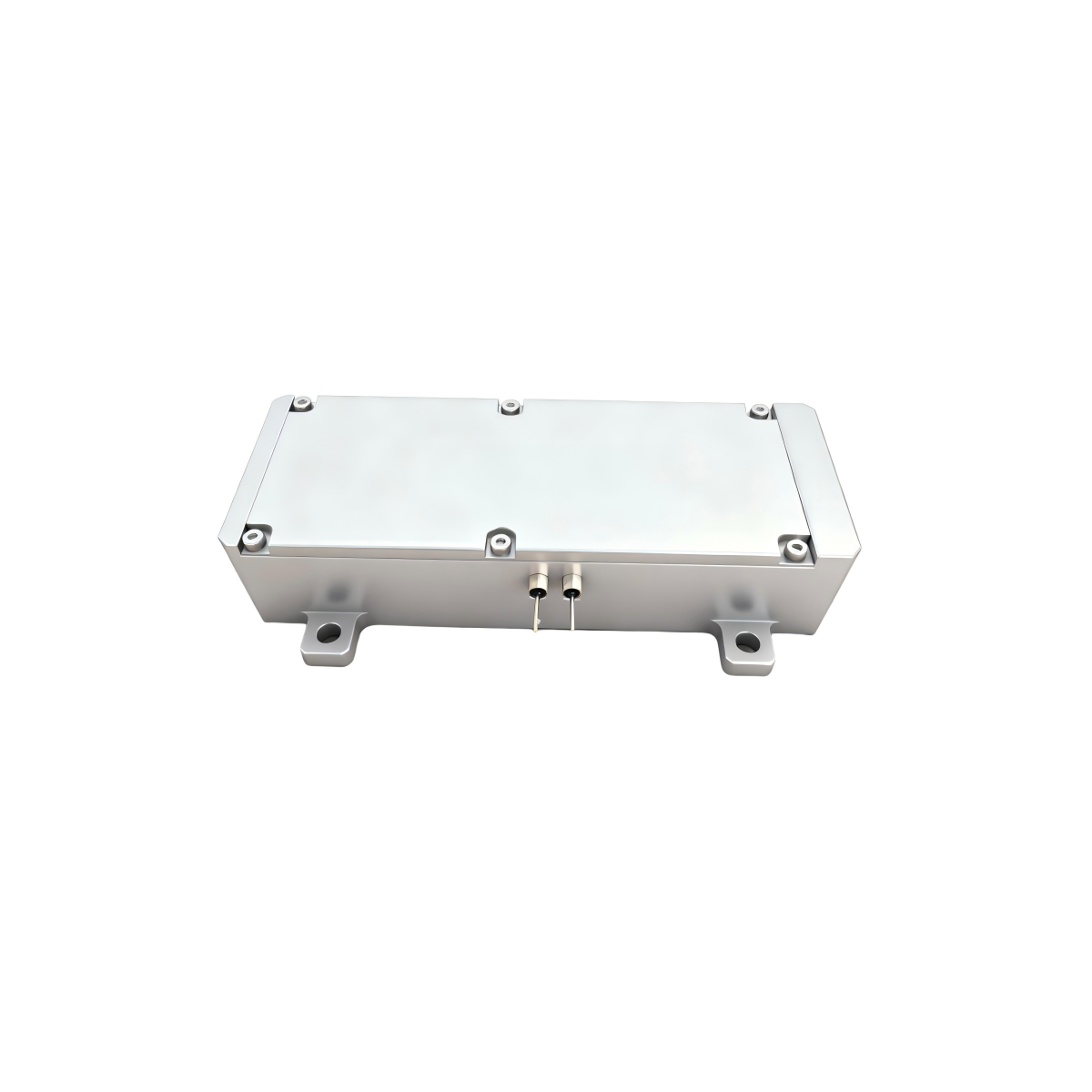
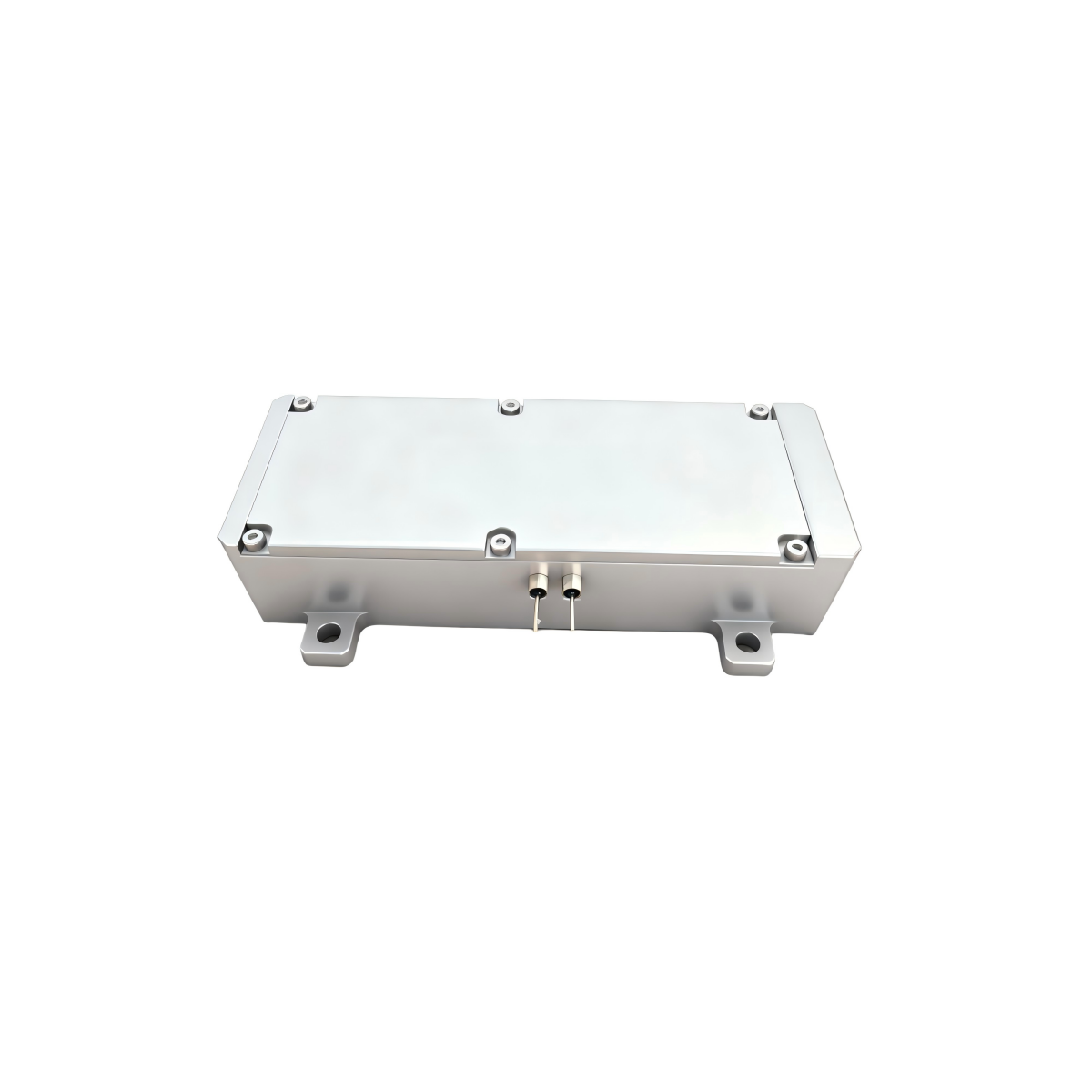
Before making any connections, make sure the power is switched off and completely isolated. During wiring, carefully check the positive and negative terminals of the laser and ensure correct polarity. After the wiring is completed, perform a thorough inspection to confirm that all connections are correct, in order to avoid short circuits, reverse polarity, and other faults. At the same time, make sure all terminals are firmly secured to prevent poor contact due to loose wiring. -
Set operating parameters according to the factory test report.
After confirming that the wiring is correct, set the corresponding parameters on the driver according to the attached factory test report. Once the parameters are correctly set, turn on the driver; the laser should then operate normally.
Product Description
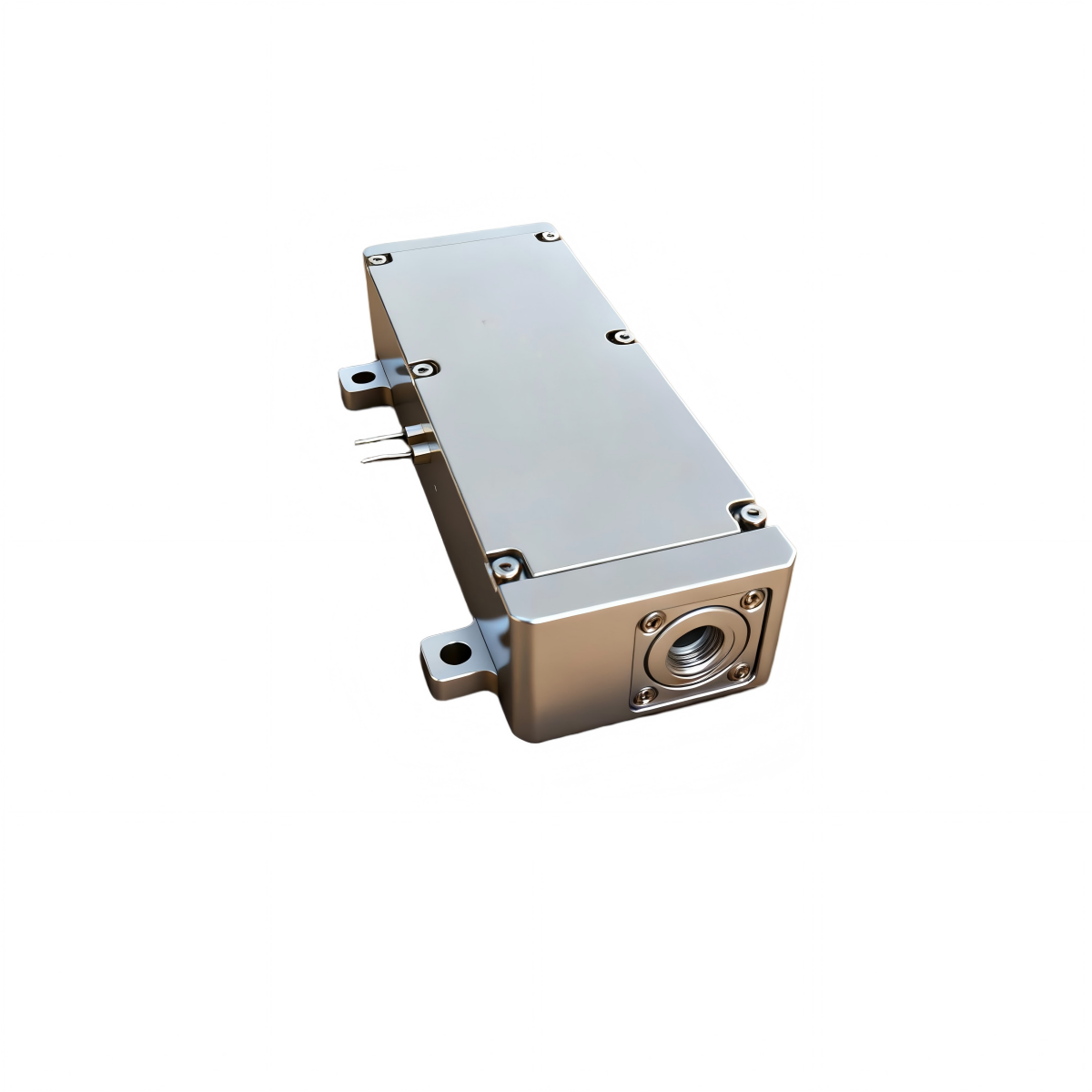
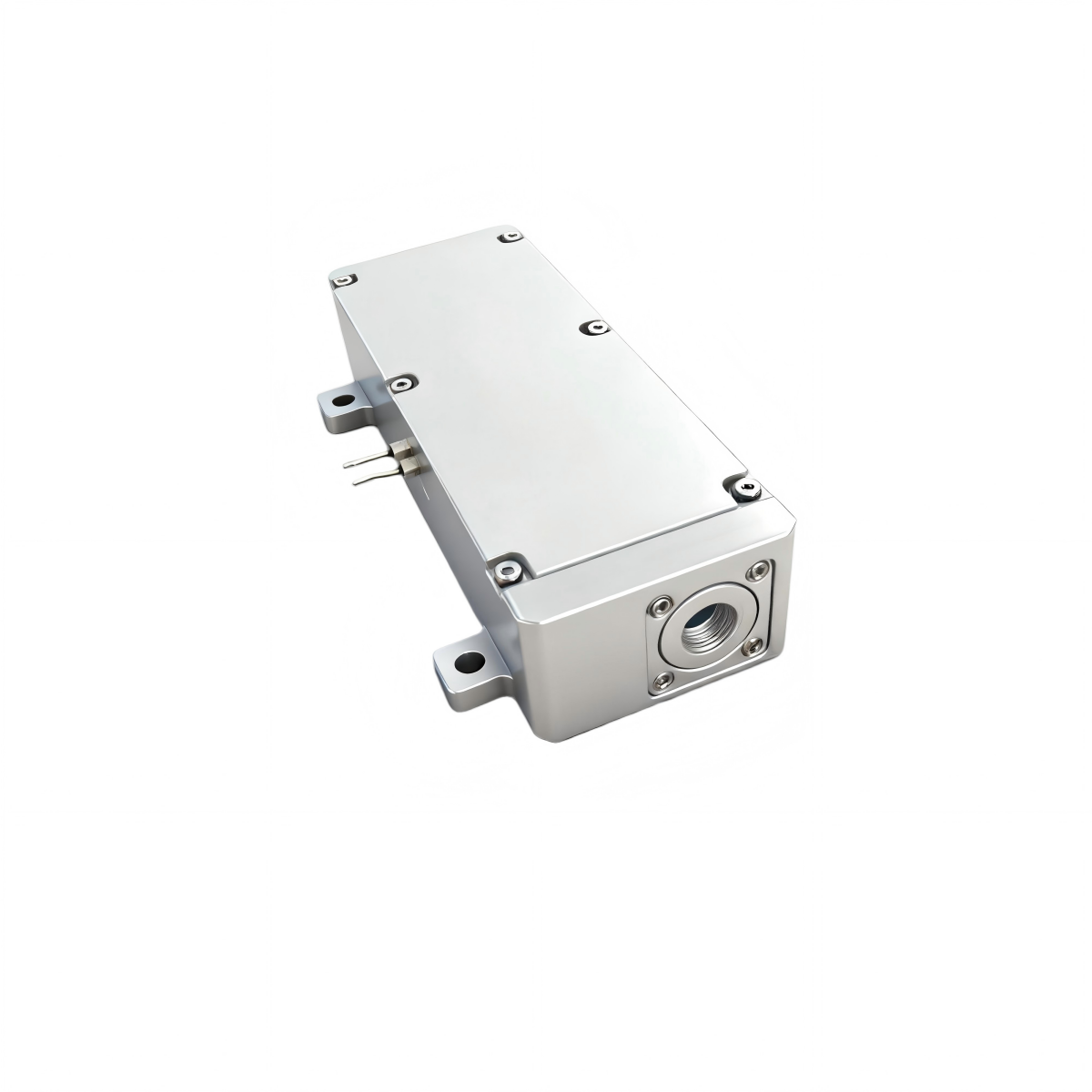
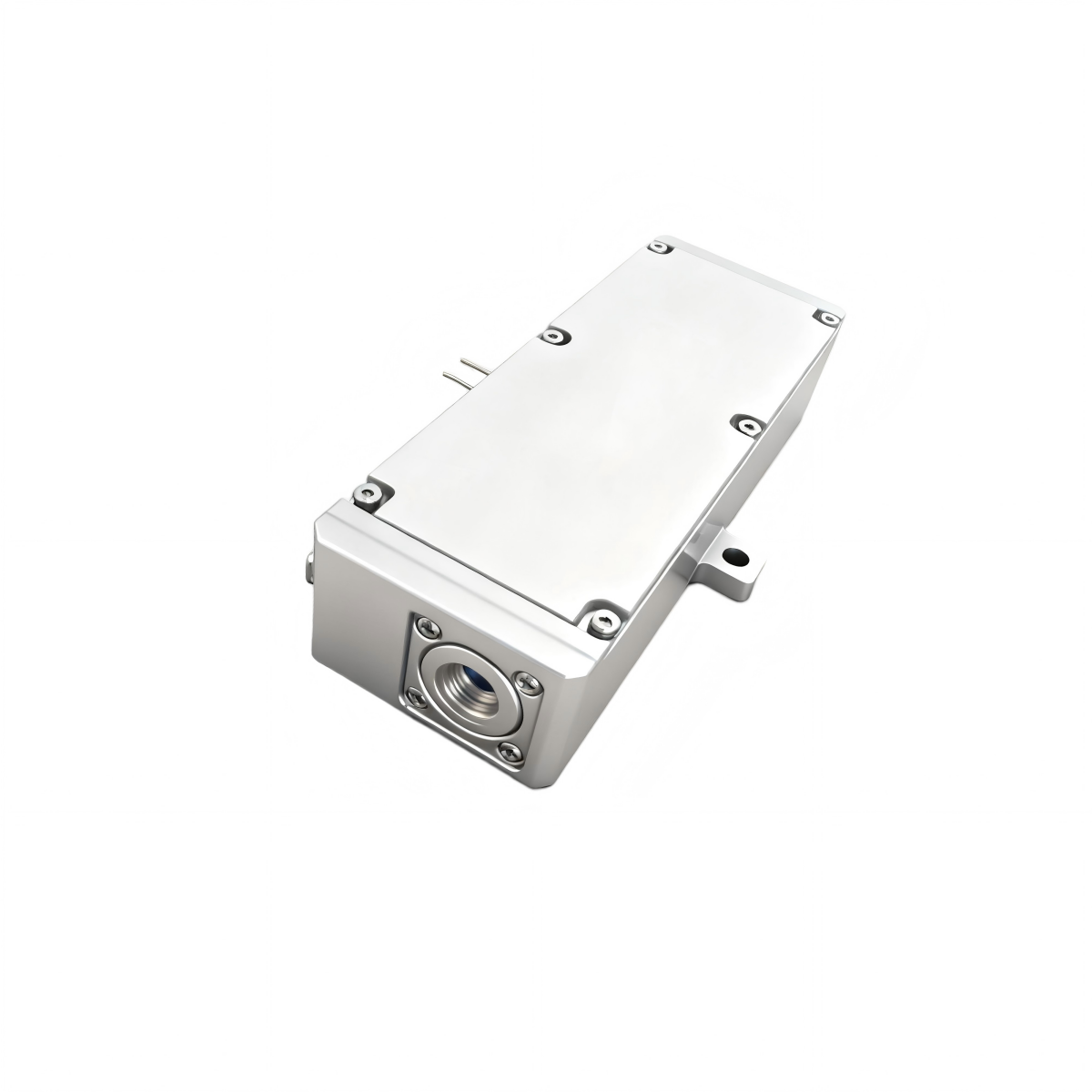
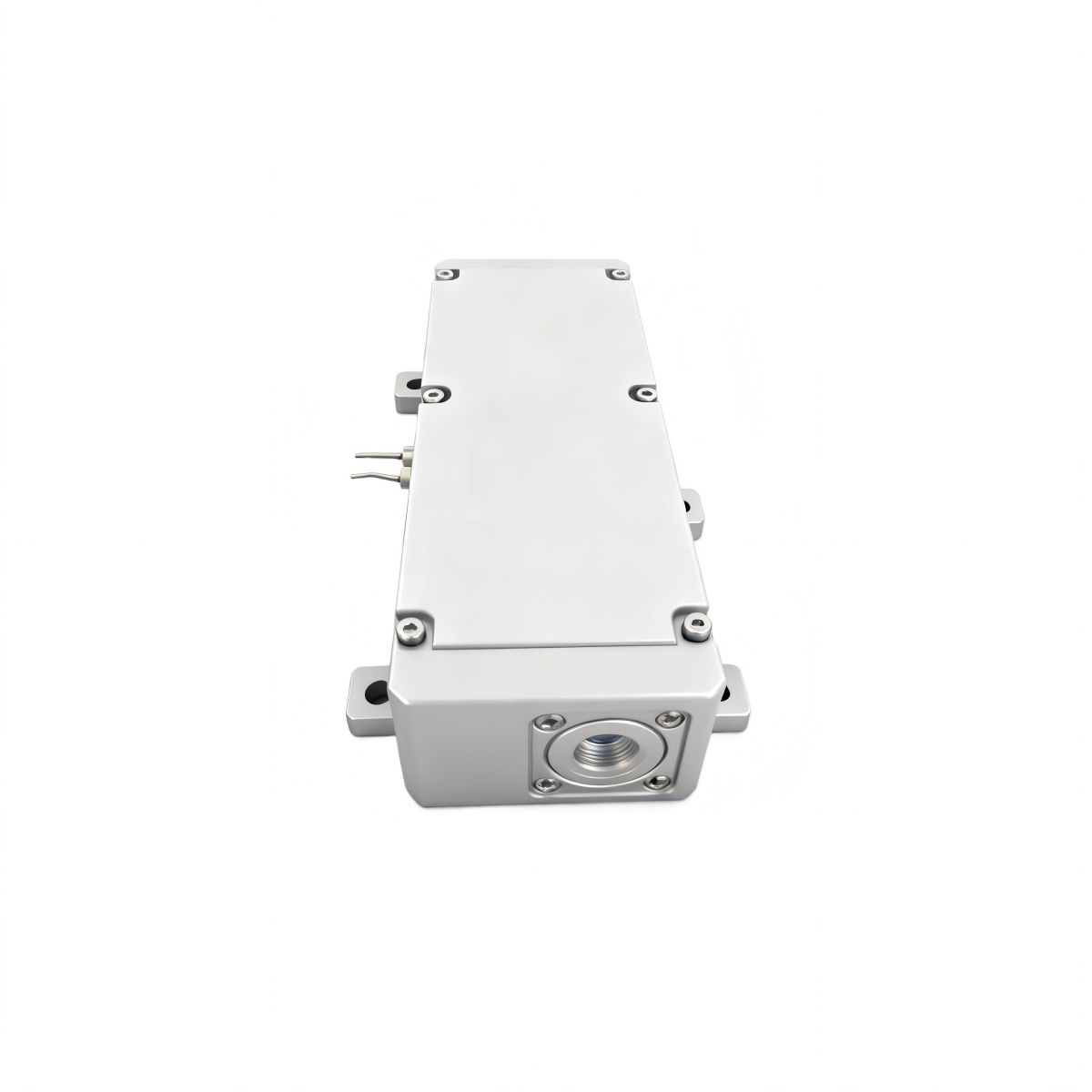
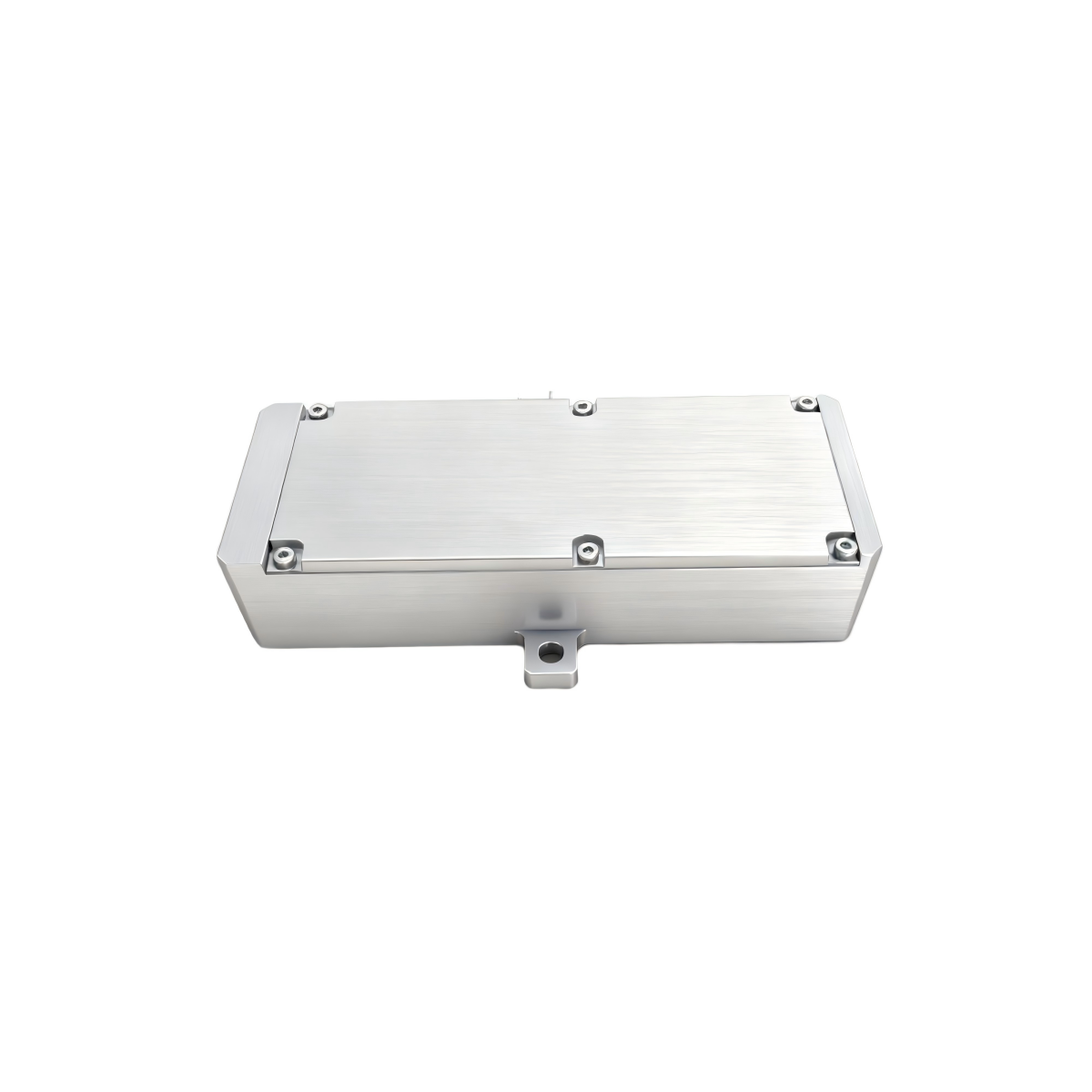
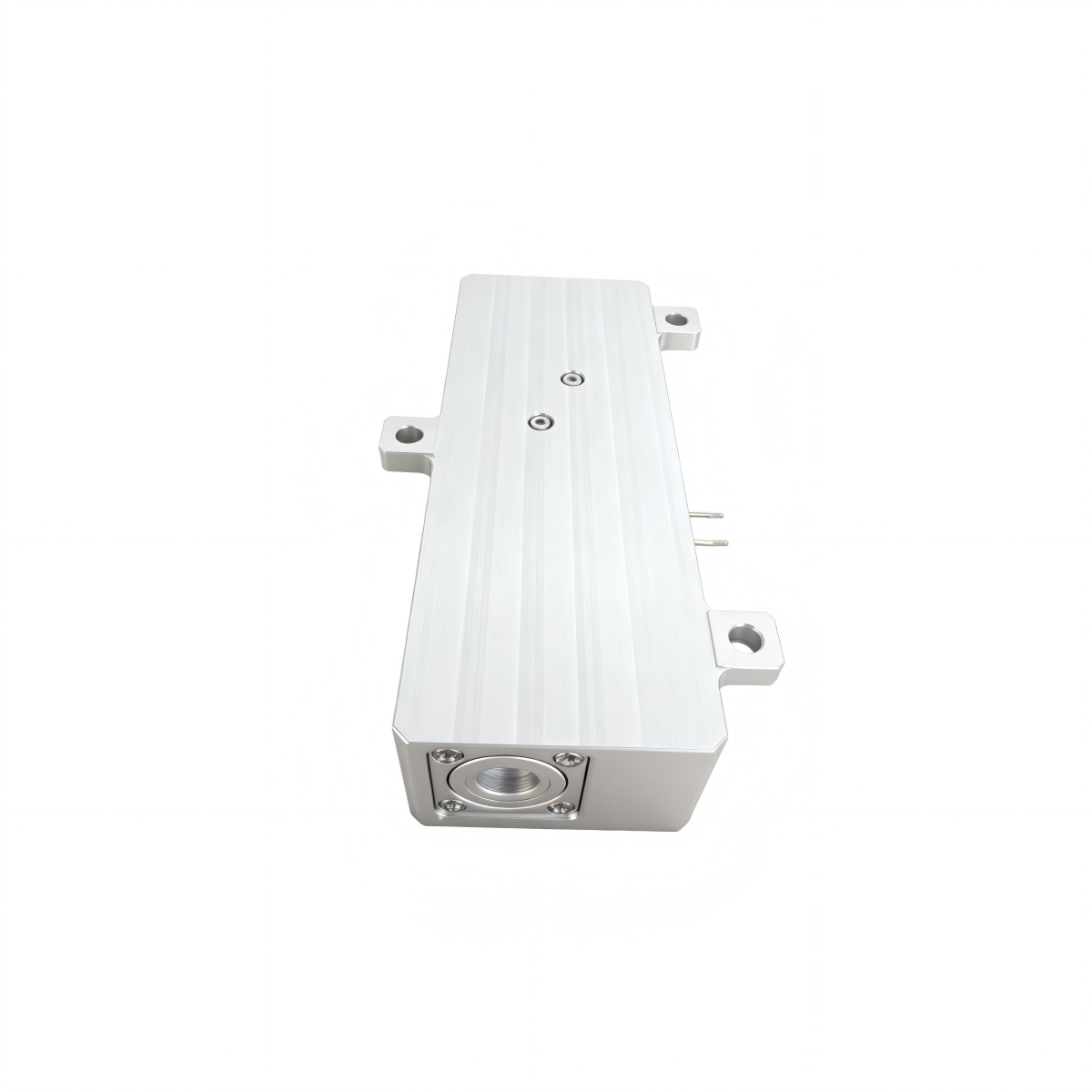
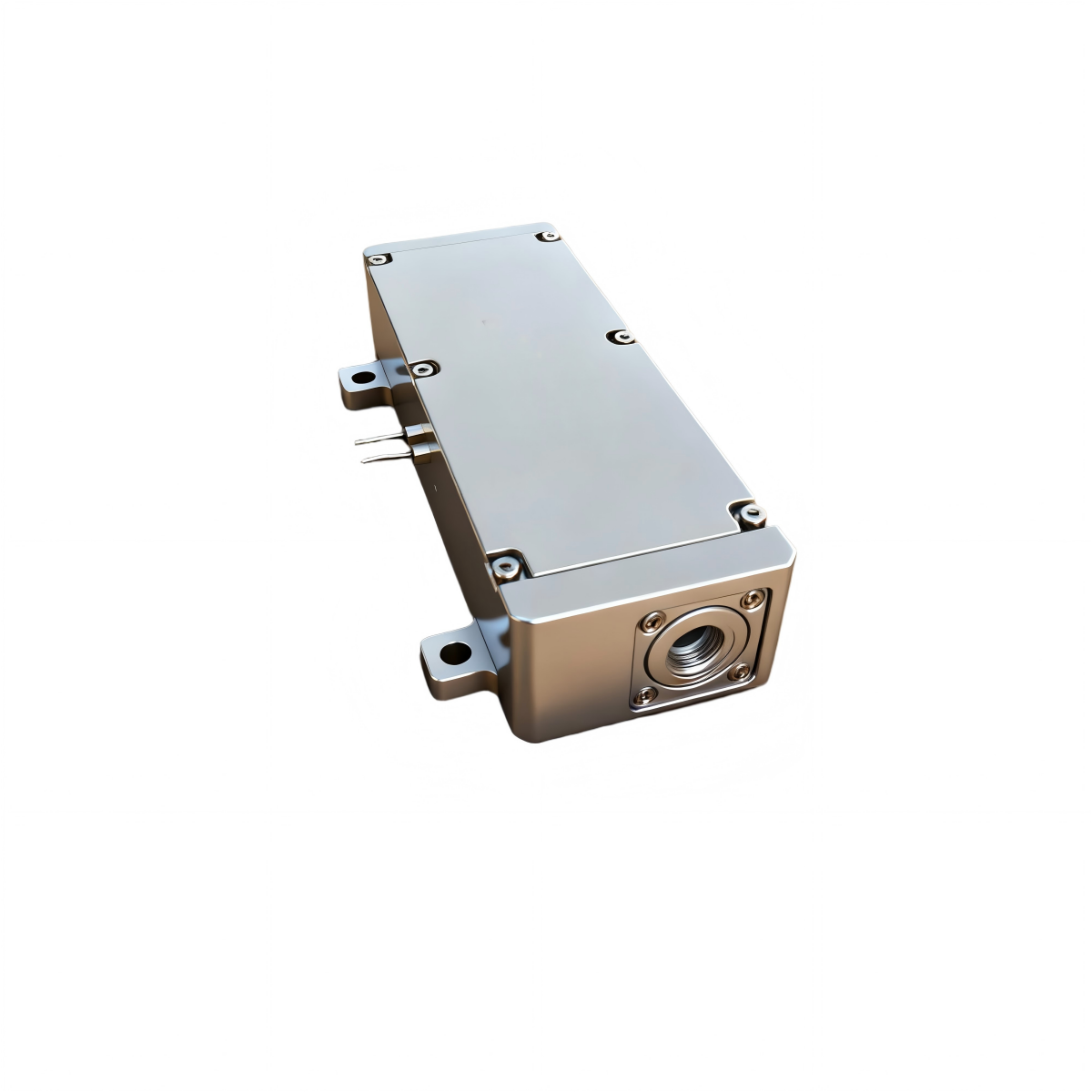
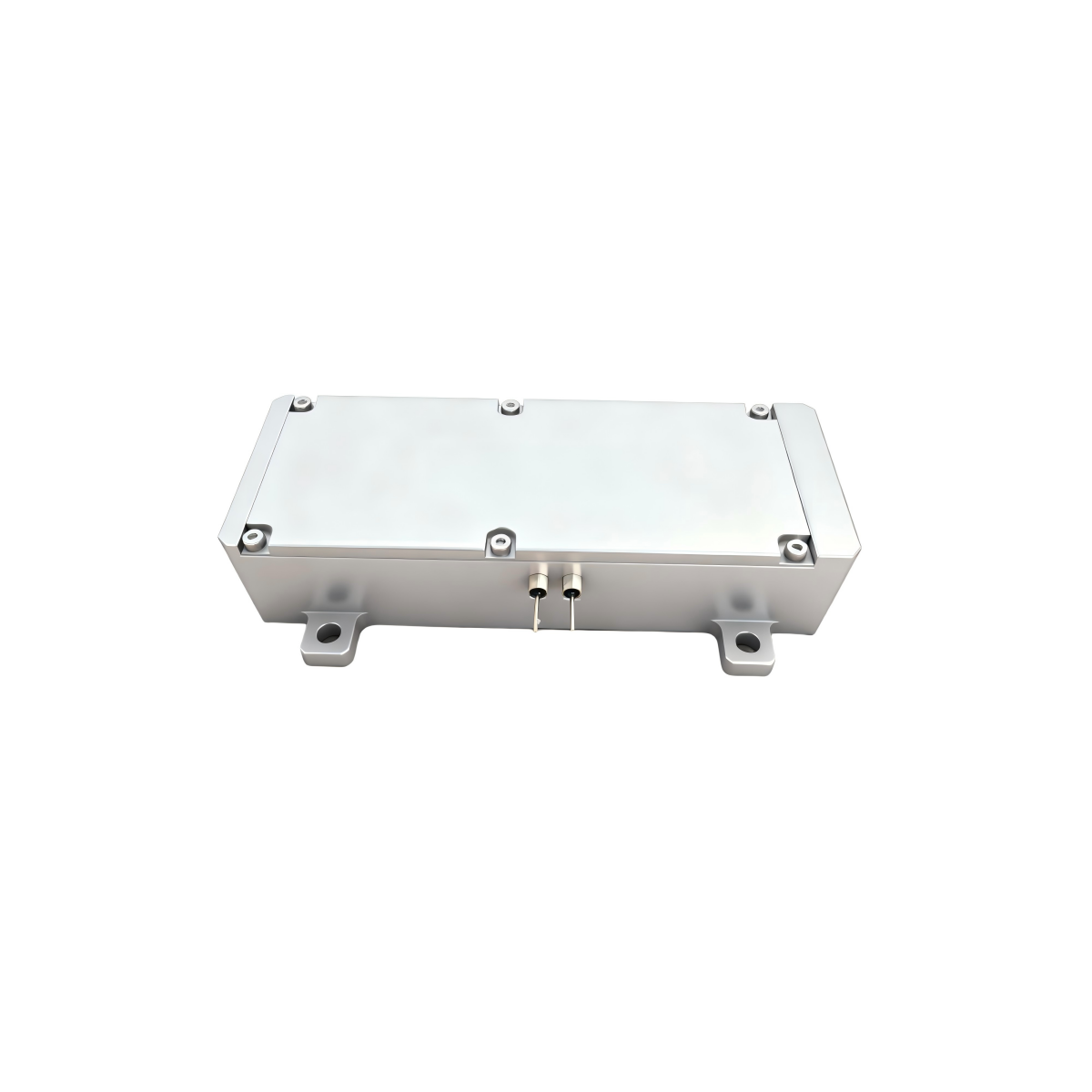
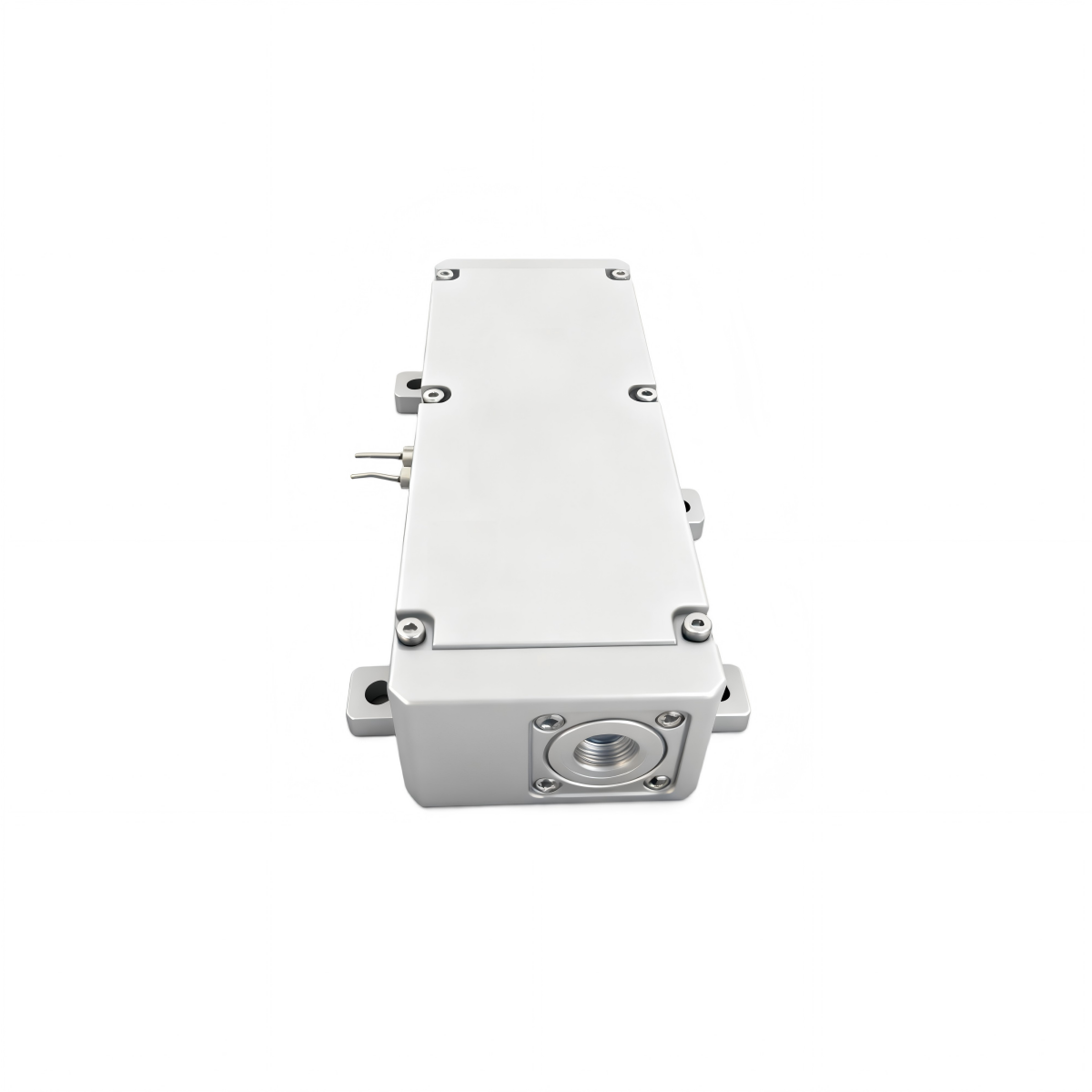
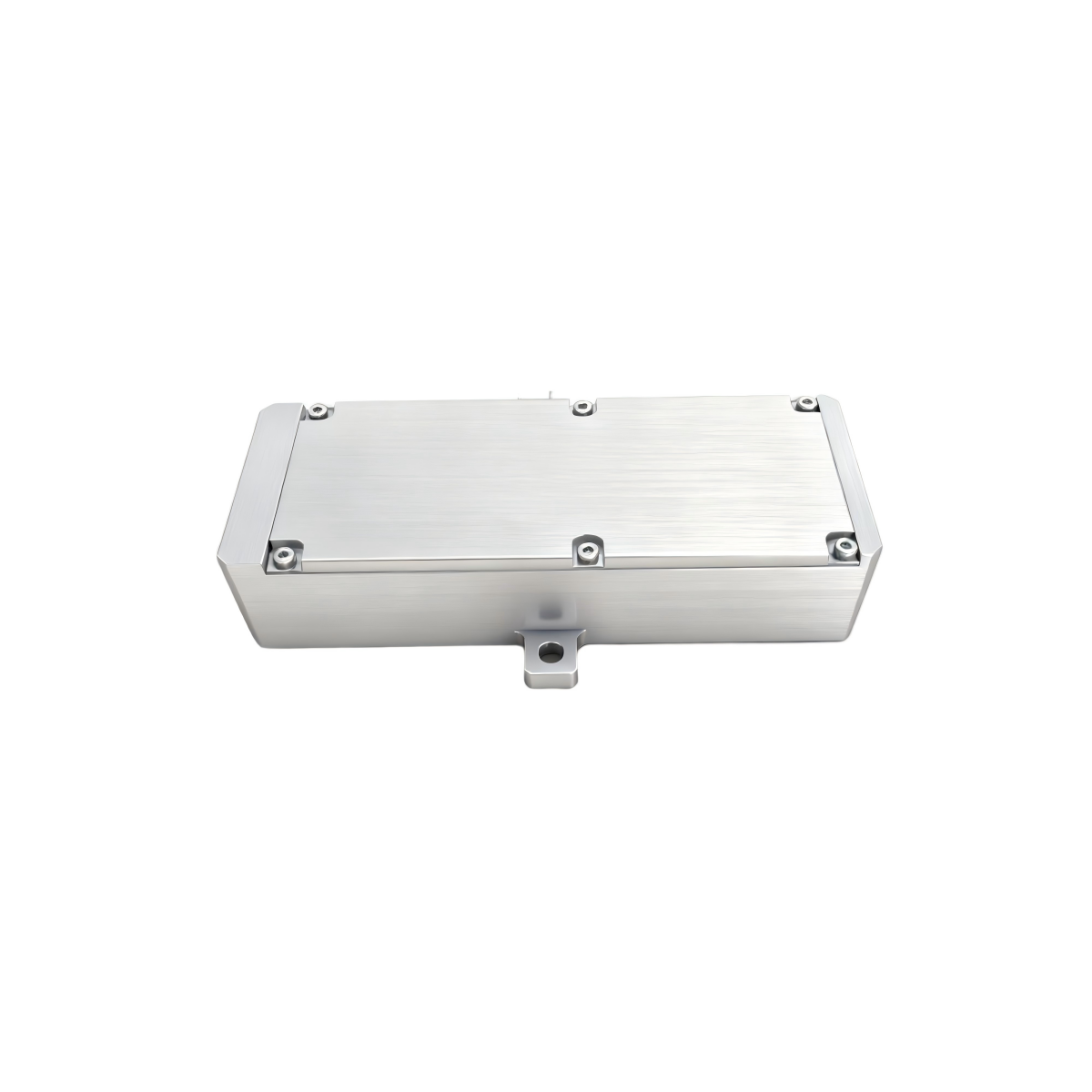
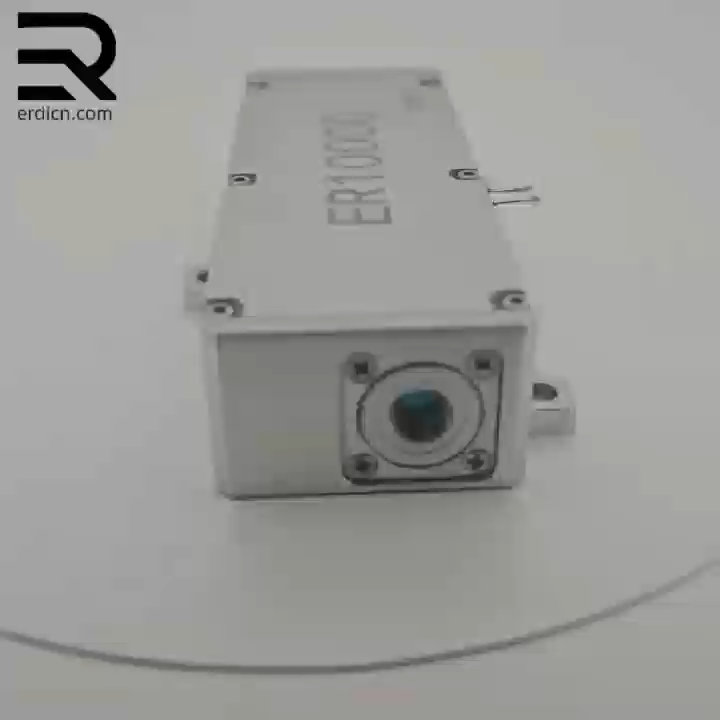
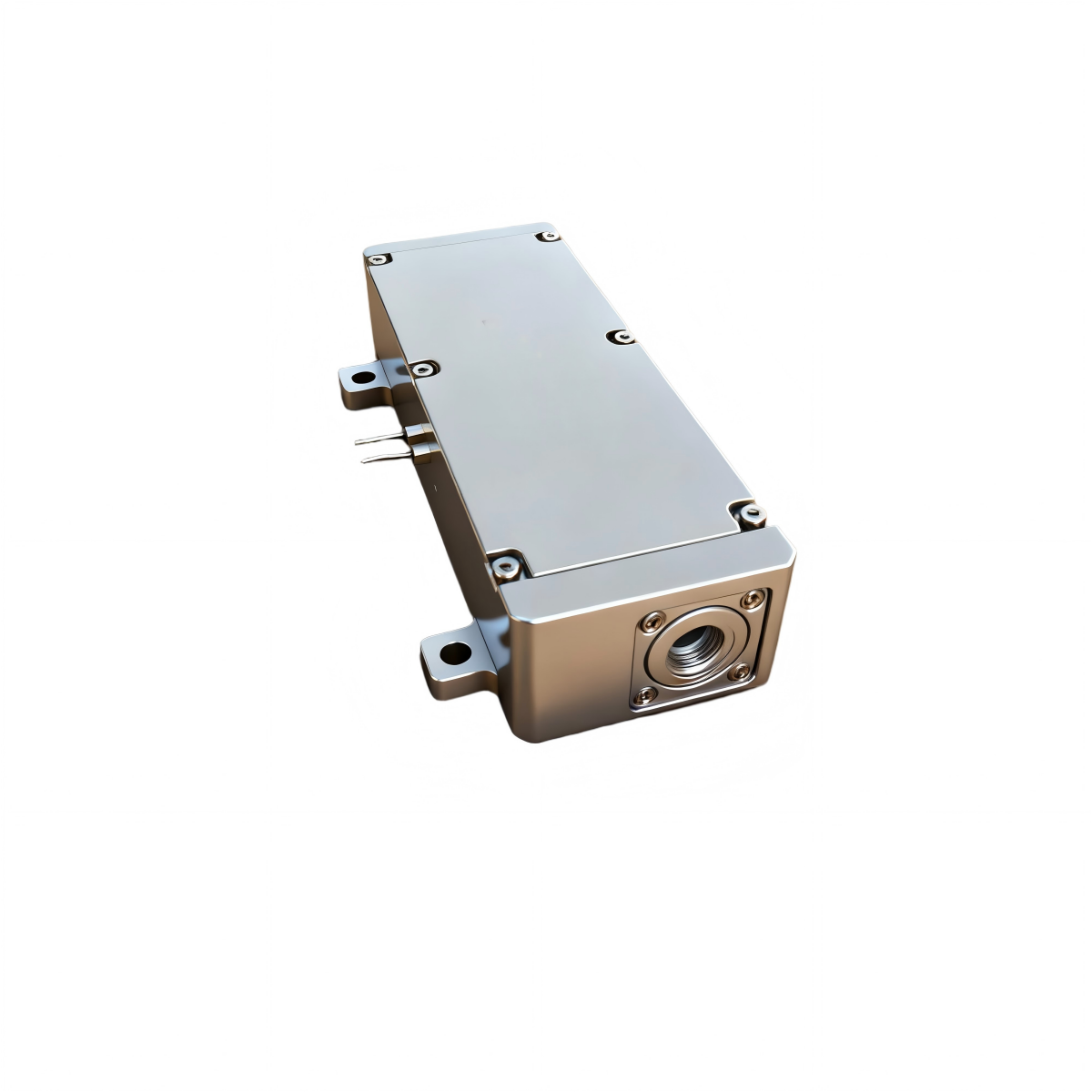
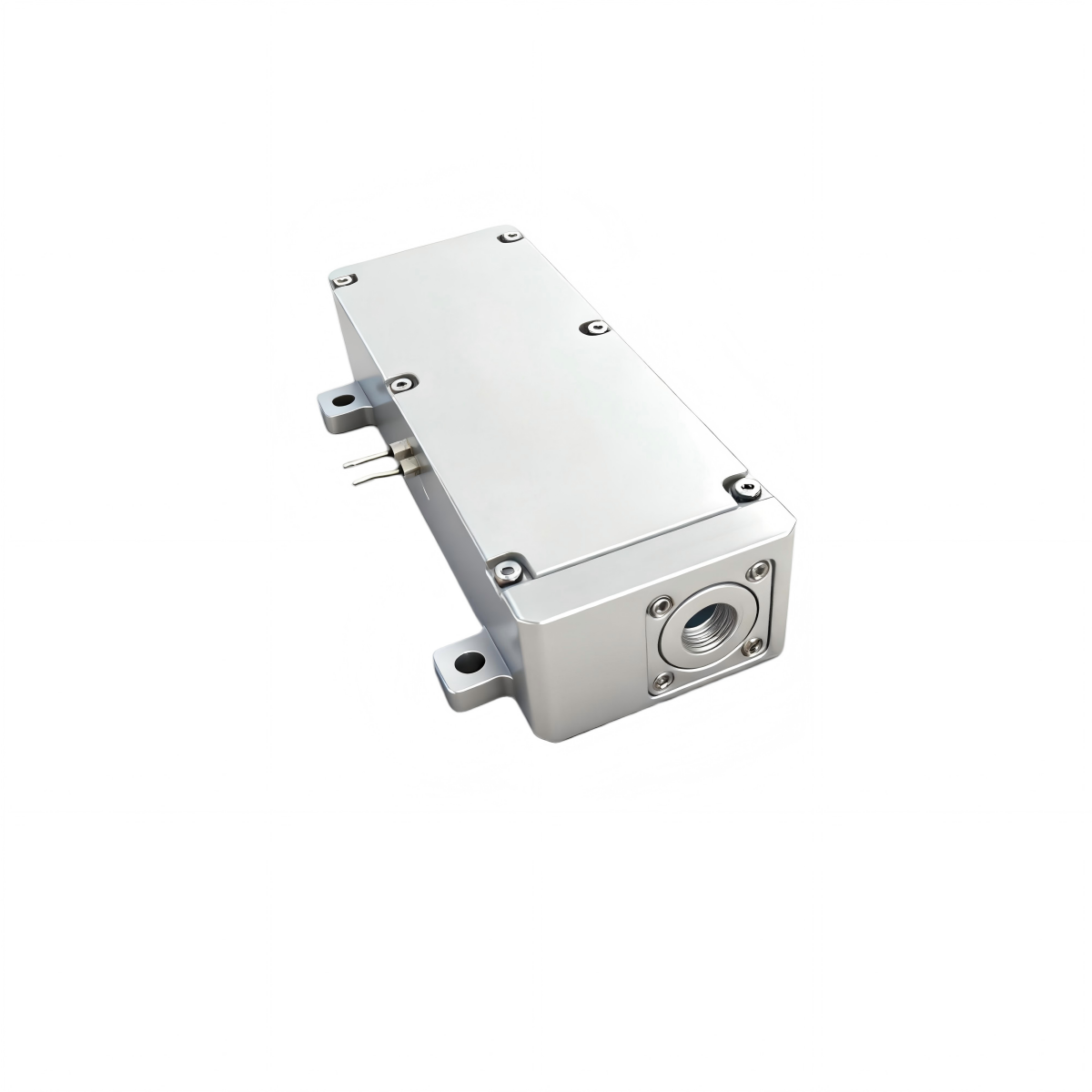
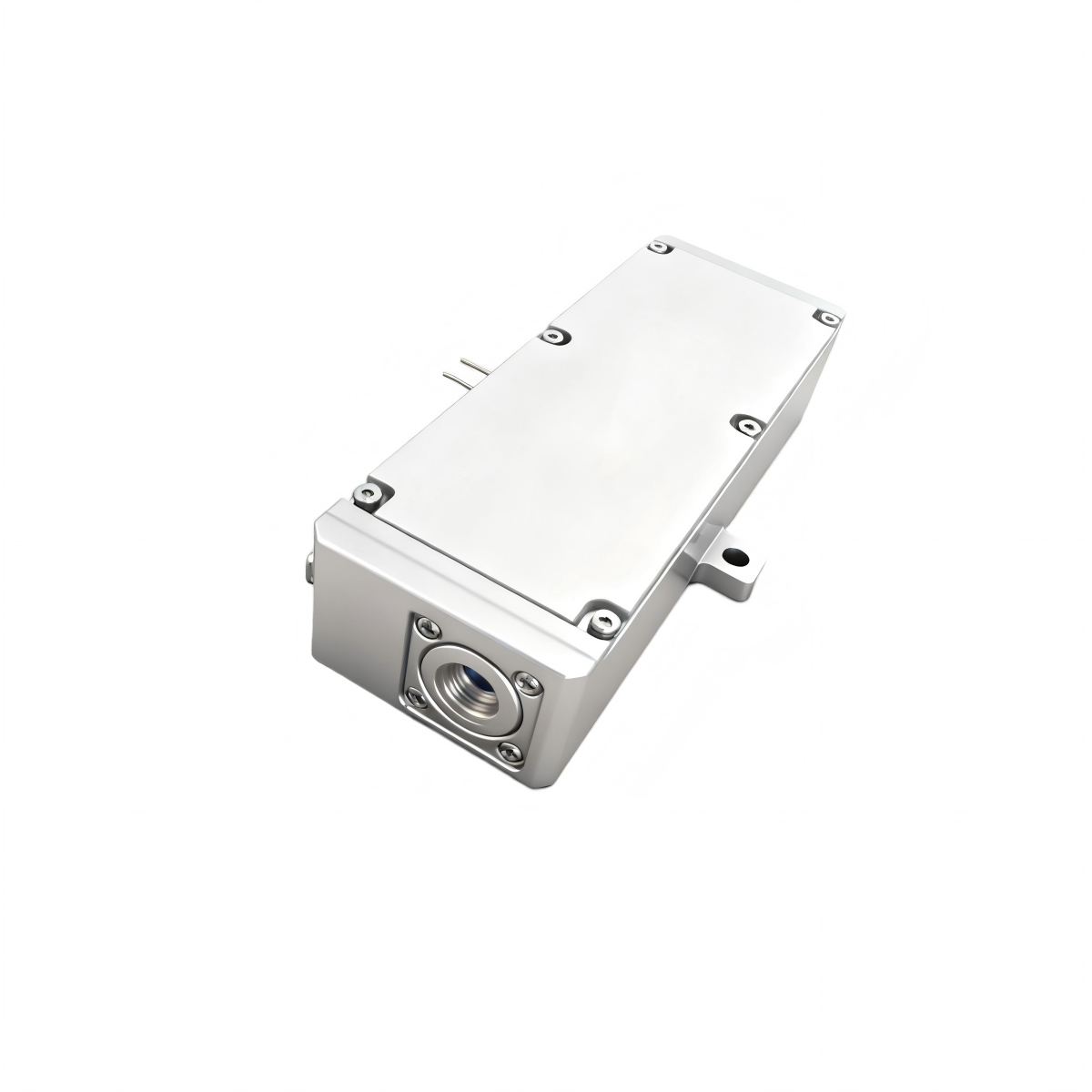
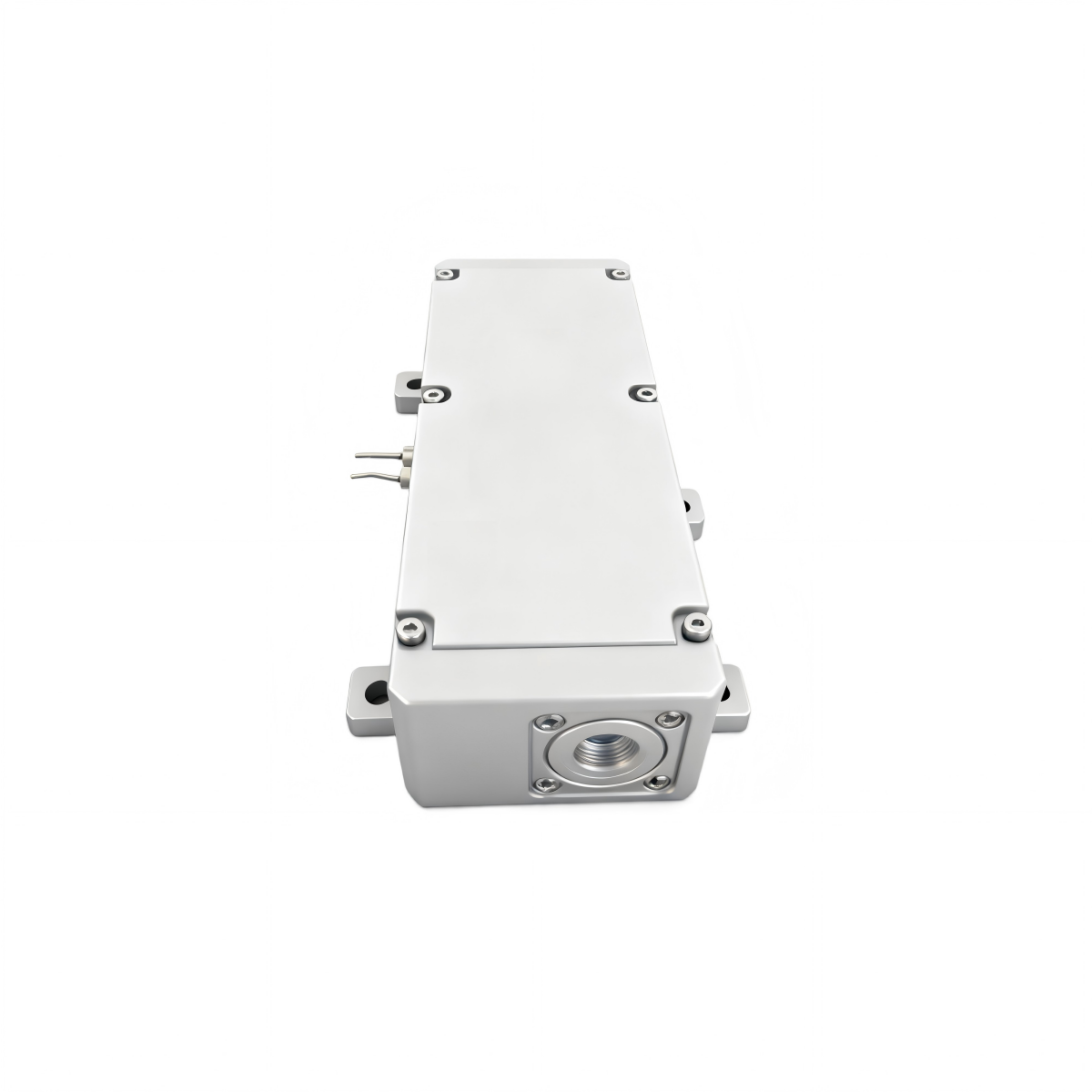
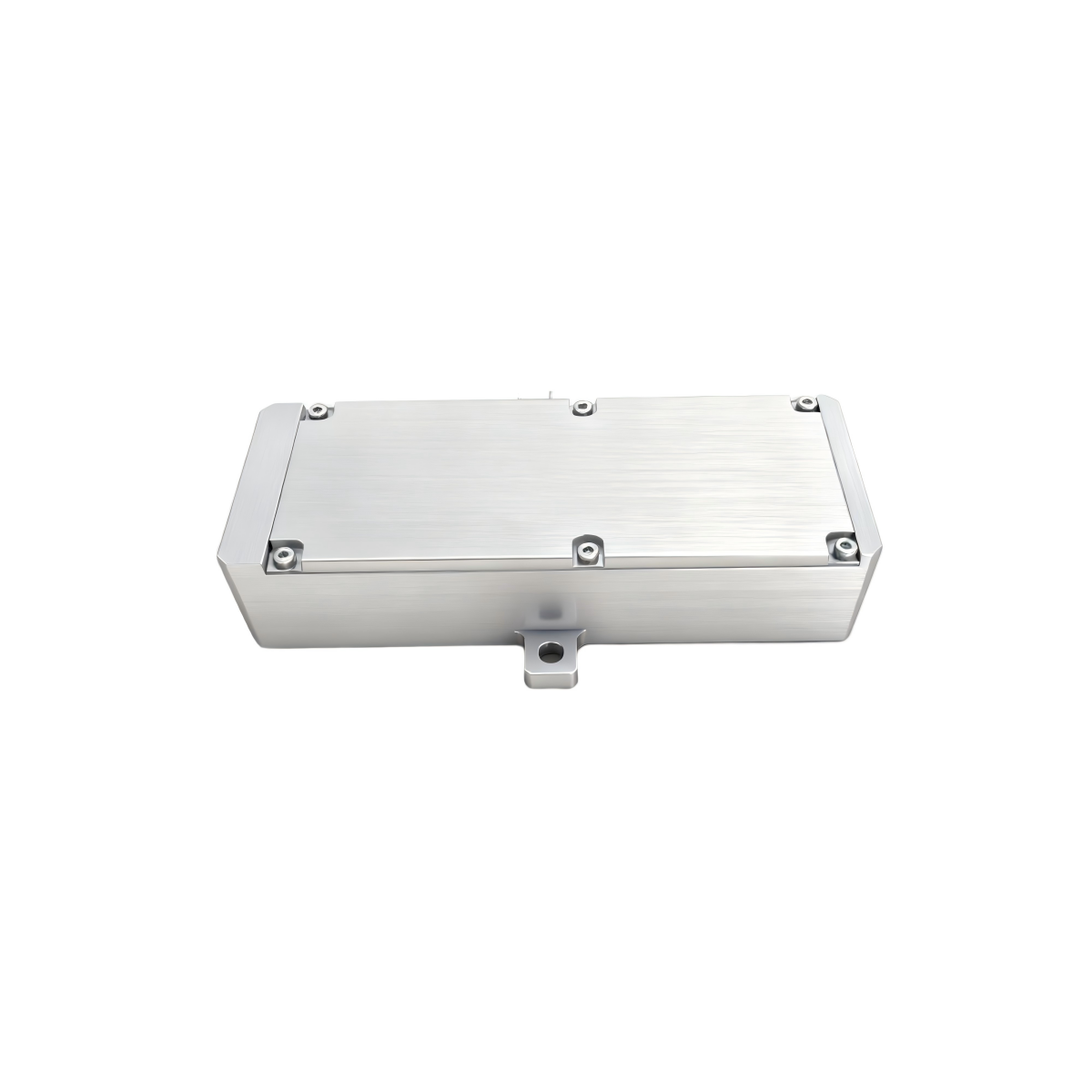
ER8000 1.54µm / 1535nm 8mJ Eye-Safe Erbium Glass Microchip DPSS Laser
The ER8000 is an 8mJ 1535nm eye-safe erbium glass microchip DPSS laser developed as a high-energy core for long-range LiDAR, precision laser rangefinders, infrared sensing payloads and selected medical and communication systems. It uses co-doped Er:Yb phosphate glass pumped by a semiconductor laser diode to generate Class 1 eye-safe radiation around 1.5µm, combining millijoule-level pulse energy with a compact mechanical envelope.
The laser provides ≥8mJ pulse energy with a typical pulse width of 13ns and a pulse repetition rate from 1 to 5Hz. Pulse stability is specified at 10%, and the output beam is TEM00 with a raw 0.8mm diameter and ≤4mrad full-angle divergence, so it can be easily expanded for long-range free-space propagation or focused into compact transmit optics and scanners. Such nanosecond, high-peak-power pulses are well suited for Time-of-Flight LiDAR and long-range distance measurement, enabling detection from hundreds of meters up to tens of kilometers depending on system optics and target conditions.
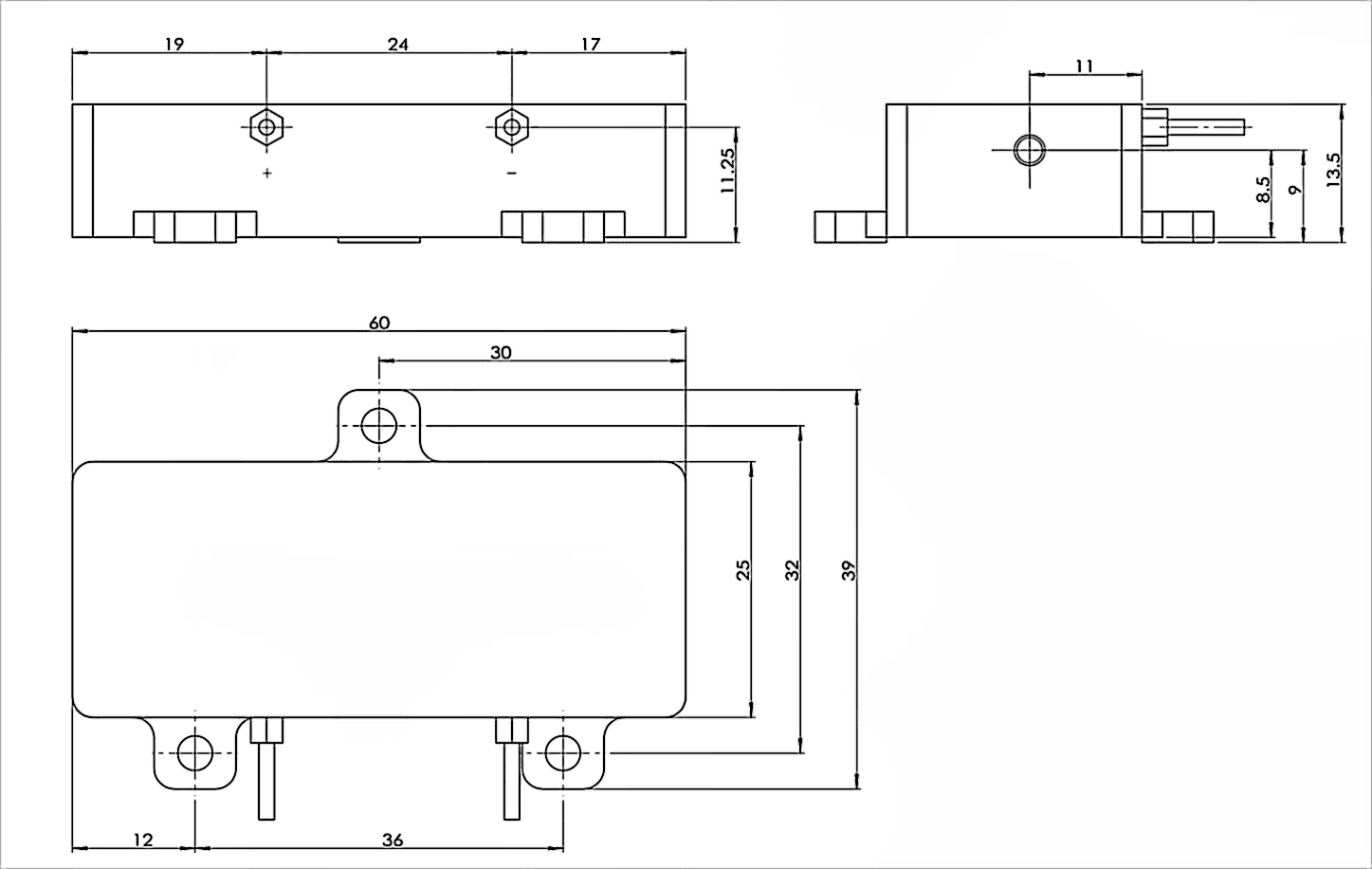
Mechanically, the ER8000 is packaged in a 110×40×24.5mm³ housing and weighs about 220g, giving system designers a robust 8mJ 1535nm source that still fits into EO/IR pods, vehicle turrets and fixed sensor heads. Electrically, the typical load voltage is <14V with an operating current of 100A, drive pulse width ≤4ms and nominal repetition rate around 5Hz. The driver power supply must be correctly matched to these parameters; otherwise, the laser may fail to operate normally or could be overloaded and permanently damaged.
The ER8000 is engineered for harsh outdoor environments. It operates from −40°C to +65°C and can be stored between −55°C and +75°C. Shock resistance is rated at 1500G for 0.5ms and vibration tolerance is 20–2000Hz at 20G, with a lifetime of more than one million shots, aligning with long-life airborne, vehicle and ground-based LiDAR and rangefinder systems.
Beyond classic laser rangefinding, 1535nm Er:glass lasers are widely used in laser radar, target recognition, laser irradiation, medical skin treatments and optical communication. The 1.5µm band lies in an atmospheric transmission window with low attenuation and good penetration through fog, rain and aerosols, which makes it attractive for environmental LiDAR, border security and remote sensing. At the same time, this wavelength coincides with telecom windows and is used in fiber-optic communication and amplification, while strong absorption by water in tissue enables non-ablative dermatology and other controlled medical procedures.
Operational guidance focuses on safe wiring and correct parameter configuration. The driver must be fully switched off and isolated before any connection; polarity of the laser terminals needs to be checked carefully and all connections must be tightened to avoid short circuits, reverse polarity and intermittent contacts. After wiring, the driver’s voltage, current, pulse width and repetition rate should be set strictly according to the attached factory test report, and only then should the driver be enabled so that the ER8000 runs within its specified operating window.
With its 8mJ pulse energy, eye-safe 1535nm wavelength, TEM00 beam quality, rugged environmental rating and compact 110×40×24.5mm³ form factor, the ER8000 serves as a versatile 1.5µm platform laser for long-range LiDAR channels, high-end rangefinders, infrared sensing nodes, medical treatment devices and free-space or fiber-based communication links where safety and performance must be balanced.