
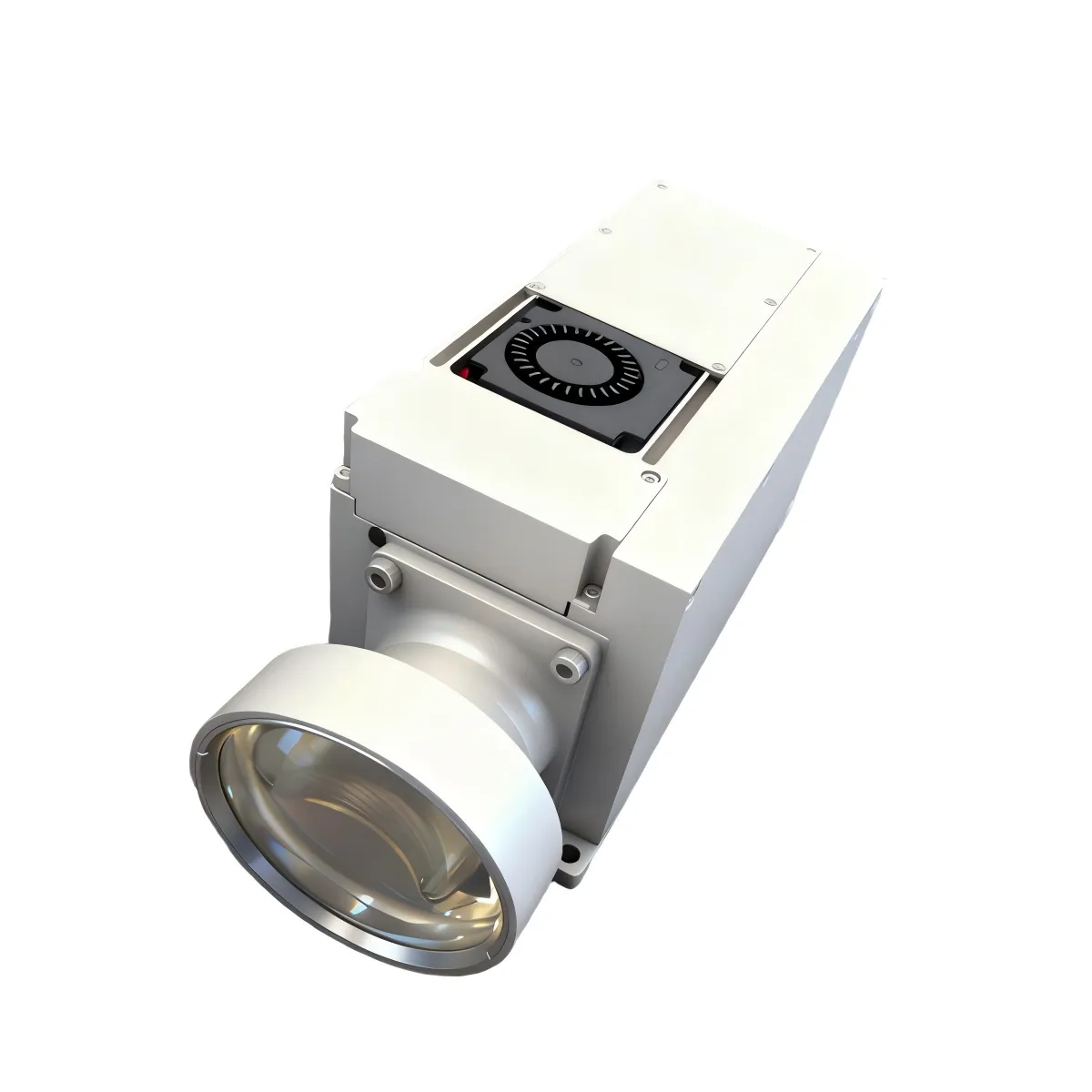
Selecting a laser rangefinder for OEM integration starts with the application, not a single maximum-range number. The correct module must match the target, atmosphere, optical path, platform interface, size and power limits, and required measurement rate.
1. Define the target and operating range
Specify the minimum and maximum distance, target size, reflectivity, expected background, visibility, and whether the platform or target will move. A range quoted for a large high-reflectivity target cannot be applied directly to a person, vehicle, tree line, or small UAV.
2. Select wavelength and eye-safety requirements
Common laser rangefinder wavelengths include 905 nm and the 1535 nm eye-safe band. Wavelength affects detector choice, atmospheric transmission, optical coatings, eye-safety classification, cost, and achievable range. The completed system must be assessed as a whole; module-level performance alone does not establish final product compliance.
3. Compare measurement performance
Review ranging accuracy, resolution, minimum range, acquisition probability, false-alarm rate, multi-target capability, and ranging frequency. For tracking or moving platforms, update rate and latency can be as important as maximum range.
4. Check the electrical and data interface
Confirm supply-voltage range, peak and average power, start-up behavior, trigger method, communication protocol, baud rate, data format, and fault reporting. UART, TTL, RS-422, CAN, or other interfaces must match the host controller and cable length.
5. Evaluate size, weight, power, and thermal design
For UAV gimbals, handheld optics, and compact EO/IR payloads, the module must fit the available envelope without disturbing balance or cooling. Review mounting points, connector orientation, heat dissipation, standby power, and peak current before freezing the mechanical design.
6. Plan the optical and mechanical integration
The external window, clear aperture, coating, alignment tolerance, spacing, and stray-light control can significantly affect range. Mechanical integration should maintain transmitter-receiver alignment across temperature, shock, and vibration.
7. Verify environmental performance and documentation
Match the module's operating temperature, storage temperature, ingress protection, vibration, and shock data to the intended environment. Request a current datasheet, interface-control document, dimensional drawing, test conditions, and traceable validation data.
ERDI TECH LTD develops 1535 nm and 905 nm laser rangefinder modules for OEM integration. Our engineering team can help compare range targets, interfaces, optical-window requirements, and environmental constraints before sample evaluation.