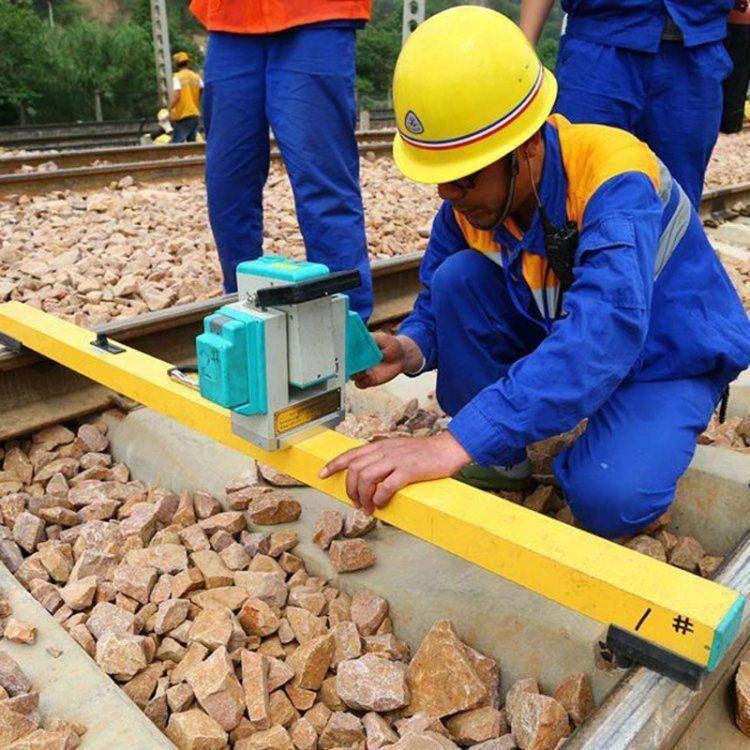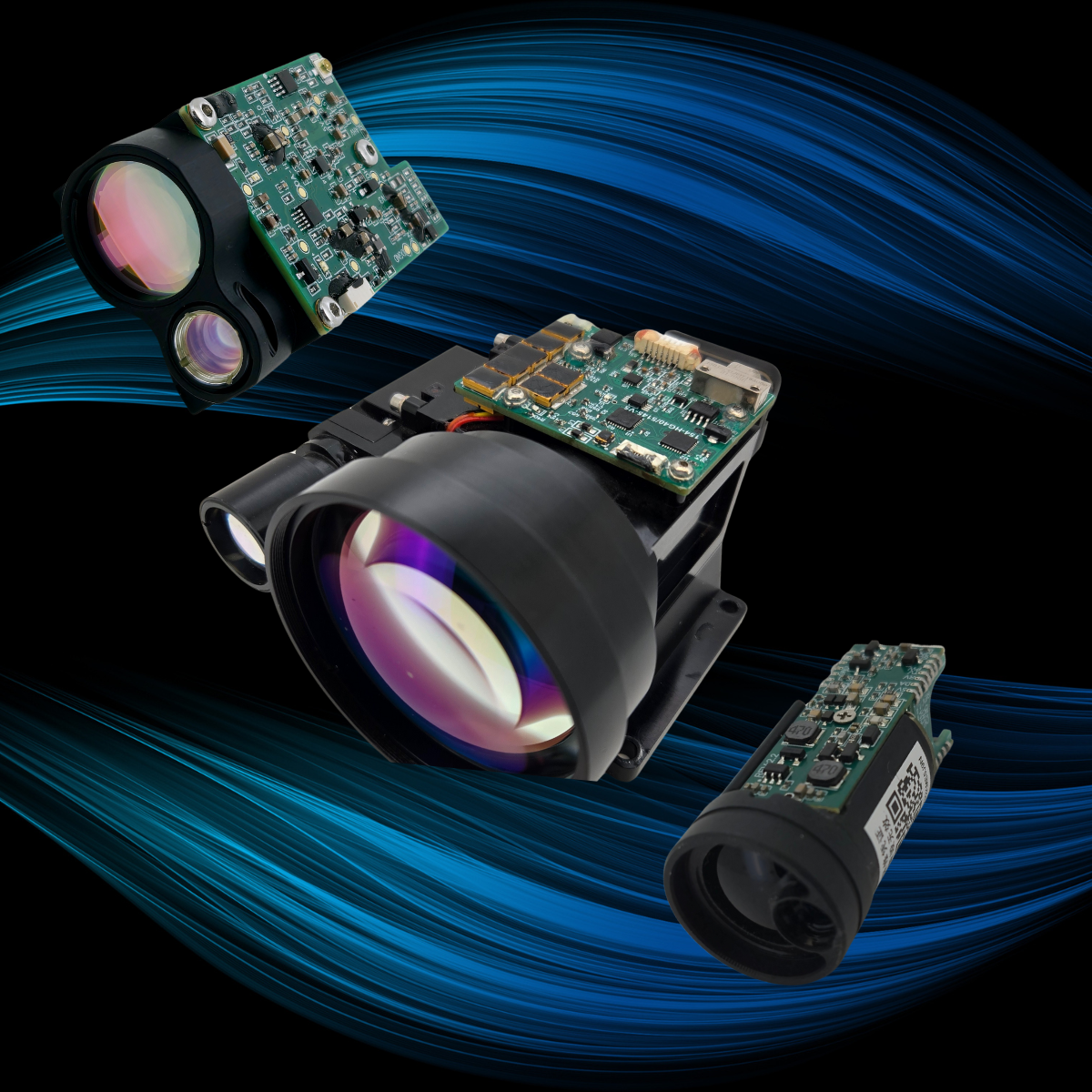
Laser ranging is a major category of laser technology applications. In production practices and scientific research, the issue of measuring distance often arises. For example, in geodetic surveying and geological exploration, it is necessary to measure the distance between two hilltops; when building a bridge, it is necessary to measure the interval between the two sides of a river; in military applications, aiming of artillery positions and long-range strikes are inseparable from accurate.
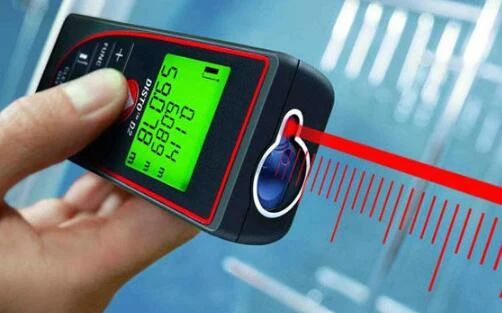
Photoelectric ranging is an early proposed physical ranging method. Photoelectric rangefinders were made and practically applied to measure the distance between ground targets in the late 1940s and early 1950s. However, due to limitations in the brightness and monochromaticity of the light source, the photoelectric rangefinder did not develop significantly at that time.
In the early 1960s, the emergence of lasers greatly promoted the development of photoelectric rangefinders. Lasers have high brightness, good monochromaticity, strong directionality, and narrow beams, making them ideal light sources for photoelectric rangefinders.
Compared with other rangefinders (such as microwave rangefinders and photoelectric rangefinders), laser rangefinders have the characteristics of long detection distance, high ranging accuracy, strong anti-interference ability, good confidentiality, small size, light weight, and high repetition frequency.
After successfully conducting laser ranging on the moon and artificial satellites, various civilian and military laser rangefinders have undergone several generations of research and improvement, and are now widely used in practical work.
Unlike laser length measurement, the lengths that can be measured by laser ranging are much greater.
If classified by range, laser ranging can be roughly divided into three categories: short-range laser rangefinders, with a range of only within 5km, suitable for various engineering surveys; medium and long-range laser rangefinders, with a range of five to tens of kilometers, suitable for geodetic control surveys and earthquake prediction; and long-range laser rangefinders, used to measure the distance of missiles, satellites, the moon, and other spatial targets.
Next, I will introduce the knowledge of laser ranging technology in detail, including the principles of laser ranging technology, the use of laser ranging technology, and the application of laser ranging technology.