
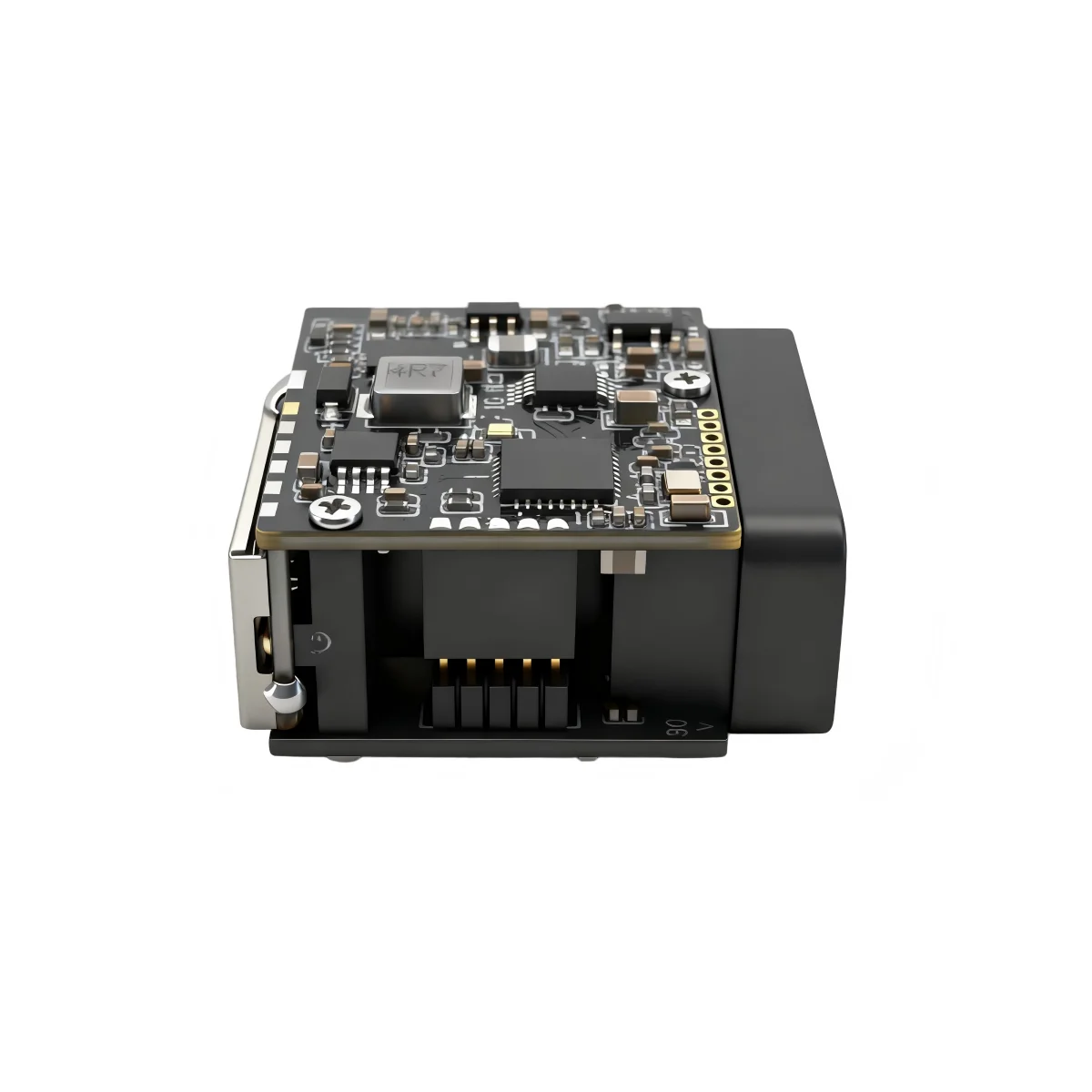
A 1535 nm laser rangefinder module measures distance by transmitting a short optical pulse and calculating the pulse's round-trip time. The wavelength can support a lower retinal-hazard design, but the right module is determined by the complete system: target conditions, optics, timing, power, interface, mechanical constraints and qualification requirements.
What “eye-safe” means at 1535 nm
The cornea and lens absorb much of the optical energy near 1535 nm before it reaches the retina. This wavelength characteristic can help engineers design a lower-hazard ranging system. It does not make every 1535 nm emitter automatically Class 1 or safe under every exposure condition.
Eye-safety classification depends on pulse energy, repetition rate, beam divergence, aperture, optics and the applicable measurement method. The finished instrument must be evaluated against the standards and operating conditions required for its market.
Parameters that determine ranging performance
| Parameter | Why it matters |
|---|---|
| Specified range | Must be paired with target size, reflectivity, visibility and detection probability. |
| Accuracy and resolution | Determine whether the module can support mapping, tracking, fire-control support or industrial measurement. |
| Measurement rate | Affects moving-platform updates, target tracking and host-processing load. |
| Beam divergence | Controls spot size at distance and influences target discrimination and alignment tolerance. |
| Receiver aperture | Influences return-signal collection, especially for small or low-reflectivity targets. |
| Multi-target output | Helps separate first, strongest or last returns in complex scenes. |
| SWaP | Size, weight and power directly affect UAV endurance, gimbal balance and thermal design. |
| Interface and timing | UART or other host interfaces must match command, trigger, timestamp and data-rate requirements. |
OEM integration checklist
- Define the target: Record minimum reflectivity, dimensions, range and atmospheric visibility for the intended scene.
- Confirm the optical path: Check window transmission, coatings, vignetting, contamination and boresight alignment.
- Budget power and heat: Verify supply tolerance, peak current, duty cycle and heat transfer in the final enclosure.
- Validate host timing: Confirm trigger behavior, latency, output format and synchronization with cameras or navigation sensors.
- Test the finished assembly: Recheck range bias, alignment, vibration, temperature, sealing and eye-safety compliance after integration.
Application-specific priorities
| Application | Typical selection priorities |
|---|---|
| UAV gimbals | Low mass, compact dimensions, low power, stable alignment and fast serial communication |
| Handheld optics | Low power, rapid first reading, compact receiver optics and eye-safety verification |
| EO/IR platforms | Long-range target performance, boresight stability, timing and environmental qualification |
| Industrial sensing | Repeatability, interface reliability, target reflectivity range and enclosure protection |
Questions to ask before selecting a module
- Under what target reflectivity and visibility conditions was maximum range measured?
- What are the accuracy, detection probability and false-return criteria?
- Which supply, interface and trigger requirements apply?
- What environmental and eye-safety tests have been completed?
- Are interface documentation, evaluation samples and integration support available?
Compare 1535 nm rangefinder modules
Browse ERDI's 1535 nm laser rangefinder module collection, or contact sales@erdicn.com with your target, range, SWaP and interface requirements.