
ERDI 1064 nm Laser Rangefinder & Target Designator Series
Dual-Function, Long-Range, Multi-Platform Laser System for Modern Battlefield Integration
Precision. Range. Integration. Combat-Ready.
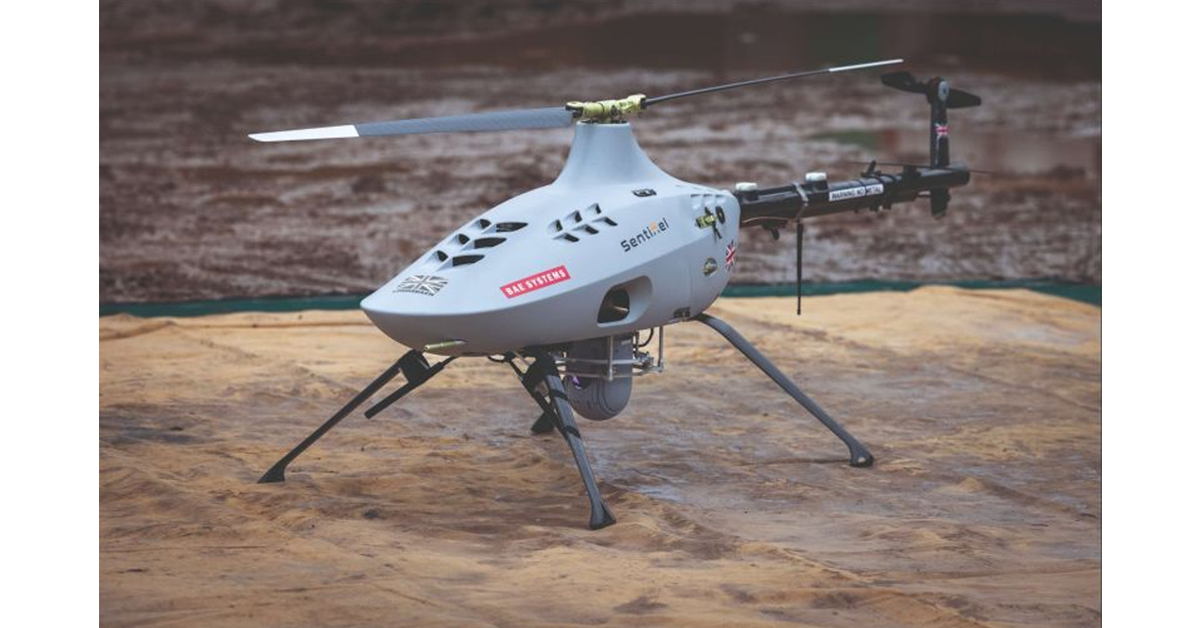
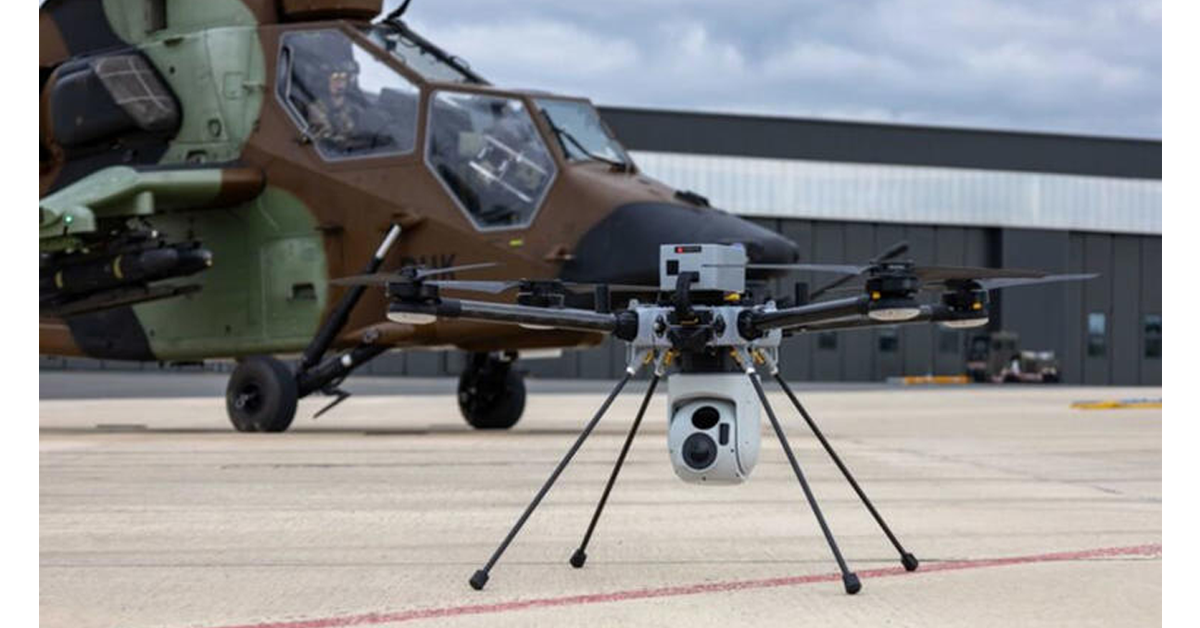
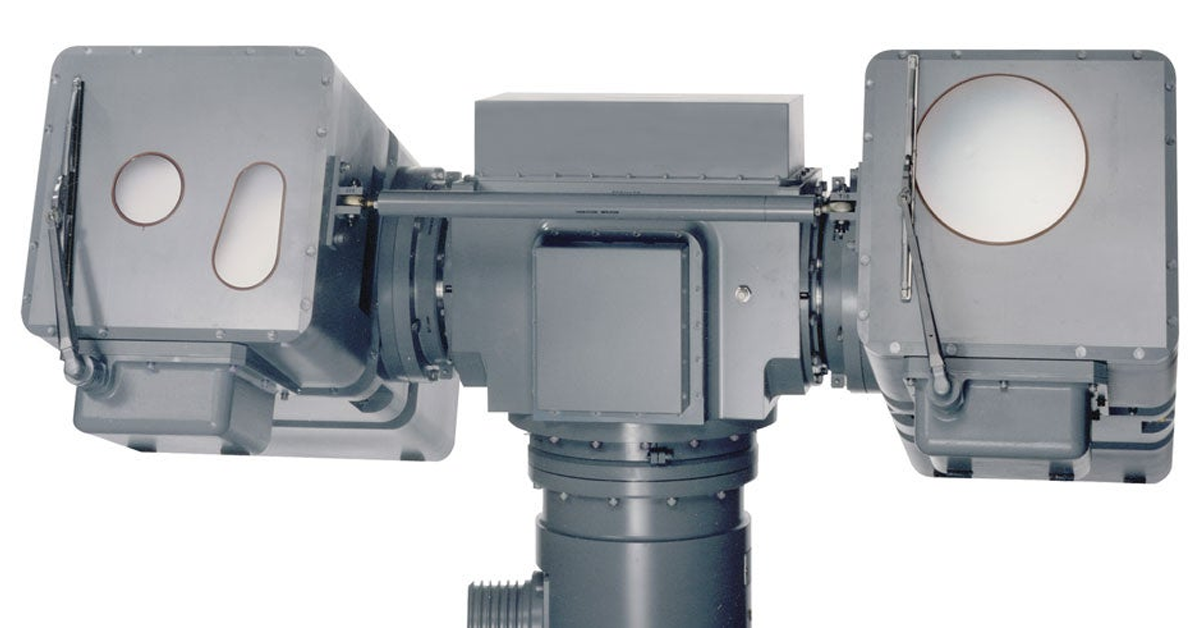
Designed for UAV payloads, EO/IR gimbals, vehicle weapon stations, and naval surveillance platforms.
A laser designator is a high-precision device that marks targets by emitting a highly focused laser beam, which is crucial for accurate targeting in various fields. The laser designator has diverse applications across military, surveying, and industrial fields, including target acquisition, terrain mapping, and material processing. In military operations, the laser designator plays a crucial role in target acquisition and guided weapon positioning, which enhances strike accuracy and combat effectiveness by minimizing collateral damage and maximizing target destruction. In addition to its military applications, the laser designator is also utilized in industrial and surveying fields for high-precision measurement, positioning, and calibration, further demonstrating its versatility and importance in various sectors. By illuminating targets with laser beams, the device guides advanced guidance systems, such as GPS and infrared systems, to achieve precise tracking and strikes, making it a critical component in modern precision warfare systems.
Ⅰ.System Overview
.png?w=1049&h=799)
.png?w=422&h=383)
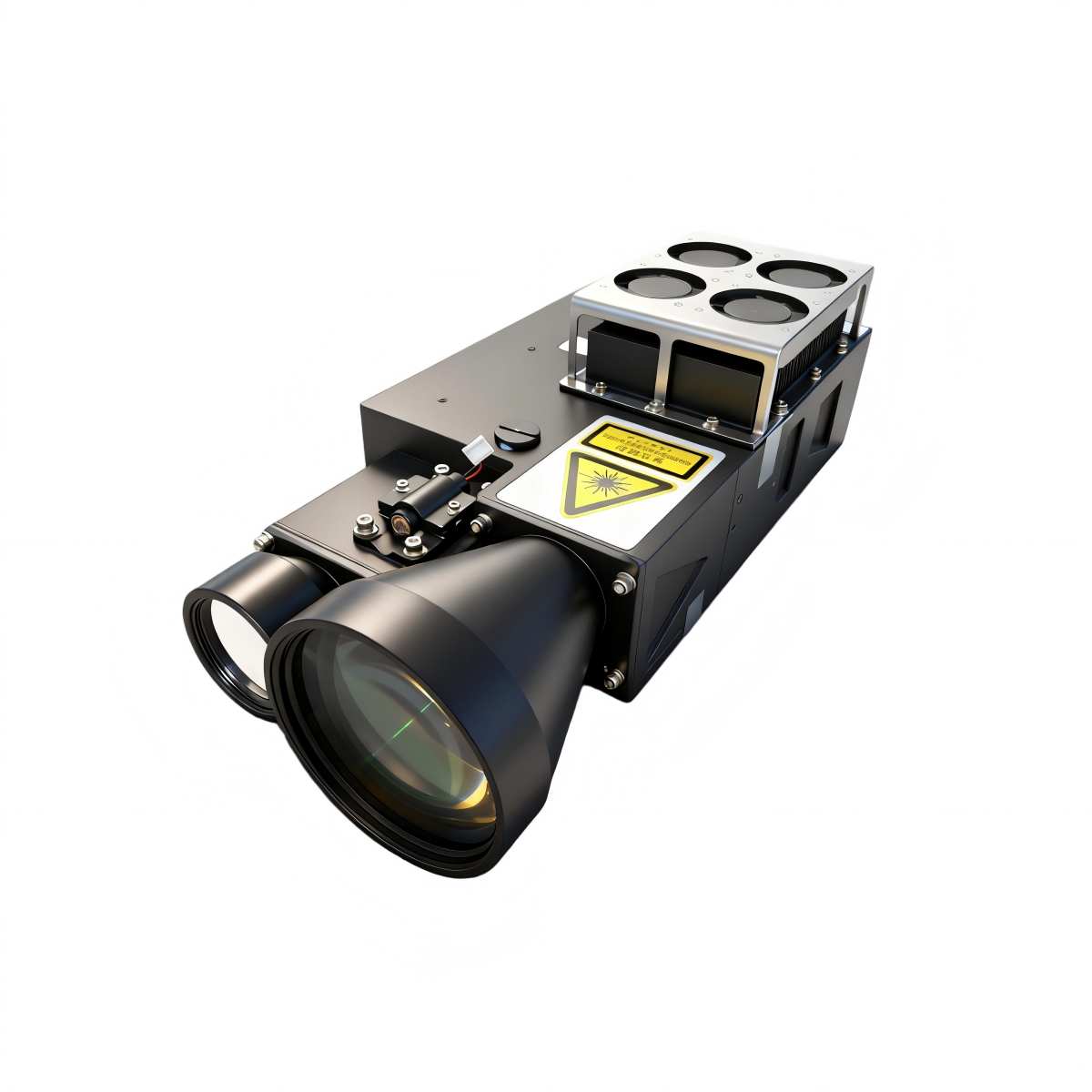
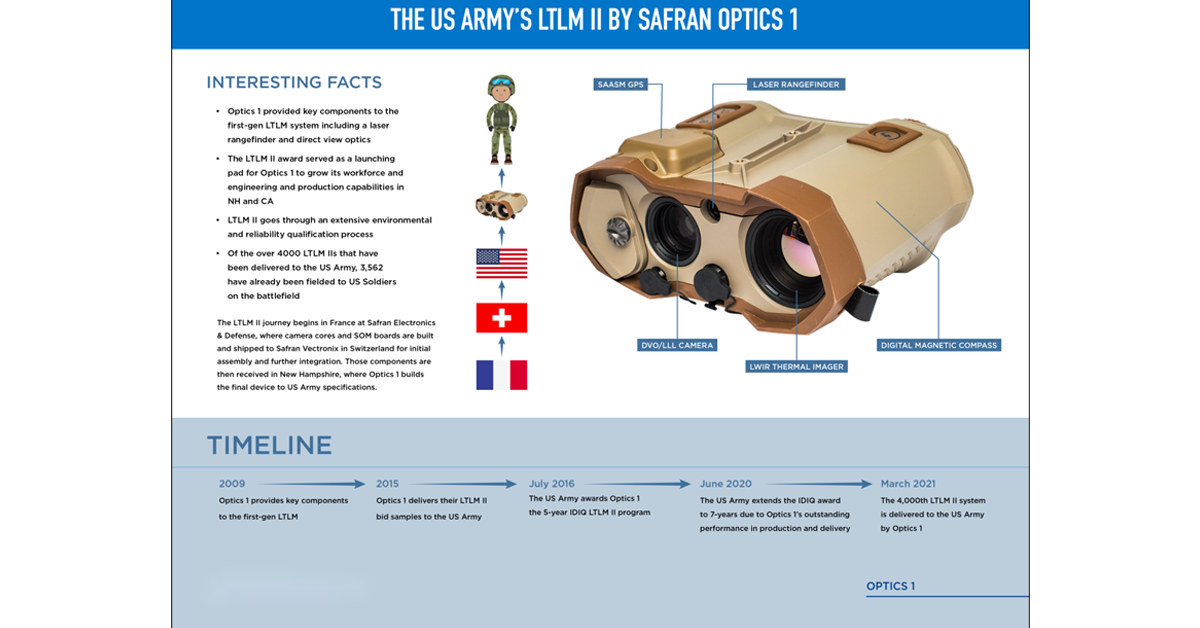
This system adopts 1064 nm wavelength laser pulses (the primary emission band of Nd:YAG lasers), integrating Laser Rangefinder and Laser Target Designator functions into a single module. It is suitable for deployment on missile-borne, airborne, vehicle-mounted, UAV-mounted, and electro-optical pod systems.
Core advantages include:
The same module combines distance measurement and target indication, with indication and ranging synchronized.
The 1064 nm wavelength leverages the advantages of a mature laser system (Nd:YAG laser technology), facilitating high-energy pulse emission and long-distance measurement.
https://en.wikipedia.org/wiki/Nd%3AYAG_laser?utm_source=chatgpt.com
Modular, lightweight design, facilitating integration into airborne/vehicle-mounted/unmanned systems—for example, it can be installed in electro-optical pods, gimbals, UAV pods, etc.
Standardized communication interface (e.g., RS-422), supporting external control, coding triggers, and self-test functions.
Ⅱ.Key Technical Indicators and Structural Composition
2.1 Laser Emission and Measurement Parameters
- Operating Wavelength: 1064 nm ±3 nm (Typical Emission Band of Nd:YAG Laser)
- Single Pulse Energy: For example, in the case of model LDR60K1, it's ≥ 60 mJ.
- Pulse Width: Typically ≥ 15 ns ±5 ns
- Repetition Frequency: Adjustable from 0 - 20 Hz, or 1 Hz/5 Hz/Single Shot Mode (depending on the model)
- Beam Divergence: ≤ 1–0.4 mrad (For some models, it can be customized to 0.1- 1.0 mrad)
- Ranging Accuracy: For example, typically ±2 m (1σ)
- Maximum Ranging Distance: Such as "can reach ≥ 8000 m (visual condition 20 km, target reflectivity 0.2, target size 2.3m×3m)" and other indicators.
2.2 Module Structure and Interfaces
- Transmit/Receive Optical Components: Adopt a common - aperture design or polarization - separation structure to reduce volume and improve alignment accuracy.
- Laser Drive and Control Section: Includes Q - switch drive, high - voltage detection drive, time - measurement circuit, and temperature - control circuit.
- Power Management and Communication Interface: Typical voltage is 20 - 28 V DC (usually 24 V), with an RS - 422 interface and a baud rate of 115200 bit/s.
- External Trigger and Coding Function: Supports user - defined coding, synchronous external triggering, recording the total number of emitted pulses, and system self - check function.
- Structure and Environmental Adaptability: Lightweight structure (e.g., ≤ 650 g or for more models ≤460 g), compact size (e.g., ≤ 117×97×53 mm), and capable of withstanding vibrations during flight or in - vehicle use, and operating in an environment from - 40 °C to +55 °
2.3 Overview of Technical Advantages
|
Functions |
Explanation of Advantages |
|
Dual functions (ranging + indication) |
Saves system volume and has strong synchronization ability. By integrating dual functions into one device, it reduces the overall space occupied by the system, and the dual - function operation can be highly synchronized, ensuring efficient and coordinated work. |
|
High beam quality (M² < 5) |
Improves long - distance aiming and reduces speckle. High beam quality with M² < 5 means the laser beam is more concentrated and stable, which is beneficial for precise long - distance aiming. Also, it helps to reduce the speckle phenomenon, making the target observation and indication clearer. |
|
Common - aperture design |
Saves the overall system volume and simplifies optical axis alignment. The common - aperture design allows the use of a single optical path for both transmission and reception, significantly reducing the system's volume. At the same time, it simplifies the optical axis alignment process, improving the system's assembly efficiency and optical performance stability. |
|
Coding/anti - interference ability |
Supports pulse coding, prevents blinding interference, and is suitable for complex electromagnetic environments. Pulse coding technology can effectively identify and process laser signals, enhancing the system's anti - interference ability. It can resist blinding interference from external light sources and operate stably in complex electromagnetic environments. |
|
System self - check and reliability |
Built - in health monitoring, reports status, and is convenient for maintenance. The system has a built - in self - check function that can monitor its own health status in real - time. It can report the operating status to the operator, helping to quickly identify potential problems and facilitating maintenance work, thus improving the system's reliability and maintainability. |
|
Strong environmental adaptability |
Reliably operates in harsh environments such as flight and in - vehicle use. With strong environmental adaptability, the system can withstand vibrations, temperature changes, and other harsh conditions during flight or in - vehicle operation, ensuring stable and reliable performance in these demanding environments. |
Ⅲ.System Integration and Application Scenarios
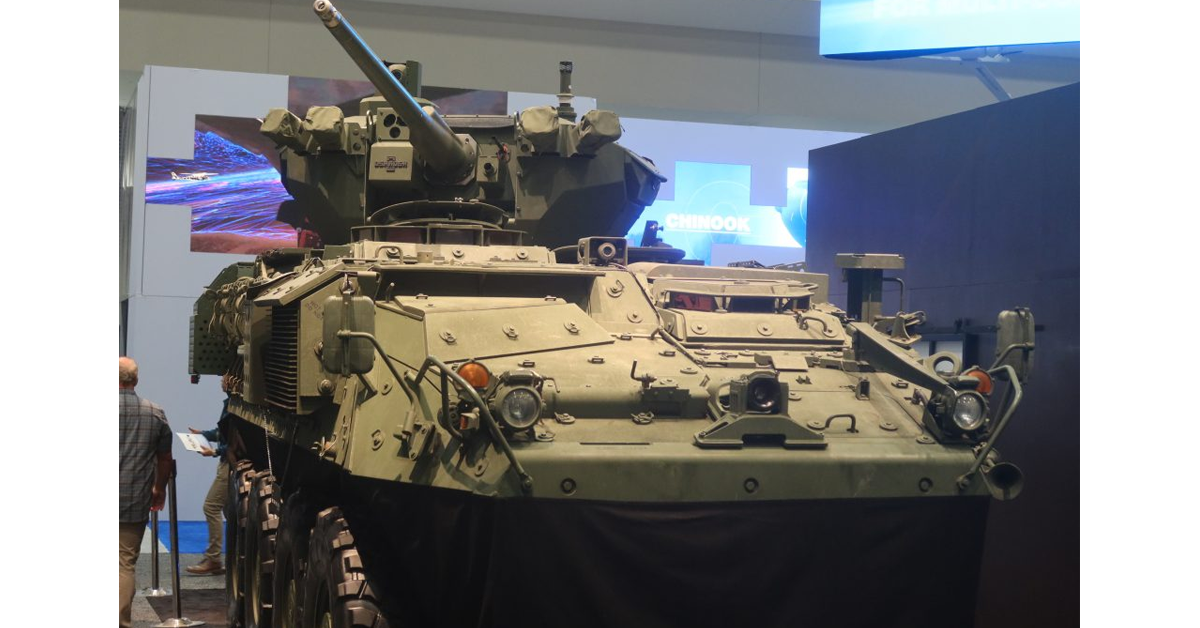
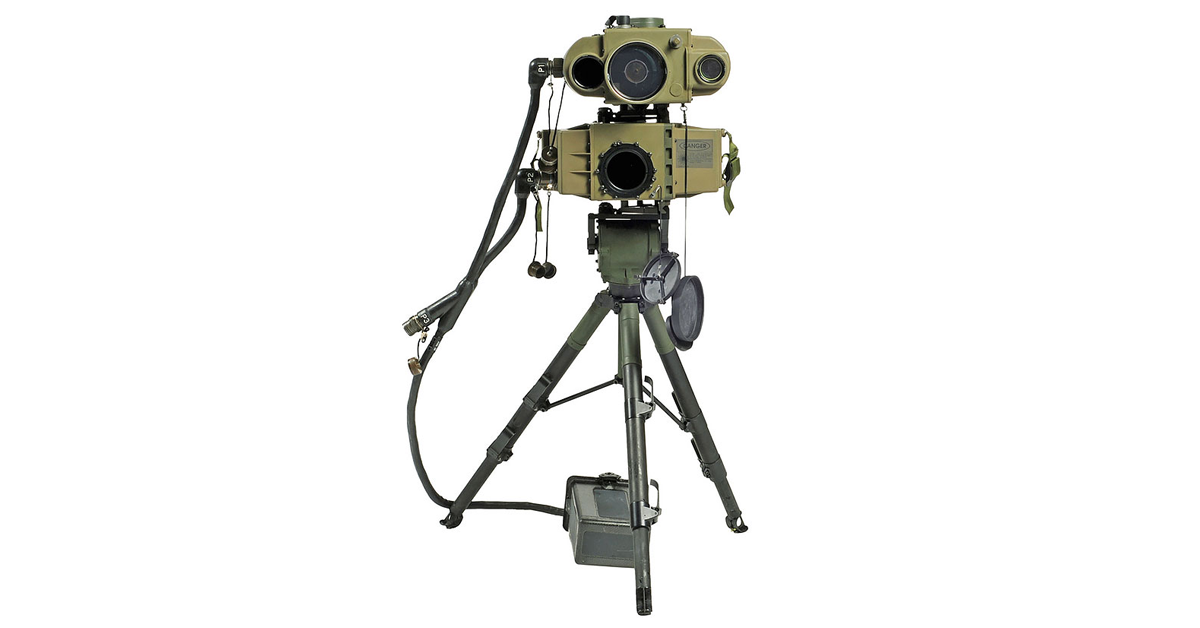
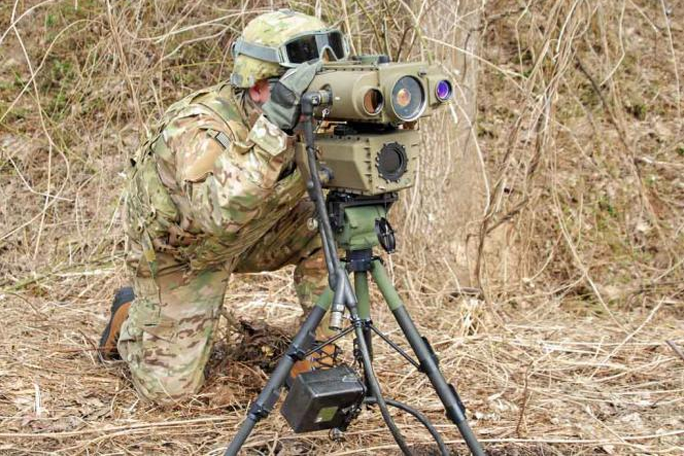
3.1 Integration into Airborne/UAV
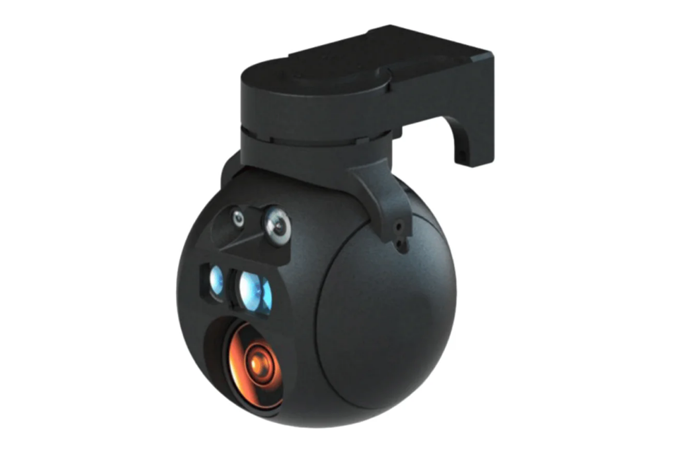
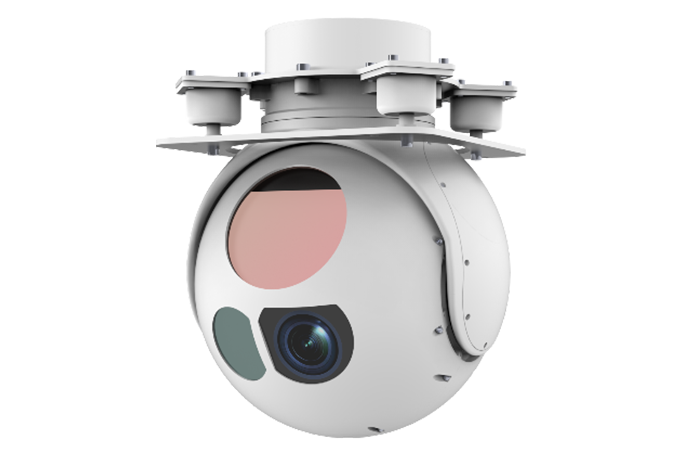
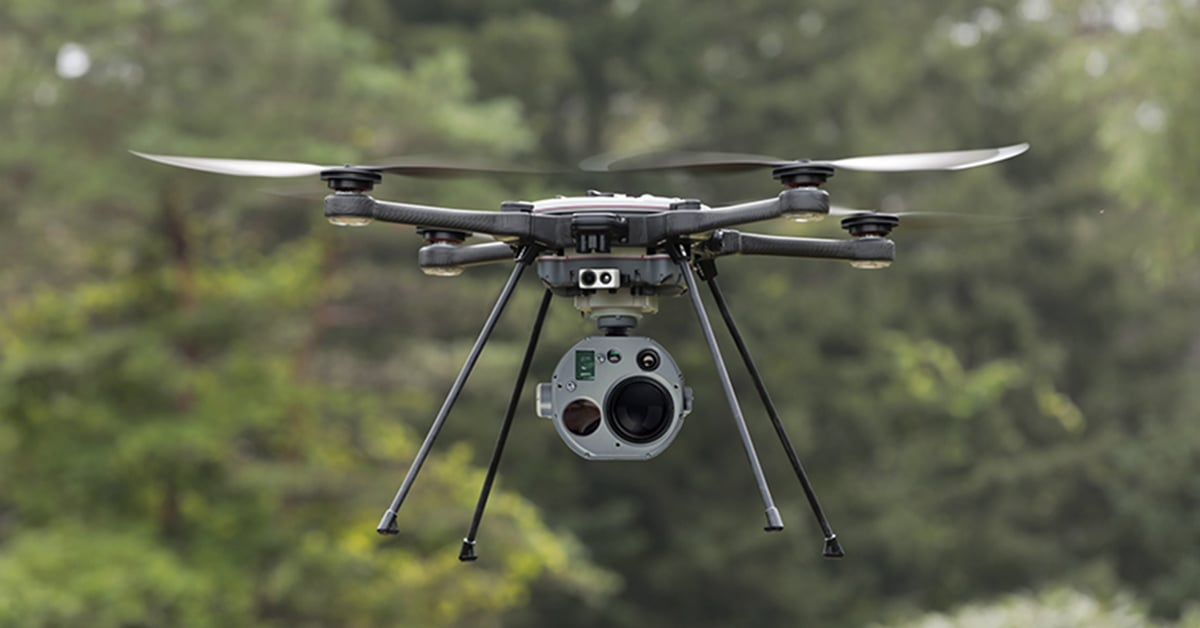
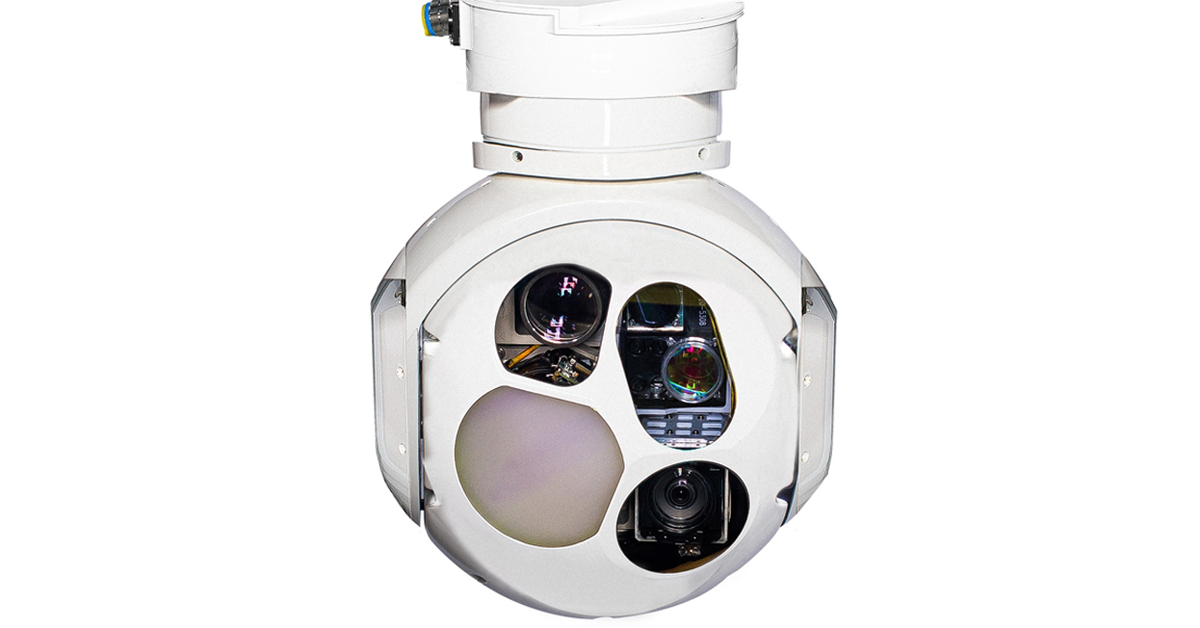
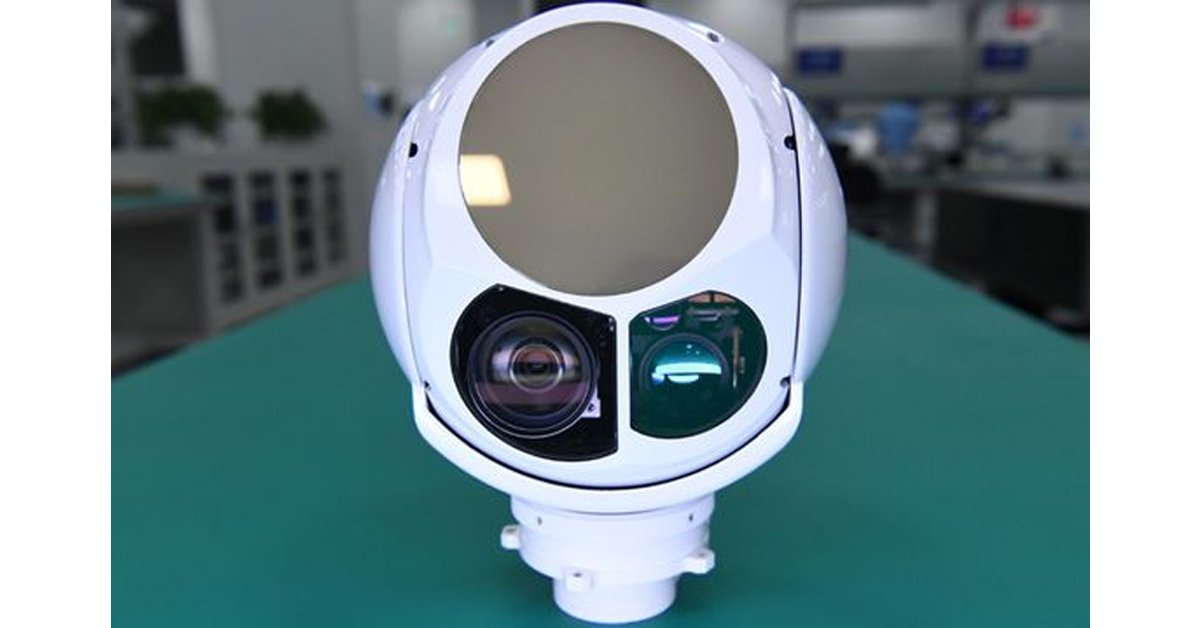
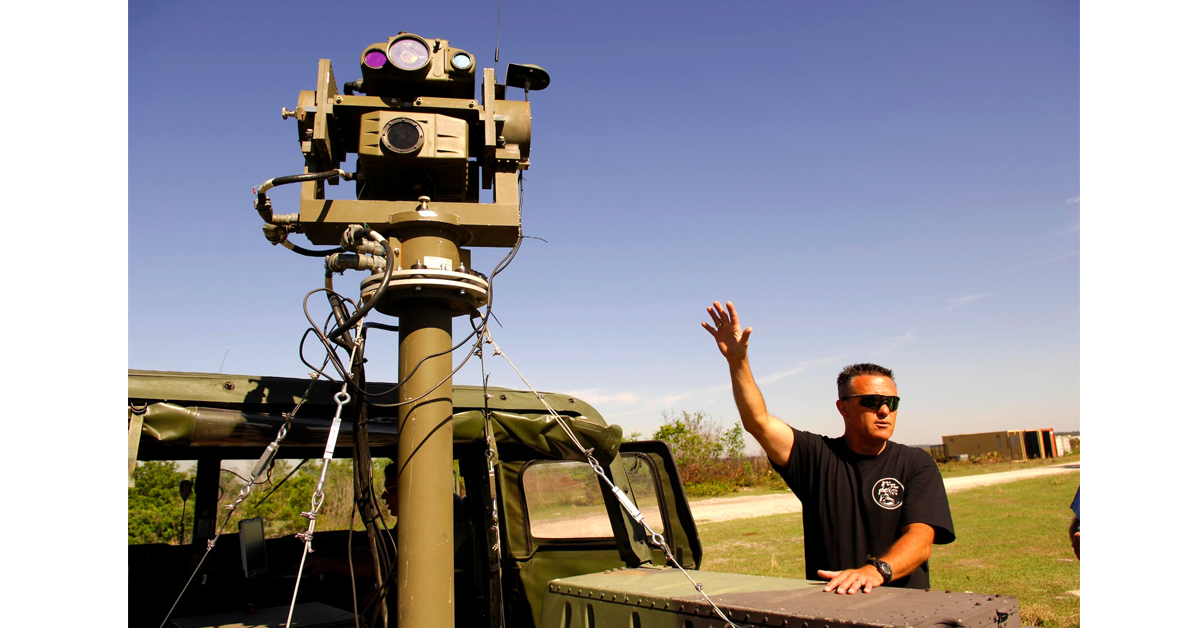
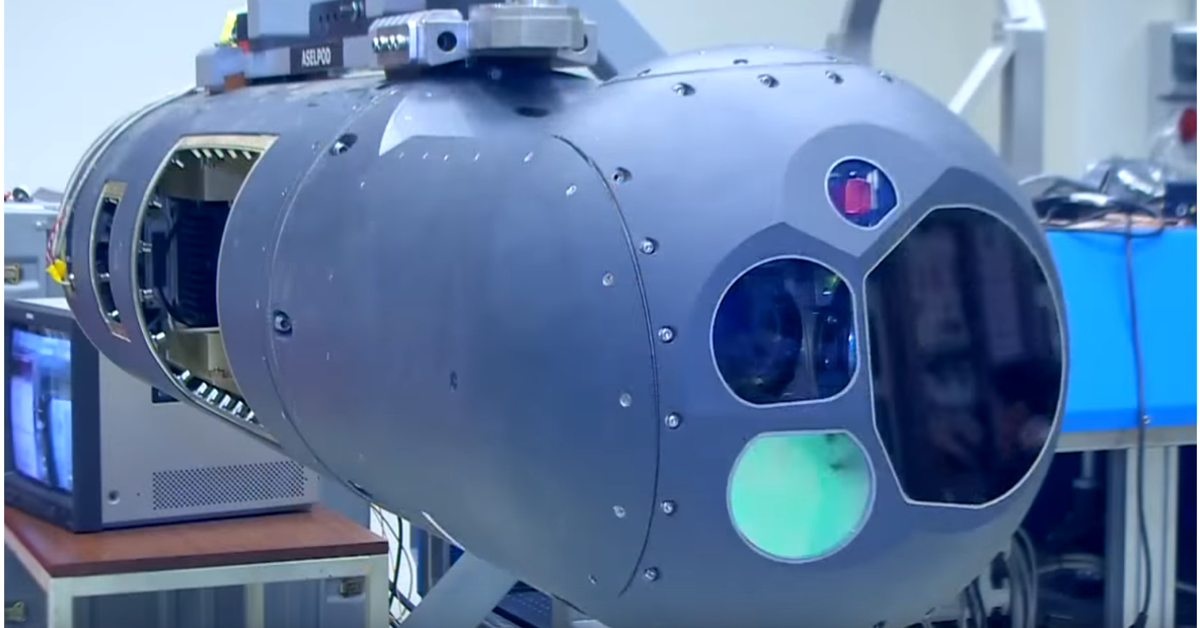
PayloadsFor instance, integrating this 1064 nm module into the electro - optical pods of aircraft or unmanned aerial vehicles (UAVs), in combination with visible - light/infrared thermal imaging cameras and pan - tilt systems with a wider field of view, can achieve the following:
- On UAVs, conduct long - range ranging, mark targets, and provide laser indication and identification.
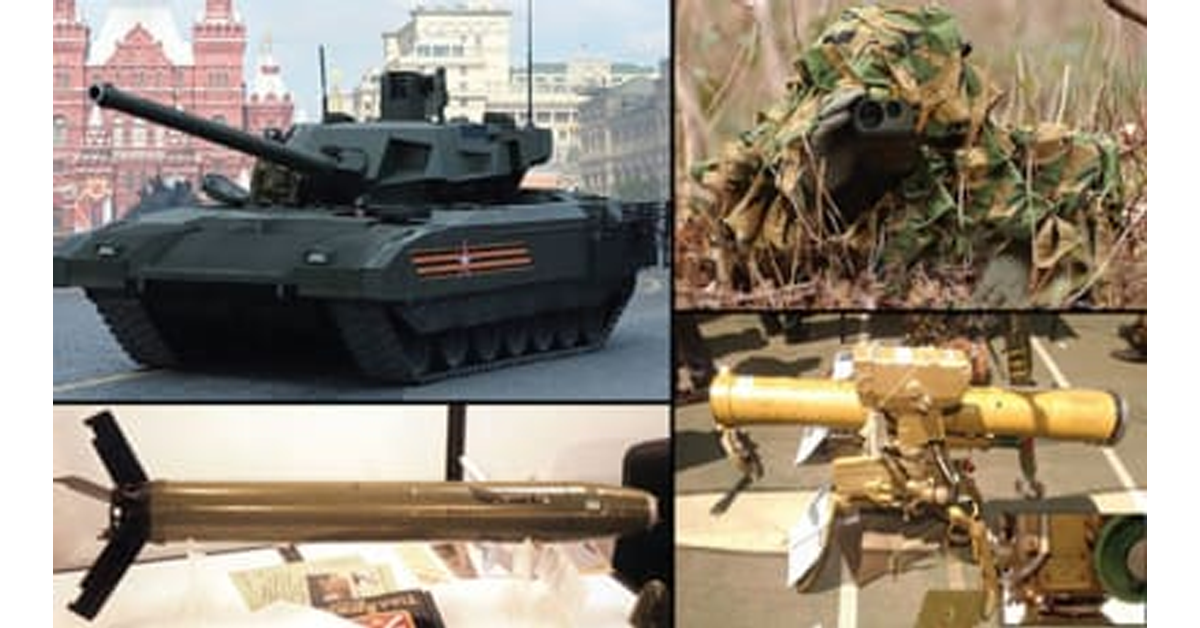
- Link with the fire - control system or missile - borne guidance system to supply the indication laser source for laser - guided munitions.
- In hovering or cruising states, it is used for battlefield reconnaissance, border patrol, and sentry post surveillance.The product is suitable for UAV suspension pods, airborne pods, vehicle - mounted electro - optical systems, etc.
3.2 Integration into Vehicle - mounted/Armored Platforms
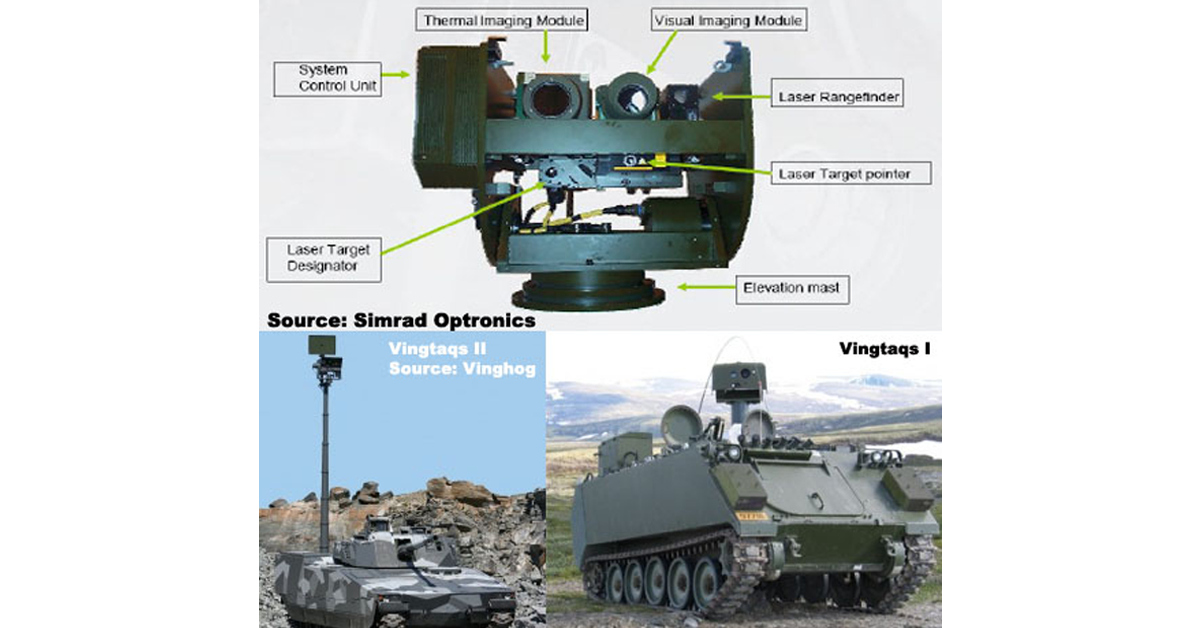
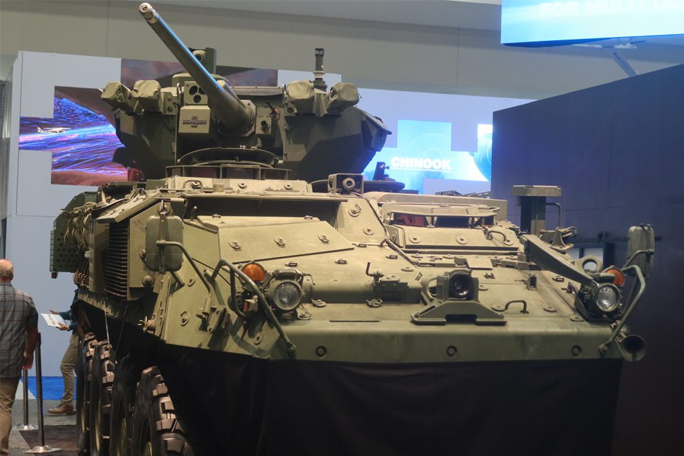
This module can also be integrated into armored vehicles, turrets, tanks, or other ground platforms:
- Installed on the top of the turret or vehicle body, it serves as a laser designator and rangefinder for target locking and weapon guidance.
- Collaborating with fire - control radars and electro - optical aiming systems, it designates targets through laser coding to cooperate with guided munitions.
- During the operation of the mobile platform, its high pointing stability and anti - vibration capabilities are particularly crucial.
3.3 Applications in Maritime/Ship - borne/Border Surveillance
It also has application value in maritime platforms, border surveillance radar systems, and coastal monitoring posts:
- In the surveillance of sea surfaces or long - distance targets, the laser ranging function can measure the distance to ships, floating objects, or intruding targets in real - time.
- The laser indication function can assist unmanned aerial vehicles, patrol boats, or shore - based systems in quickly locking onto targets.
- The module has environmental adaptation characteristics to resist sea fog, wave disturbances, and wind - induced vibrations.
3.4 Extended Scenarios in Emergency/Security/Civilian Use
Although it is mainly designed for military - grade applications, the technology can also be extended to civilian/security fields:
- For perimeter monitoring of critical infrastructure (airports, ports), the laser ranging + indication function is used to assist in security surveillance.
- In border protection, restricted area monitoring, and unmanned sentry posts, the laser module provides high - precision distance measurement and target identification.
Its "security solution" module can also be quickly customized.
Ⅳ.Typical Models and Selection Suggestions
The following is a summary of typical parameters of some ERDI models (for reference only, and the specific parameters shall be subject to the official data):
- Model: LDR20K1 - The single - pulse energy is approximately 20 mJ. It features a lightweight design (≈ 290 g) and is suitable for small - sized platforms such as unmanned aerial vehicles.
- Model: LDR40K1 - It has a pulse energy of approximately 40 mJ, a ranging accuracy of ±2 m, and an operating wavelength of 1064 ± 3 nm.
- Model: LDR60K1(-01) - With an energy of ≥60 mJ, it can achieve a ranging distance of ≥8 km (under certain conditions) and a target indication distance of ≥5 km. The weight is ≤650 g, and the beam divergence is ≤0.4 mrad.
- There are also higher - energy models such as 80 mJ, 100 mJ, and 160 mJ, which are used for applications requiring longer distances or higher performance.
Selection Suggestions:
- If it is for small unmanned aerial vehicles with lightweight requirements, models with 20 mJ - 40 mJ are preferred.
- For medium - sized unmanned aerial vehicles / airborne pods or vehicle - mounted fire - control systems, models with 60 mJ or more are recommended.
- If the mission requires extremely long - range operation, dealing with small - sized targets or targets with low reflectivity, models with more than 80 mJ should be considered.
- Pay attention to whether parameters such as beam divergence, ranging accuracy, weight, dimensions, interface (RS - 422), and environmental adaptability match the platform's interface.
- The system also needs to take into account the laser safety class (e.g., Class 4 laser), cooling methods, and maintenance requirements.
Ⅴ.Key Points and Precautions for System Integration
5.1 Optical Calibration and Stability
Due to the extremely high requirements for long - distance measurement and indication alignment, the following is recommended:
- After the initial integration, perform optical axis alignment calibration on the optical axis of the module and the platform installation structure (such as pods, pan - tilt systems).
- Enable the self - check function and regularly detect the fluctuation of the emitted pulse energy (e.g., within the specification of ≤10%) and the change of the divergence angle.
- In environments with vibrations and drastic temperature changes (such as aircraft takeoff and landing, vehicle operation), the beam stability and non - deviation must still be ensured.
5.2 System Interface and Software Protocol
- The module uses RS - 422 communication. It should be confirmed whether the main control system has an RS - 422 interface or uses a converter.
- If the external trigger interface (TTL 3.3 V, RS422, level - triggered) requires the encoding synchronization indication function, it needs to be configured in the main control software.
- The module supports functions such as encoding, pulse cumulative counting, and fault self - reporting system. These statuses should be read in the system for maintenance purposes.
5.3 Safety and Operating Environment
- The laser is a Class 4 device (high - power). On - site, protective measures must be set up to prevent accidental irradiation of personnel/equipment.
- With a wide operating temperature range (-40 °C ~ +55 °C or higher), it is recommended to adopt temperature control or heat - insulation measures on the platform to ensure operation at night or in extreme environments.
- The module should be installed in a position to avoid direct vibration, impact, or strong electromagnetic interference.
- If it is used in an aerial platform, anti - vibration, pan - tilt stability, and shock - resistant structural designs should also be considered.
5.4 Application Logic and System Flow
- Startup Procedure: System power - on → Self - check → Laser module pre - heating (if required) → Switch to ranging or indication mode.
- In Ranging Mode: Frequency can be set (single shot, 1 Hz, 5 Hz, 20 Hz, etc.) → Receive distance data → Output to the main control system.
- In Indication Mode: Set the code, trigger an external or built - in indication pulse → The module emits a laser to mark the target → It can perform continuous short - cycle or long - cycle indication (such as specifications of ≤ 17 s, ≤ 47 s, etc.)
- If ranging and indication are to be carried out simultaneously or switched between, the indication command should be prioritized (after receiving the indication command, the module will immediately stop the ranging task).
Ⅵ.Typical Scenario Demonstrations
Scenario A: UAV-mounted employment for battlefield reconnaissance / laser-guidance missions
A UAV carries the podded module and, while airborne, scans targets using its gimbal. The system first performs a rapid range measurement to the target (for example, in the 3–8 km band), then transmits a coded laser designation onto that target. Ground- or air-based weapon systems or laser-guided munitions detect the reflected signal and home on it, enabling precision engagement.
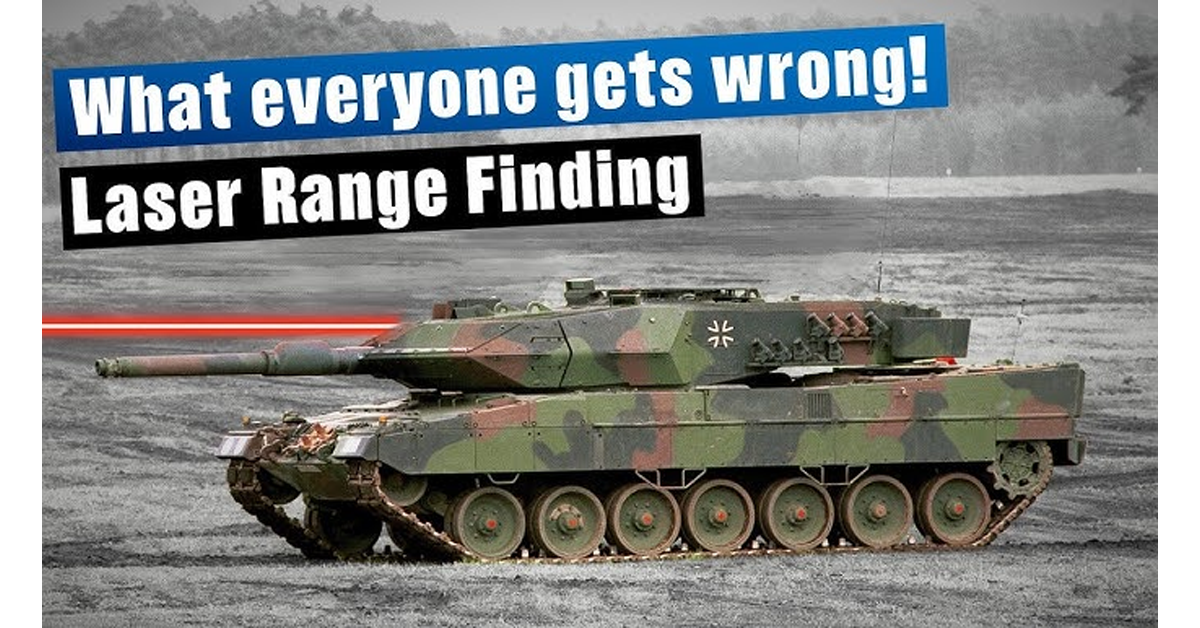
Scenario B: Armored-vehicle turret target acquisition and battlefield support
An armored vehicle’s fire-control system is equipped with this module. While rapidly advancing into forward areas, the vehicle uses the laser module to detect and range distant targets (e.g., enemy armored vehicles or artillery positions), providing precise target ranges and designations to artillery units or missile systems. The module is vibration- and shock-resistant and is engineered to operate reliably in the dynamic environment of a moving platform.
Scenario C: Coastal surveillance and patrol vessel application
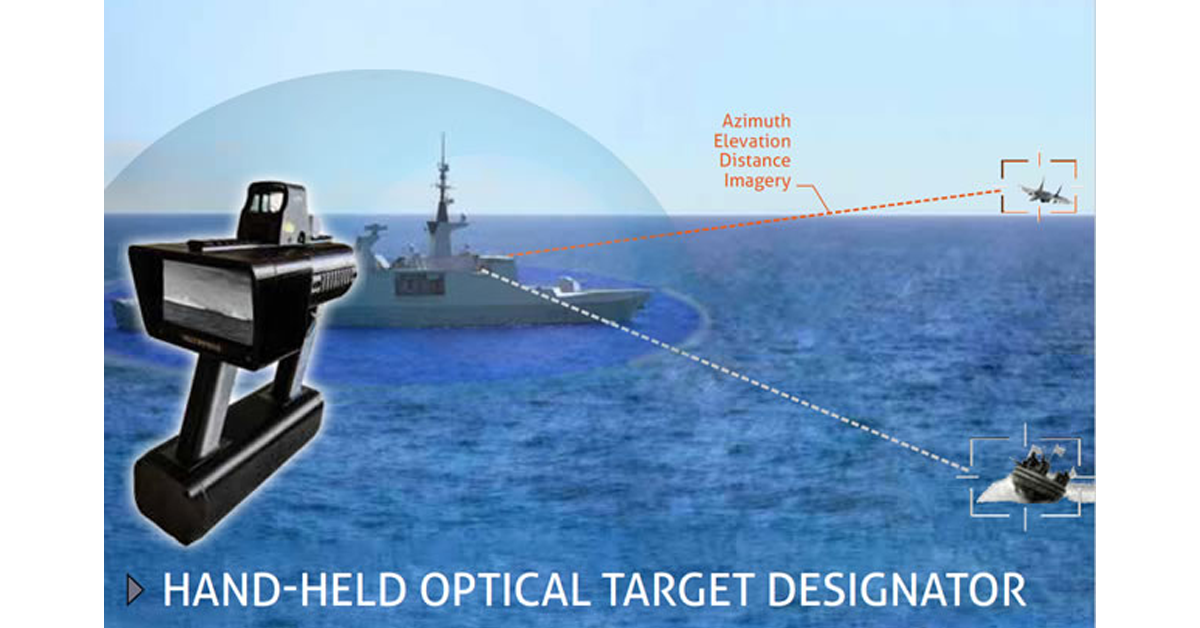
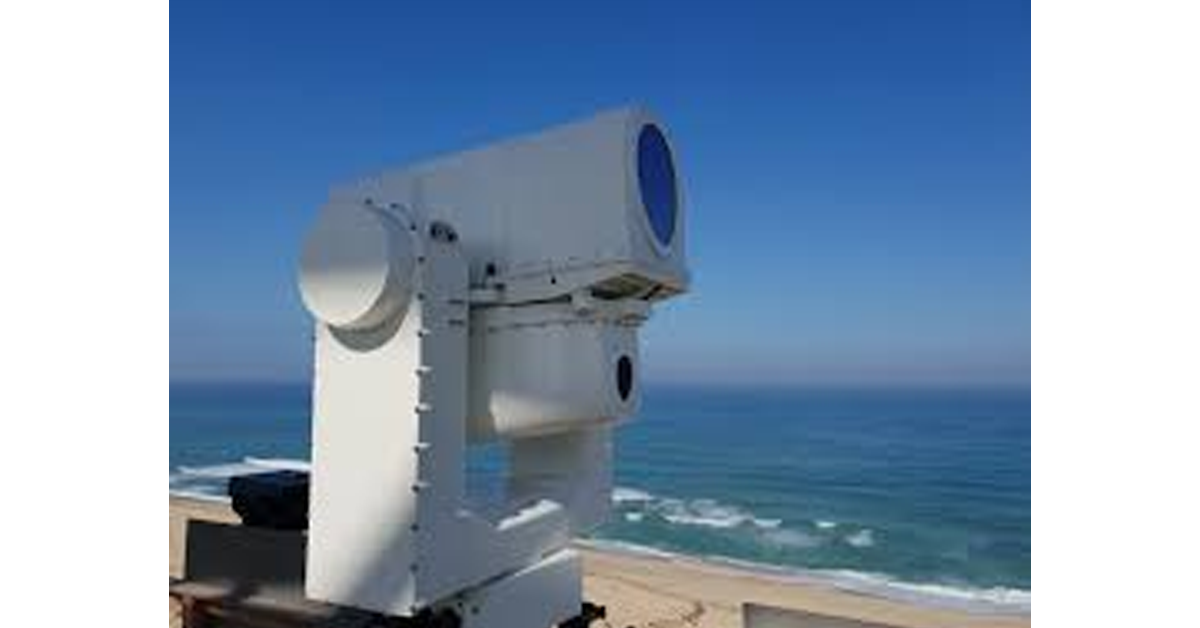
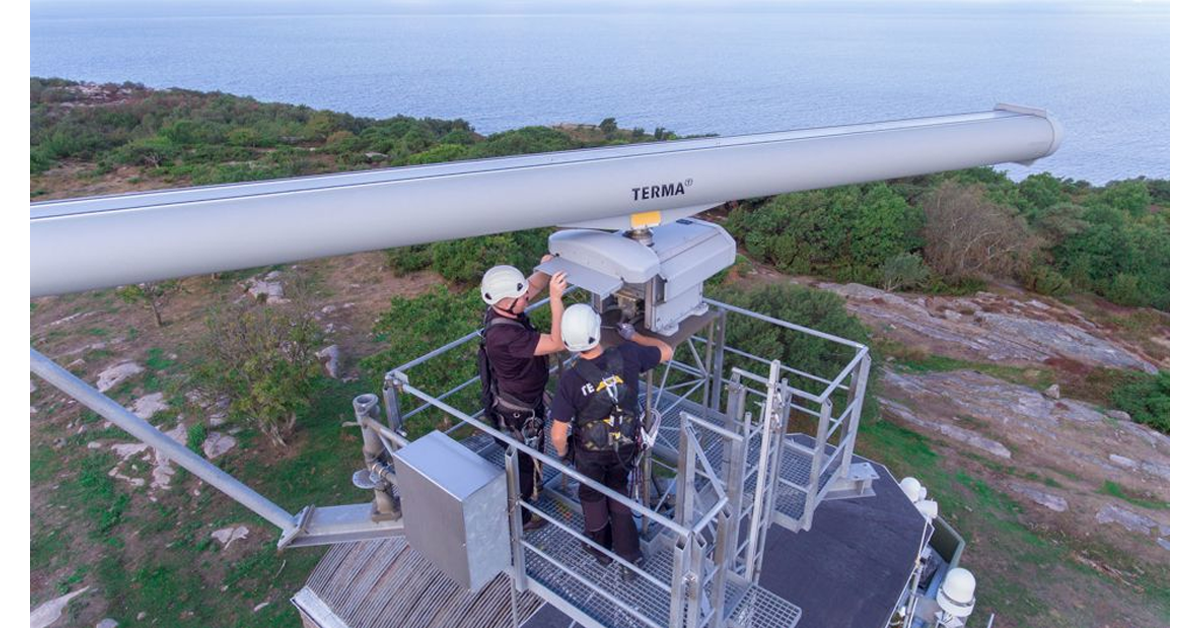
A patrol vessel or coastal monitoring platform equipped with this module performs rangefinding on incoming or suspicious vessels, floating objects, or unmanned surface vehicles (USVs). The laser designator can assist UAVs or shore-based systems in target acquisition, providing real-time and highly accurate range data. The module is designed to operate effectively in maritime environments, with resistance to sea fog, surface reflections, and wave-induced motion effects.
Ⅶ.Relationship to Laser Guidance / Designator Technology Background
A laser designator operates by emitting a coded laser beam to mark a target for laser-guided munitions to lock onto.
Nd:YAG lasers are commonly employed in such systems due to their well-established 1064 nm emission wavelength, high output power, and suitability for long-range applications.
In practical operation, factors such as timing synchronization between ranging and designation, coding accuracy, stability, beam divergence, and energy consistency are all critical to ensuring overall system effectiveness.
Ⅷ.Summary
The 1064 nm laser rangefinding and target-designation module integrates high-energy pulsed emission, precision control, modular architecture, standard communication interfaces, and multi-platform adaptability, delivering long-range, high-accuracy, dual-function performance for both laser ranging and target designation. Whether deployed on UAV payloads, armored-vehicle turrets, naval patrol vessels, or border surveillance outposts, the system demonstrates exceptional versatility and integration capability.
During system selection and integration, special attention should be given to pulse energy, ranging accuracy, beam divergence, interface compatibility, environmental robustness, and beam alignment. When integrated with stabilized gimbals and multi-sensor suites—including visible-light cameras, infrared imagers, and wide-angle optics—the system can significantly enhance real-time reconnaissance, target localization, and laser-guided engagement efficiency.